
Senate committee advances bill to let Minnesota libraries treat ebooks like owned copies
Get AI-powered insights, summaries, and transcripts
Sign Up Free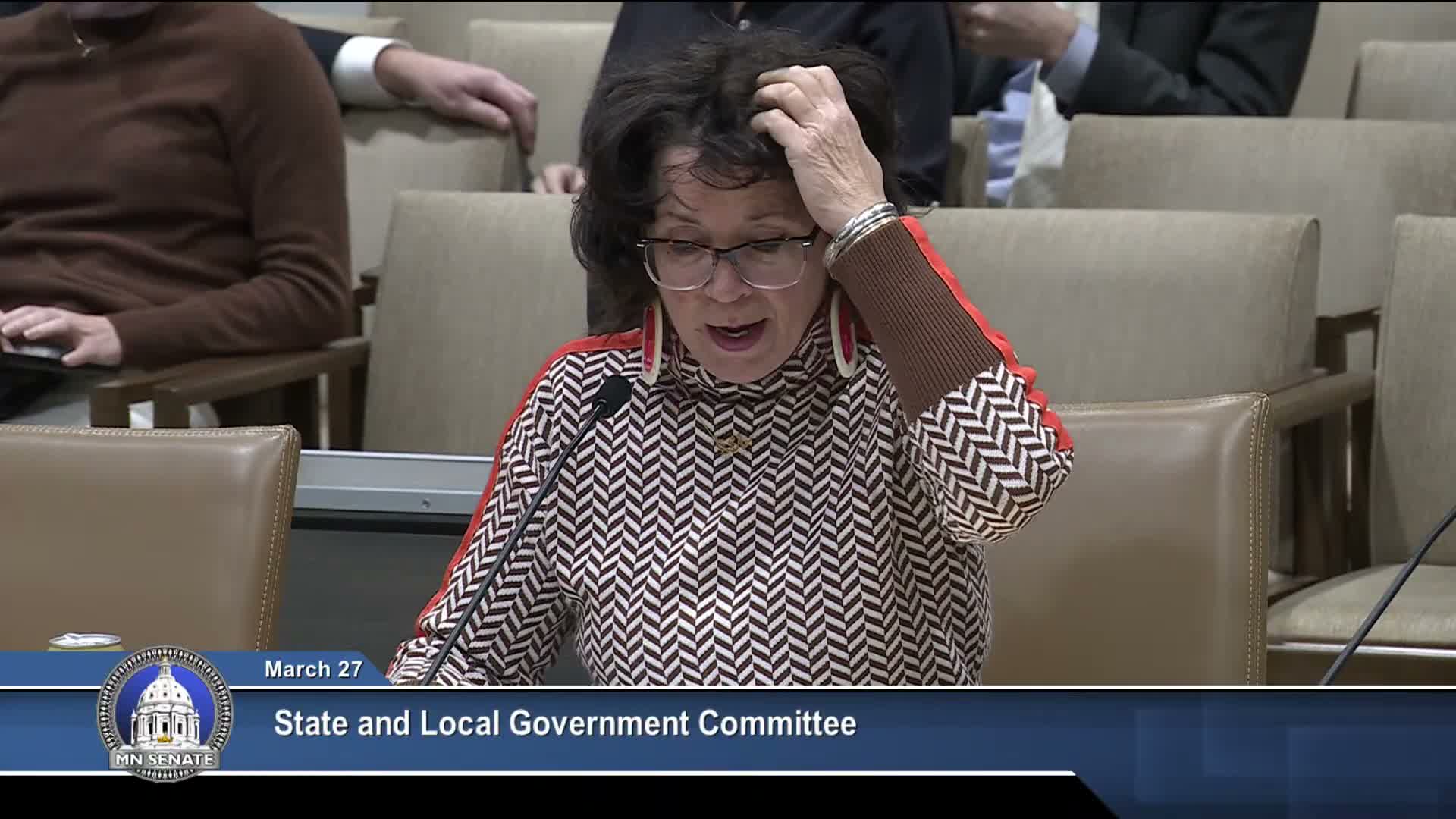
Summary
After testimony from library officials and publisher representatives, the State and Local Government Committee advanced Senate File 36 85 as amended to general orders. Supporters said the bill will curb repeated, costly ebook licensing; opponents warned it could reduce publisher willingness to supply new releases.
A Minnesota Senate committee on Tuesday advanced a bill meant to change how public and K–12 school libraries license ebooks and audiobooks, saying the current leasing model burdens library budgets and limits access.
Senate File 36 85, sponsored by Senator Kunash, would restrict certain contract terms so libraries have the option to acquire perpetual-use licenses for ebooks and audiobooks and would prohibit contract clauses that prevent customary lending functions. "Under our current licensing laws, libraries are required to lease and not own digital materials," Sen. Kunash said, arguing that libraries pay "4 to 5 times" what consumers pay and repeatedly repurchase expiring licenses. She asked the committee to advance the bill to the floor.
Sarah Hawkins, assistant director at Anoka County Library and legislative chair of the Minnesota Library Association, told the committee the measure targets pricing practices that she said are unsustainable for libraries and schools. "Libraries pay dramatically higher prices for ebooks than for print — often 3 to 5 times more — and unlike print books, we don't own those digital titles," Hawkins said. She cited 2025 Twin Cities figures: nearly 14 million checkouts and roughly $6.5 million spent on digital content, yet an unmet need she estimated at about $21 million. Hawkins also described an example in which a metro library spent about $55,000 on one popular author's digital titles (835 licenses) and still left thousands of readers waiting.
Todd Hill of Hill Capital Strategies, testifying for publisher clients including the Association of American Publishers, said the bill could have the opposite effect and reduce access. Hill argued copyright holders and publishers must retain the right to set terms and that unilateral contract restrictions could push publishers or vendors to limit library access to new releases. "The likely impact of this legislation is that it will reduce rather than expand access to digital library materials," Hill said, adding that the current licensing model saved the library thousands of dollars in the example Hawkins cited.
Committee members pressed both sides on practical questions: how authors are paid under current vendor arrangements, whether libraries can contract directly with publishers, and whether a single dominant vendor creates a de facto monopoly. Hawkins and other library witnesses said vendors provide the technical delivery platforms (DRM, apps and circulation controls) and that the bill's change from the word "publisher" to "vendor" in the A1 amendment was intended to reflect that operational reality. Hawkins emphasized the bill aims to enable negotiation and transparency rather than mandate unlimited free distribution.
Senators expressed concerns about possible unintended consequences. Several members warned that if vendors or publishers refuse to sell to Minnesota under a new statutory regime, the state could temporarily lose digital access; supporters countered they were willing to accept that risk to break an unsustainable pricing model and to encourage more market competition or alternative vendor options.
After debate, the committee adopted the A1 amendment (replacing references to "publisher" with "vendor") and voted to recommend SF 36 85 as amended to be placed on general orders. A roll call produced six ayes, three noes, one pass and one excused. The bill now moves forward in the Senate process.