Get Full Government Meeting Transcripts, Videos, & Alerts Forever!
Get email alerts on the Delegate Communications And Selection topic
No spam. Unsubscribe anytime.
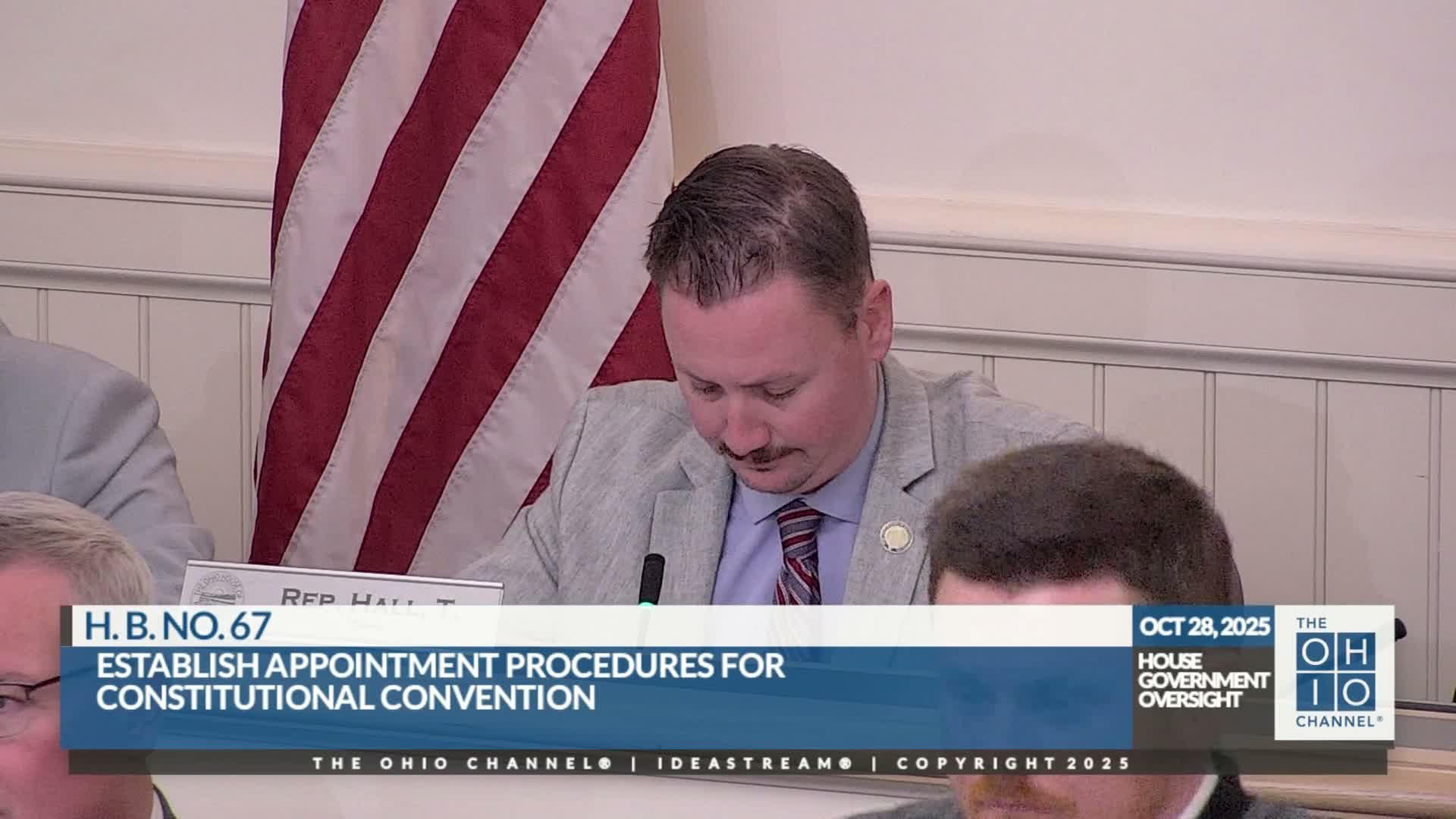
Committee adopts amendment to HB 67 and hears testimony on delegate rules and penalties
Summary
The committee accepted an amendment to HB 67 removing a provision that would bar delegates from communicating a delegation's divisions. Witness Michael Farris testified that about 16 states have similar measures; members pressed him on minority representation in delegate selection and on penalties for misbehavior.
At the third hearing on House Bill 67, Vice Chair Ferguson offered an amendment (listed on committee materials as amendment 136_11_25) that removes a provision prohibiting a convention delegate from communicating an impression to people outside the delegation that the delegation is divided. Ferguson moved the amendment and, after an explanation, the committee adopted it "hearing no objection," making it part of the bill.
The committee then heard in-person testimony from Michael Farris, who said "16 states have adopted measures just like this or, you know, in the same nature," and described the proposal as part of maintaining legislative control over delegates. Farris told members penalties for delegate misconduct vary by state: in some states it can be a criminal offense, in others a misdemeanor, in some cases removal from the commission; he said the legislature can choose an enforcement mechanism.
Representative Rader pressed Farris on minority inclusion, asking whether the bill ensures minority-party voices would have representation among delegates. Farris said the bill is silent on that issue and that the legislature is free to choose how delegates are selected; he suggested any mechanism to guarantee minority representation would be complex and better decided when appointing delegates on a convention-by-convention basis.
Representative Workman asked about the state's responsibility to recall delegates who stray from instructions or "wash their hands of the process." Farris said the legislature should remain engaged and that the ability to remove a delegate upon due notice is an important enforcement option. Representative Humphrey asked why the bill specifies an odd number of delegates; Farris said the purpose is to avoid tie votes so the state's vote can be recorded.
What’s next: The amendment was adopted by unanimous consent and the committee concluded the third hearing on HB 67; no roll-call vote on the full bill was recorded in the transcript.