Lifetime Citizen Portal Access — AI Briefings, Alerts & Unlimited Follows
Committee hears bill to let employers report unemployment interview 'no‑shows' to ODJFS
Loading...
Summary
Sponsors told the House Government Oversight Committee HB 395 would create a conspicuous online reporting link on the Ohio Department of Job and Family Services website to allow employers to report applicants who miss scheduled job interviews; lawmakers pressed sponsors on whether the change duplicates existing processes and on JFS capacity.
Representative Gross and Representative Lorenz gave sponsor testimony for House Bill 395, saying the measure would require the Ohio Department of Job and Family Services to create a conspicuous online reporting link so employers can report when an applicant receiving unemployment benefits fails to appear for a scheduled job interview. "This is just a common sense update to help enforce existing eligibility rules," Representative Gross said, framing the bill as a tool to direct benefits to those "genuinely seeking work."
The sponsors cited employer anecdotes describing repeated "no-shows" — an electrical company and a national gas-station chain — and said the existing reporting process "doesn't work," arguing the proposed link would "close the loop" by making complaints easier to file and requiring the department to review them. Representative Lorenz said the bill amends section 414.134 of the Ohio Revised Code and would be voluntary for employers, with "no new penalties, no new mandates on employers."
Ranking Member Humphrey asked how HB 395 differs from current options for employers to note no-shows and whether the sponsors had consulted business groups. The sponsors responded that while some mechanisms exist, they are ineffective in practice and that employers asked for a streamlined, secure tool. Representative Rader raised concerns that county Jobs and Family Services offices — particularly in large counties such as Cuyahoga — are already overburdened and asked whether adding follow-up queries would stretch JFS capacity. Representative Gross said sponsors had discussed implementation with JFS and argued the change could reduce workload over time by helping people move into work.
Vice Chair Ferguson suggested adding a claimant self-reporting question to the routine weekly check-in (for example, "have you skipped any job interviews?") so recipients could also provide a statement; sponsors said they were open to strengthening the bill language and saw the measure as aimed at personal responsibility rather than punishment. Representative Troy warned the committee against creating records that would penalize seasonal workers or those who repeatedly collect unemployment because of cyclical work patterns; sponsors replied that existing job-search rules apply irrespective of the reason for unemployment.
Lawmakers pressed on standards for determining a missed interview and for excused absences (illness or emergencies); sponsors said the online form would allow employer comments and that the department would evaluate claims, but offered no detailed adjudication standard during the hearing.
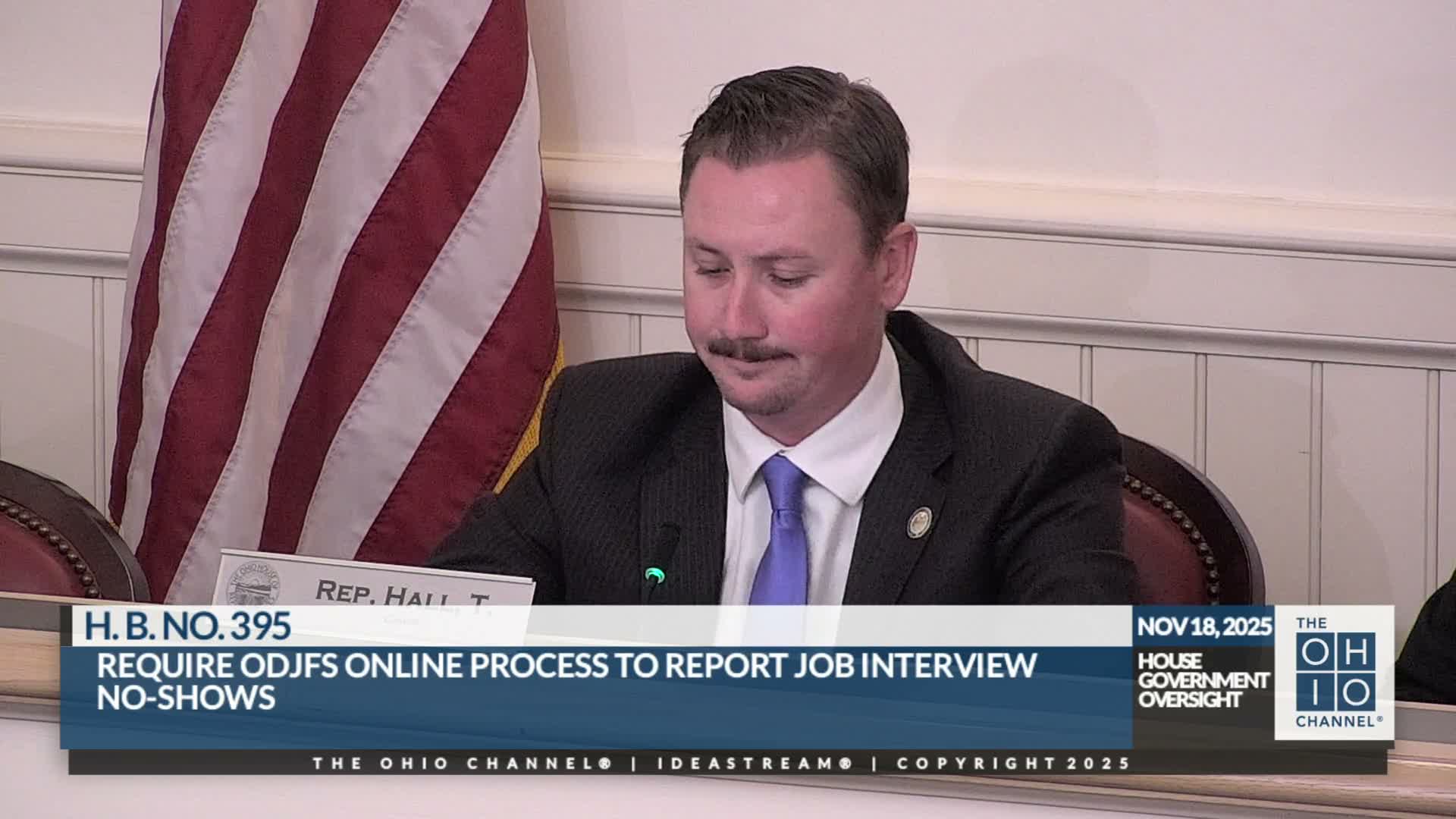
Chair Hall concluded the first hearing on HB 395 after members had asked questions and heard sponsor testimony. The committee took no formal vote during the hearing.