Sponsor urges photo-ID requirement for marriage licenses to close identity gap
Loading...
Summary
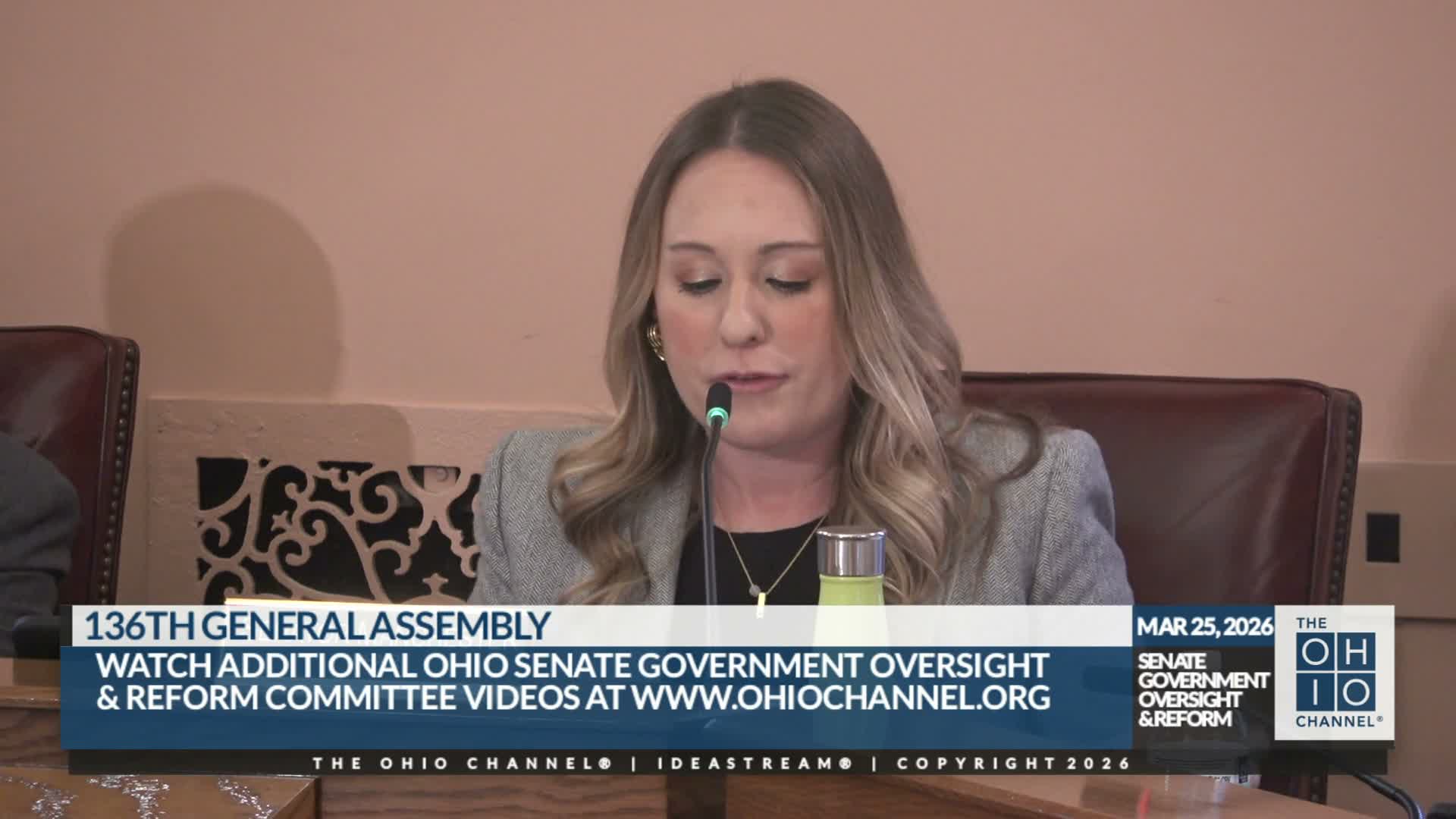
Representatives Mike Odioso and Abrams told the Government Oversight and Reform Committee that House Bill 386 would require current, valid photo identification for marriage-license applicants to ensure identity verification, citing a 2018 Cincinnati identity-theft case and a probate judge's referral.
Representative Mike Odioso, sponsor of House Bill 386, told the Government Oversight and Reform Committee that the bill would amend Ohio Revised Code 3101.05 to require applicants to present a current, valid photo identification when applying for a marriage license. "House Bill 386 addresses this gap by adding a new provision that requires each applicant to present a current and valid photo identification when applying for a marriage license," he said, listing acceptable forms "including a U.S. passport, driver's license, state-issued identification card, government-issued photo ID, or a school-issued photo ID."
The sponsors said the change is intended to provide probate courts a reliable way to verify identity and to reduce the risk of fraud, human trafficking and coerced marriages. Representative Abrams told the committee that the bill will "close the loophole that currently permits issuances of marriage licenses without a reliable means of confirming identity."
Why it matters: Sponsors argued the requirement would modernize the marriage-license process and strengthen public accountability in probate courts. Representative Odioso said the bill originated from a recommendation by a Hamilton County probate judge, and he cited one incident in 2018 in which a Cincinnati man used a stolen identity for decades, including in a marriage and when fathering children. "So there was one in 2018," Odioso said, describing the case as a motivating example for the sponsors.
Committee members asked whether the requirement could create problems for religious communities that do not routinely use photographs, specifically asking about Amish residents. Senator Landis asked, "Are there exemptions for this type of a situation?" Odioso responded that the sponsors had reviewed the issue with counsel and believed local practice had provided workarounds but that they would consider borrowing language from other ID statutes if necessary. Landis said he would "research it from my connections and get back to the chair" about how Amish communities in his district would be affected.
No formal vote or amendment was recorded at the hearing. The sponsors offered to work with committee members on any language changes. The committee closed the first hearing on House Bill 386 with no immediate action.