State auditor flags high eligibility error rates and concentrated home‑health spending in Franklin County

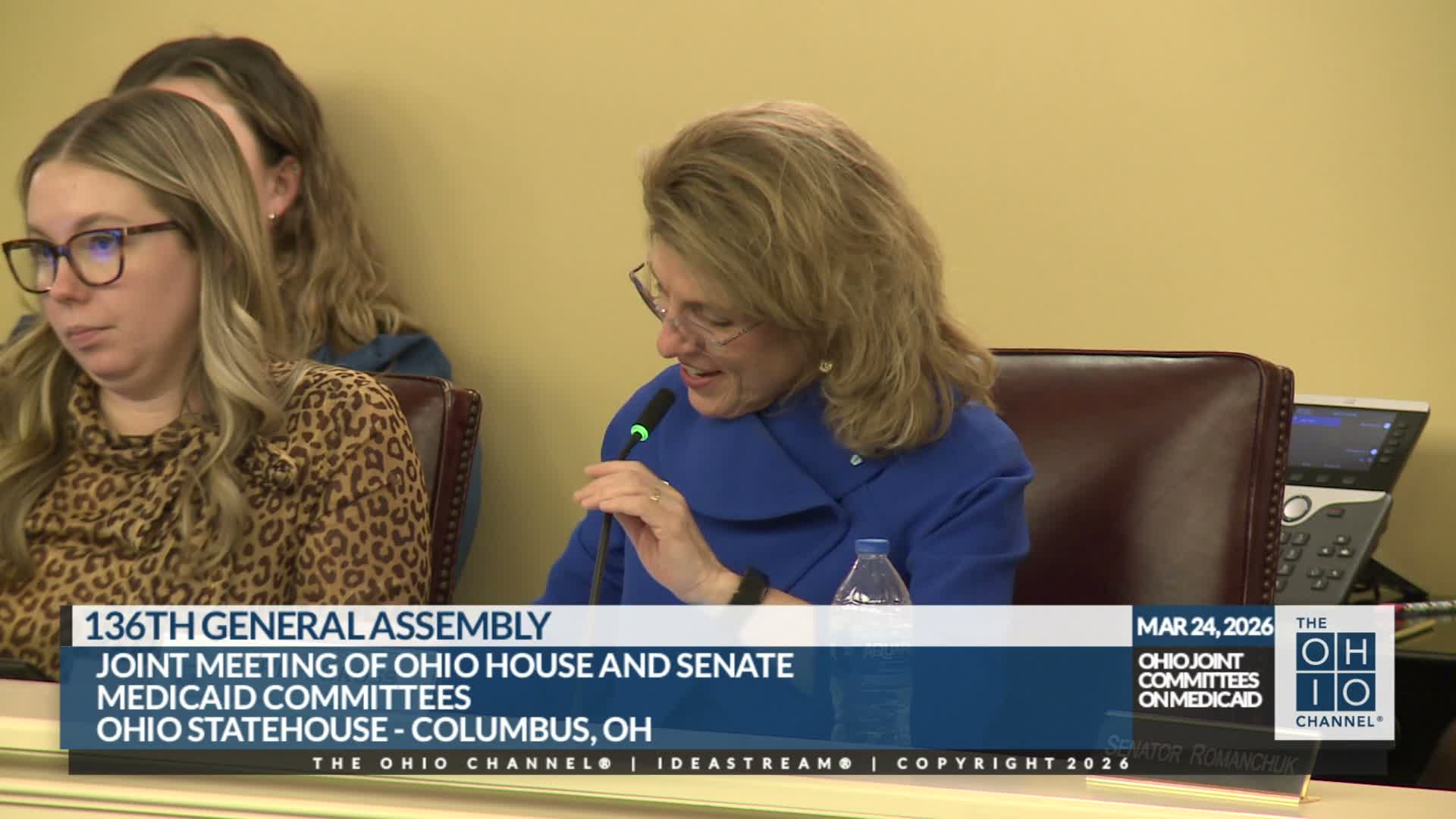
Joint House and Senate Medicaid Committees · March 24, 2026

Get AI-powered insights, summaries, and transcripts

Sign Up Free
AI-Generated Content: All content on this page was generated by AI to highlight key points from the meeting. For complete details and context, we recommend watching the full video. so we can fix them.

Summary

The Auditor of State told a joint Medicaid committee that audits show a roughly 15.6% eligibility error rate in sampled transactions and that Franklin County accounts for about 38% of Ohio’s $1.6 billion in home‑health spending, notably in ZIP codes 43229 and 43231.

The Office of the Auditor of State told the joint House and Senate Medicaid committees that its recent audits found repeat control weaknesses in Medicaid eligibility and a concentrated pattern of home‑health spending.

Auditor Faber told members that a sampled audit showed an eligibility error rate of about 15.6% and warned about the financial significance of that finding: "If you could and you did literally extrapolate, a 15.6% ... error rate could be as much as $4,400,000,000," he said, while adding that other extrapolation methods would yield smaller figures and that extrapolation carries caveats.

Faber also highlighted a striking geographic concentration in home‑health spending: roughly 38% of Ohio’s $1.6 billion in home‑health dollars is spent in Franklin County, and two ZIP codes — 43229 and 43231 — together account for about $229 million of that total. He emphasized that data anomalies require follow‑up analysis, not immediate conclusions: "Correlation doesn't equal causation," he told the committee.

Mike Schmidt, who leads the Auditor’s Medicaid contract audit section, gave a provider example from the Columbus area in which audits found documentation gaps, missing required certifications and billing that exceeded service records; in that audit his team found 41% of tested claims had noncompliance errors and about $8,600 in improper payments for the sample. Schmidt said those audit findings are referred to Medicaid for recoupment and to the Attorney General’s office when appropriate.

Tiffany Ridenbaugh, chief deputy auditor, described how auditors use targeted, high‑yield sampling and data analytics to identify anomalies; she told the committee county eligibility offices receive millions of automated alerts (she cited 16,000,000 alerts in 2025) and often lack the capacity to act on each one, creating a control gap.

What happens next: the Auditor's office said more audit work is under way (including a required review of the aged, blind and disabled ABD population and a next‑generation system performance audit slated for earlier release than a statutory December 2027 deadline). The office will continue referring credible problems to Medicaid and, when appropriate, to the Attorney General for investigation.

The committee did not take formal action on the auditor’s findings during the meeting; lawmakers asked for follow‑up analyses and additional data reconciliation between agencies.

Direct evidence: testimony and sample figures came from Auditor Faber, Tiffany Ridenbaugh and Mike Schmidt during the joint hearing; auditors repeatedly cautioned about sample limits and the need for further review before drawing causal conclusions.