
Ohio Medicaid leaders urge tougher tools, wider data use to fight fraud
Get AI-powered insights, summaries, and transcripts
Sign Up Free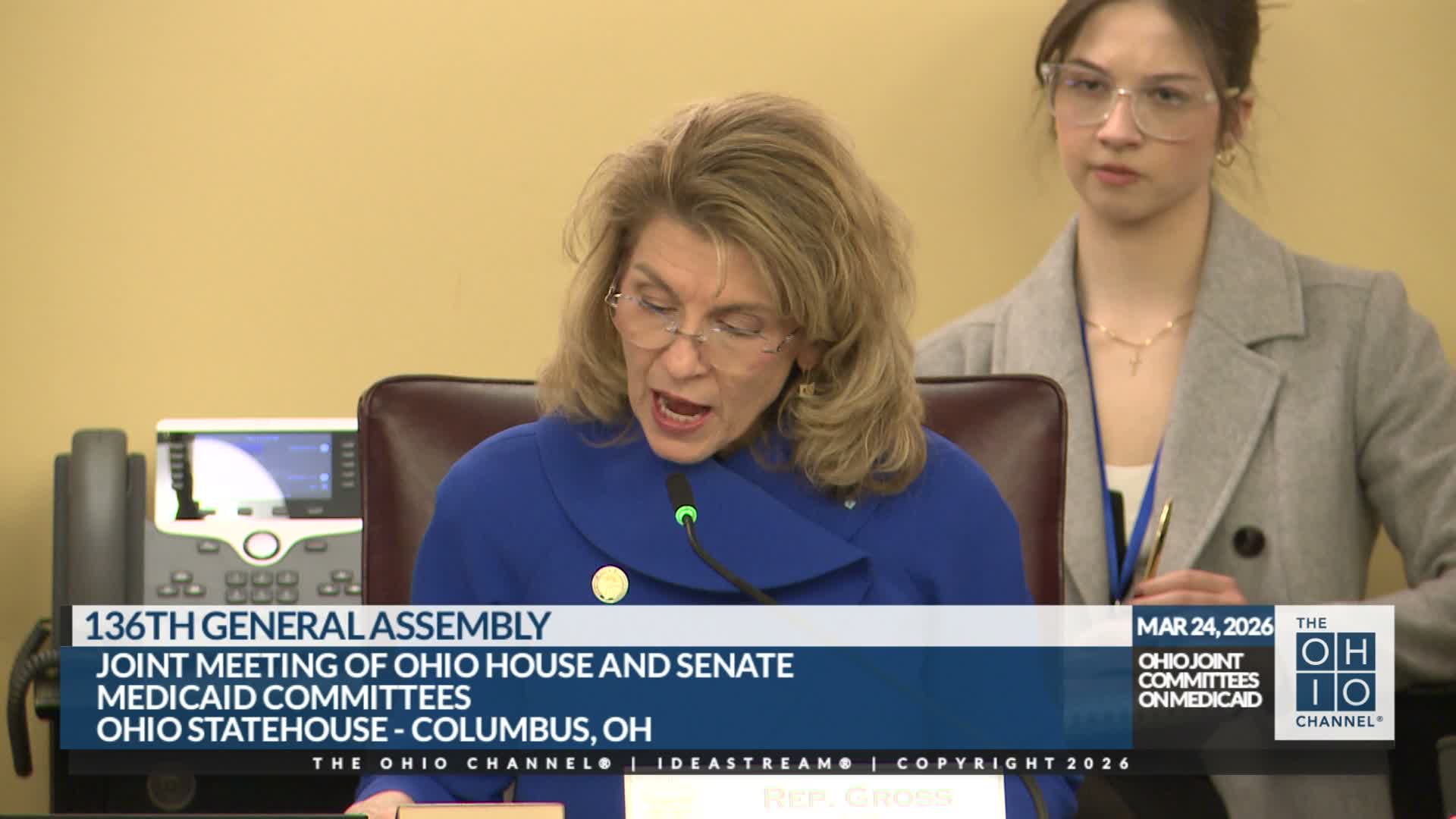
Summary
At a joint meeting of the House and Senate Medicaid committees, Ohio Medicaid Director Scott Partika, Attorney General Yost and Auditor Faber described new data‑driven work to detect fraud and urged legislative changes including restored EVV GPS, expanded prior authorization and subpoena authority for investigations.
The joint House and Senate Medicaid committees heard presentations from Ohio Department of Medicaid Director Scott Partika, Attorney General Yost and Auditor Faber on efforts to detect and prevent fraud, waste and abuse in the state’s Medicaid program.
Scott Partika told lawmakers the department is building program integrity into day‑to‑day operations, using a mix of audits, provider enrollment controls and data analytics. He said federal data sharing helped the department identify “about 6,000” people without verifiable claims history and that those records were moved from managed care to fee‑for‑service while the department seeks documentation. "We removed them from managed care and put them on fee for service to monitor while they received the notice to provide the additional information," Partika said.
Why it matters: committee members pressed for details on how the state will prevent improper payments while keeping care accessible. Partika described new operational controls — an electronic visit verification rollout, a fraud referral clearinghouse and provider risk‑assessment work with private vendors — as tools to reduce improper payments without overly burdening providers.
Attorney General Yost described how his office’s Medicaid Fraud Control Unit (MFCU) has combined traditional fieldwork with new data‑mining to generate leads. "For the first time, Ohio is not merely responding to reports of Medicaid fraud or suspected fraud, but we are actively using, data mining tools within the Medicaid database to look for irregular patterns," he said, adding that AI only generates leads that human investigators must vet. Yost said indictments announced in March — charges against 10 individuals for more than $578,000 in alleged theft — grew from that data work.
Yost urged lawmakers to strengthen criminal and investigatory tools, arguing statutory penalties for Medicaid fraud should match other theft offenses and advocating a restored GPS requirement in the EVV system. "Medical Medicaid fraud shouldn't be treated as less serious than any other theft," he told the committee, saying current law caps certain Medicaid fraud at a third‑degree felony.
Auditor Faber and his audit team told the committee the state’s audits continue to surface repeat errors in eligibility and provider payments, and that enhanced data access has helped identify anomalies. The auditor said the department’s cooperation has improved and that auditors will pursue follow‑up work where data points to unusual trends.
The committee asked how agencies coordinate referrals and investigations. Jeff Corzine, chief of program integrity at Medicaid, said the Fraud Referral Clearinghouse receives hundreds of referrals and that a weekly multi‑disciplinary review vets allegations; he said the Bureau of Program Integrity has about 85 full‑time staff in units that perform analytics and investigations.
No formal votes were taken. Committee members and agency leaders discussed potential statutory changes and agreed to continue oversight, with auditors and investigators promising additional reports and follow‑up analyses.
The joint committee adjourned without taking actions on legislation.
Sources and next steps: Director Partika, Attorney General Yost and Auditor Faber testified and took questions from committee members; the auditor and the department said further audits and data reconciliations are under way and that the legislature may be asked to consider statutory changes raised by Yost.