Get Full Government Meeting Transcripts, Videos, & Alerts Forever!
Get email alerts on the Special Education Safety topic
No spam. Unsubscribe anytime.
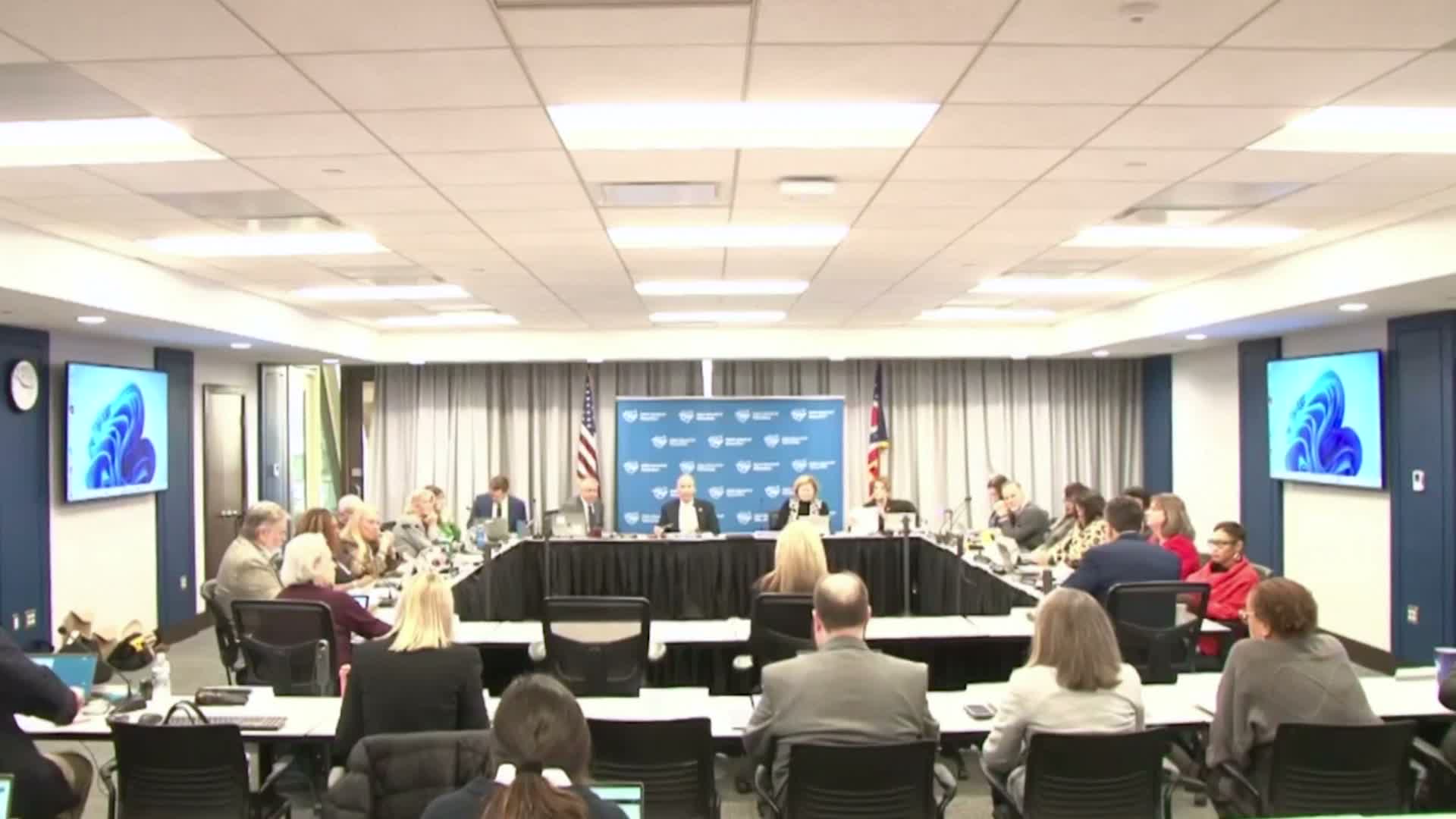
Parent tells State Board of Education her autistic daughter was harmed at school; board outlines referral options
Summary
A mother testified that her 4‑year‑old autistic daughter was injured and that Washington Local School District failed to investigate or share evidence. Board staff explained the board's jurisdiction over licensed educators, advised federal civil‑rights referrals for ADA concerns, and said professional‑conduct staff will follow up.
Laura Simpson, who the chair introduced as attending from Southern Ohio, told the State Board of Education on January 2026 that her 4‑year‑old autistic daughter suffered repeated injuries at school and that the district failed to investigate or properly notify her family.
“My daughter is currently at risk for suicide while attending her school district,” Simpson said. She described bruising, a handprint‑like mark, and a mouth injury that she said left dry blood on her child’s lips and required medical attention. Simpson said videos and documents were deleted or withheld, the district changed staff accounts, and individuals she had named were later involved in her child’s individualized education program, which she described as retaliation for raising concerns.
Simpson said she filed ADA complaints that were ignored, that required complaint forms were not part of district policy, and that when the state conducted an investigation it “was unable to determine” accountability. She said a school psychologist’s October 21 report identified suicide risk at school; she said she was not informed and supports for her daughter were not adjusted.
Board counsel and staff asked Simpson to use established complaint channels and warned that circulating evidence outside the normal process could affect quasi‑judicial proceedings. “All licensed educators, complaints against licensed educators, that’s our jurisdiction,” an attorney advising the board said, adding that the State Board can process professional‑conduct referrals for individual educators.
Officials also pointed Simpson to other remedies: the Department of Education and Workforce’s Office of Exceptional Children can handle state‑level special‑education disputes, and ADA or other federal civil‑rights grievances can be filed with the U.S. Department of Education Office for Civil Rights. One board member recommended Disability Rights Ohio as a resource for families.
Simpson and several board members also described practical obstacles families face: she said many attorneys will not take special‑education cases, that due‑process hearings can be lengthy and costly for families, and that she had pulled her daughter from school because of safety concerns and was facing potential truancy consequences.
Board members expressed sympathy and said staff would follow up. The board’s legal adviser cautioned that staff should not circulate unvetted evidence that could jeopardize later proceedings; at the same time members said they would try to connect Simpson with grievance and advocacy resources. Simpson asked the board to review materials she circulated and to help facilitate an investigation or accountability process.
The board did not announce any immediate disciplinary action during the meeting; officials advised Simpson on complaint pathways and said professional‑conduct staff would reach out to discuss whether a licensing referral was warranted.