Get Full Government Meeting Transcripts, Videos, & Alerts Forever!
Get email alerts on the Educator Licensure Dual Pk5 topic
No spam. Unsubscribe anytime.
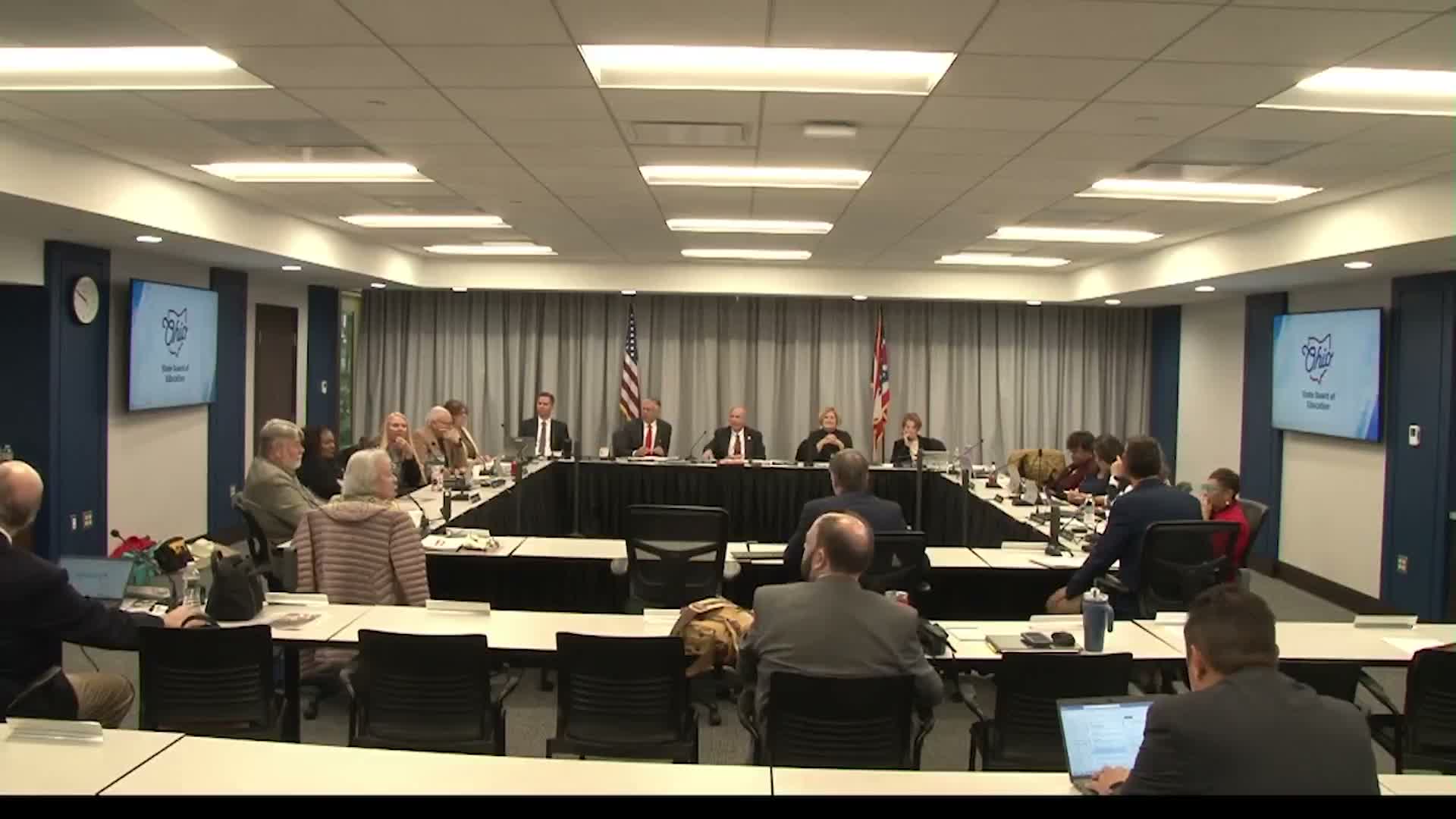
State Board debates PK–5 dual special‑education license to expand teacher pipeline
Summary
Board members heard a presentation on a proposed rule to create a PK–5 dual license (general education plus special education) and to allow licenseing to cover mild, moderate or moderate‑intensive special‑education levels; no vote was taken and staff said language will be clarified before a December vote.
The State Board of Education spent much of its November meeting discussing a proposed change to educator licensure that would create a new PK–5 dual license combining general‑education and special‑education credentials and permit candidates to seek mild, moderate or moderate‑intensive special‑education endorsements.
Superintendent Kraft introduced the proposal as an attempt to expand the pipeline of special‑education teachers. He told members that under statute a “dual license” must be issued simultaneously by an educator preparation program, and that the department and higher‑education partners requested the new pathway to make dual licensure more feasible for undergraduates.
Dr. Whiteman said the current PK–8 dual route contains too much subject‑matter content to pair easily with special‑education coursework in a four‑year program and that moving to PK–5 should make a dual pathway “more doable” for many candidates. “It is a choice that these college students will make whether they wanna pursue a dual license,” Dr. Whiteman said, adding that student‑teaching placements would be used to differentiate preparation across levels.
Several board members raised concerns about program quality and district assignments. Member Benninger, a former special‑education teacher, said she was worried that broadening the dual license to include moderate‑intensive students could leave graduates underprepared: “My fear is it will turn more away from special ed than bring them to special ed because I cannot imagine any kind of program… that could cover the breadth of all the subjects and now all that one would need to know for especially moderate intensive,” she said.
Member Reardon asked whether districts could end up assigning teachers to intensive settings against their preferences; presenters replied the pathway is designed as an opt‑in choice for candidates and that the department will clearly state the options on program materials. Superintendent Kraft and staff told members they would work with legal counsel and higher‑education partners to refine the rule language and make public guidance plain and distinct from the technical rule text.
Board members requested additional data before a vote, including counts of students receiving special‑education services by grade band and historical numbers of dual licenses issued by the department. Dr. Whiteman and department staff said those data are not on hand but can be pulled and delivered to members before the board’s December meeting. The board did not vote on the rule; staff said the item will return in December with clarified language and additional information.
The discussion ended for a scheduled recess to the auditorium for Teacher of the Year activities; the board agreed to resume the licensure conversation after the event.