Get Full Government Meeting Transcripts, Videos, & Alerts Forever!
Get email alerts on the Resident Educator Program topic
No spam. Unsubscribe anytime.
State education staff outline changes to Resident Educator program after RESA removal
Summary
Associate Director Jim Whiteman said the recent budget eliminated the Resident Educator Summative Assessment (RESA), freeing year‑2 time for mentoring; state surveys show mentoring, classroom management and student behavior are top needs.
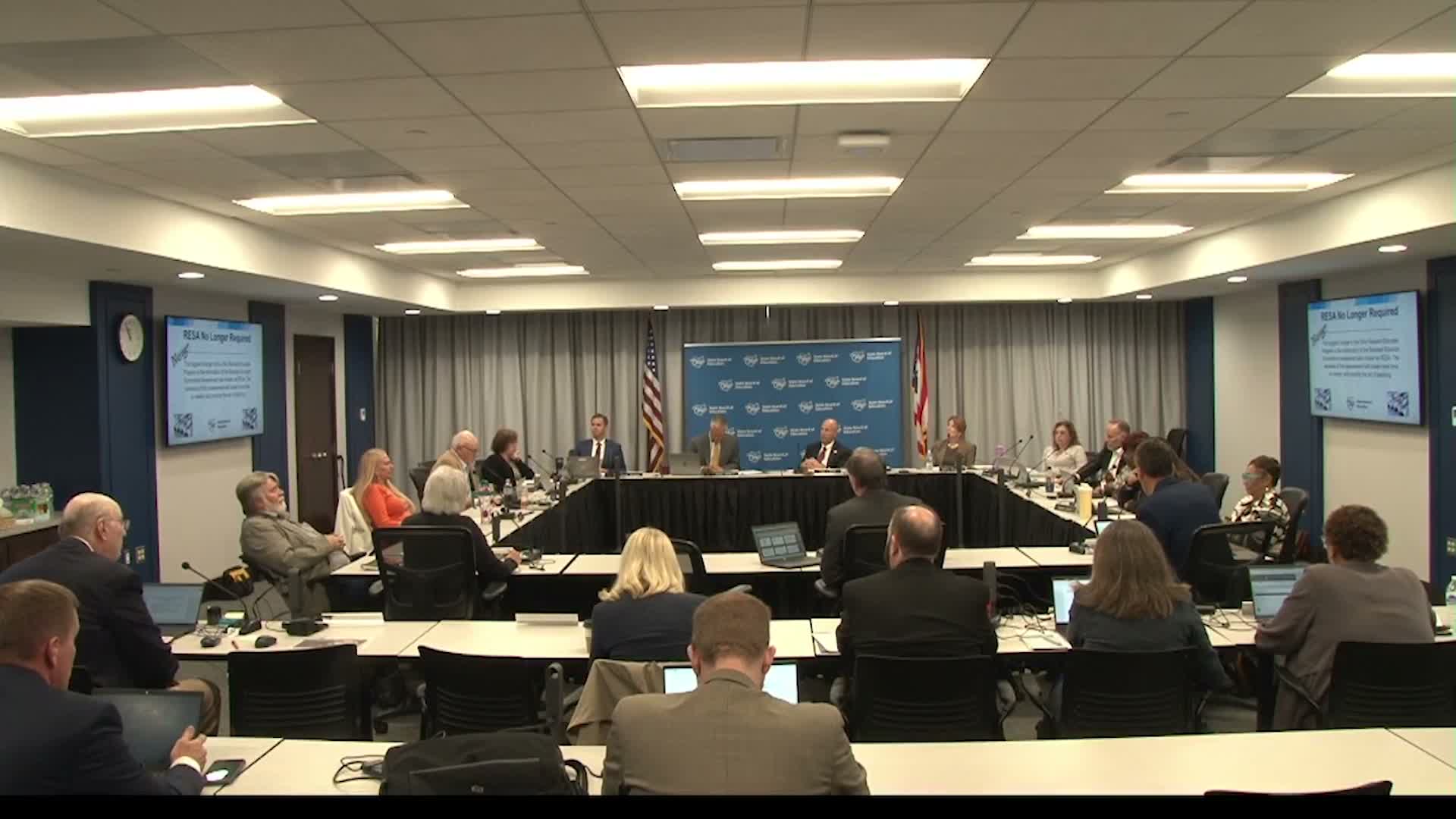
Dr. Jim Whiteman, the State Department associate director overseeing the Resident Educator (RE) program, told the State Board the budget bill removed the Resident Educator Summative Assessment (RESA), and the agency is rethinking Year 2 of the program to prioritize mentoring and practical supports.
"This will allow more time for districts to work with their resident educators during the first two years of their employment on mentoring kinds of things," Whiteman said, noting the agency and trainers would use the additional time to create implementation guidance and training supports for mentors.
Whiteman said the RE team supports roughly 5,000 resident educators statewide, with about 1,200 in the program’s first two years last year. The agency surveyed mentors and resident educators last spring and received more than 1,800 mentor responses and more than 1,200 resident-educator responses; the top three needs reported were classroom management, time management and student behavior.
Board members asked whether mentors are paid, how turnover is tracked and how districts demonstrate successful completion of the RE program. Whiteman said mentor compensation is a local decision—some districts provide stipends or release time while others do not—and the state provides a toolkit, LMS courses and trainer supports but has no enforcement authority.
On program completion, Whiteman said local districts determine whether a resident educator has met local program requirements; the state requires a minimum of 120 school days in the RE program as part of licensure progression.
Whiteman said the agency will convene state trainers to plan a "mentor recharge" initiative and create new LMS resources aimed at mentoring, classroom management and retention of entry‑year teachers. The board asked members to share comments; the RE team said substantive changes would be taken back to the Educator Standards Board as needed.