Get Full Government Meeting Transcripts, Videos, & Alerts Forever!
Get email alerts on the Professional Learning Standards topic
No spam. Unsubscribe anytime.
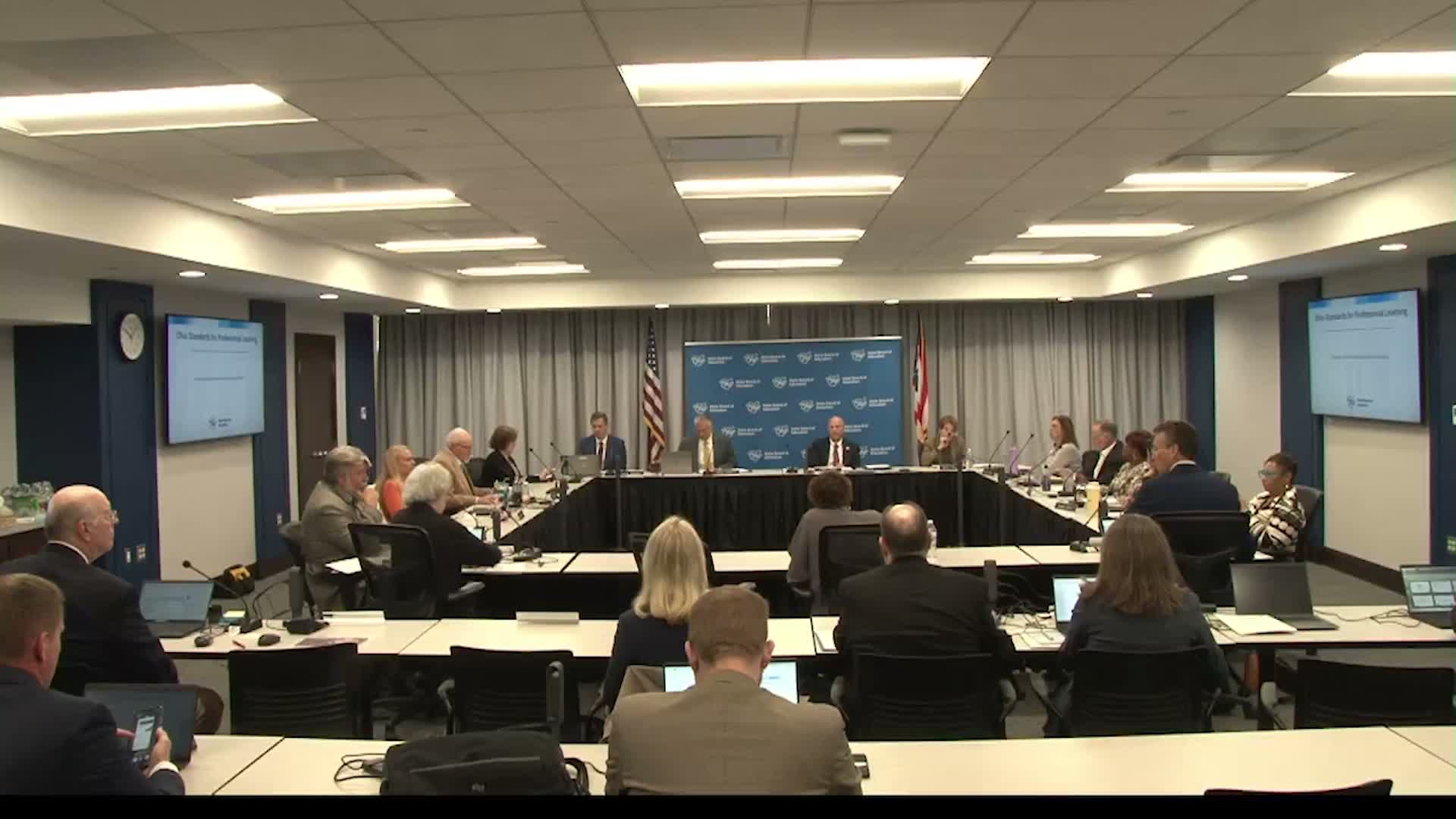
State board reviews proposed Ohio professional learning standards, asks about teacher time and funding
Summary
The State Board of Education heard a presentation on proposed revisions to Ohio's professional learning standards—including renaming and adding two standards—and members pressed officials on use of data, district flexibility and potential teacher workload impacts.
Director Harper, the educator-standards liaison, presented a set of recommended changes that would rename Ohio’s guidance from "professional development" to "professional learning," expand the structure from seven to nine standards and add standards on learning design and implementation.
"These standards are meant to guide professional learning decisions at all levels of K‑12," Harper told the board, saying the educator standards board used Learning Forward’s national framework as a reference and recommended a focus on team-based, evidence-based and sustained approaches rather than one‑off training.
The presentation stressed alignment with national research while keeping a local focus and emphasized the standards are guidance for districts, local professional development committees (LPDCs) and teacher-evaluation systems.
Board members asked how the standards will affect day‑to‑day teacher workload and district budgets. "My concern is for school districts to... give their teachers either less students or more time to work with this data because it's just a lot of stress on teachers," Member Lloyd said, warning the board should avoid creating expectations that increase burnout.
Harper and Superintendent Kraft both said the standards are advisory rather than regulatory. Harper told members the standards are "guidance documents" districts can use to judge professional-learning quality; local districts and LPDCs retain discretion over how to implement them and how to resource associated activities.
Members also pushed for clearer crosswalks to Ohio’s teacher-evaluation system and asked whether the standards should explicitly call out supports for rural and small-district teachers, fine-arts teachers and teachers of students with complex needs. Member Reardon said she was "impressed with the changes" but urged the board to ensure the guidance is practical for smaller districts and for specialists who lack grade‑level colleagues.
The board did not vote on the standards at this meeting. Harper asked members to submit written suggestions over the next month; staff said minor wording tweaks could be made administratively while substantive changes may be sent back to the Educator Standards Board for further review.