Get Full Government Meeting Transcripts, Videos, & Alerts Forever!
Get email alerts on the Educator Licensure topic
No spam. Unsubscribe anytime.
Superintendent reports spike in educator referrals and expanded RATBACK coverage; proposes streamlined review for low-tier credentials
Summary
Superintendent Kraft told the State Board of Education that referrals to the board’s licensure review rose to about 22,600 in the most recent year and that RATBACK enrollment has expanded to about 460,000, prompting discussion of streamlined due process for lower-tier permits.
Superintendent of Public Instruction Kraft presented the State Board with a detailed licensure and conduct update, saying the agency managed roughly 487,000 credentials across about 370,000 educators and saw referrals rise to approximately 22,600 last year compared with about 13,000 in 2019.
Kraft said the board now enrolls about 460,000 people in RATBACK, the state fingerprint-based reporting system, after expanding coverage to nonlicensed support staff such as custodians, secretaries and lunchroom personnel. “By the numbers, we managed 487,000 credentials for 370,000 educators,” Kraft said. He added the RATBACK expansion will let the agency catch state-level hits between national background checks and help districts spot potential issues earlier.
Why it matters: The increase in referrals reflected both broader coverage and growth within certain credential categories. Kraft told the board that substitutes and educational aids have seen steep percentage increases in referrals because the pool of people holding those credentials has expanded. He cautioned that most referrals do not result in formal board discipline, but that they add to staff workload.
Details and possible policy change: Kraft said teachers accounted for the largest raw number of referrals (about 6,227), while substitutes showed about a 97% increase in referrals over the 2019 baseline. He described sources of referrals in order of volume: background checks, RATBACK hits, district-mandated reports and citizen reports, and noted that citizen referrals are particularly time-consuming to investigate because anonymity generally prevents formal inquiries.
On the board’s process, licensure staff Kelly explained that referrals enter a case-management system and will flag applicants internally; when the agency issues hearing notices, the matter becomes publicly visible and employers may request referral histories under the law. Kraft and staff repeatedly differentiated employment decisions (made by districts) from licensure actions (handled by the board) and cited Ohio Revised Code 3319.313 as requiring certain district referrals (for convictions, guilty pleas and similar employment-related actions).
Kraft suggested one next step: exploring a curtailed administrative-review pathway for “lower-tier” credentials — such as one-time non-tax certificates, substitute permits and coaching permits — so the agency can reserve full quasi-judicial hearings for cases that raise more serious, property-right-like licensure consequences. “We treat a license like a property right,” he said, “but for lower-tier credentials, a curtailed administrative review may make sense.” Kraft said staff will bring more detail and a fuller annual report in September.
What’s next: The superintendent pledged to return in September with more granular data, including the number of referrals that become formal cases and the dispositions for cases that do reach board-level action. He also said the agency will continue outreach to preservice educators and district leaders to emphasize prevention and early screening.
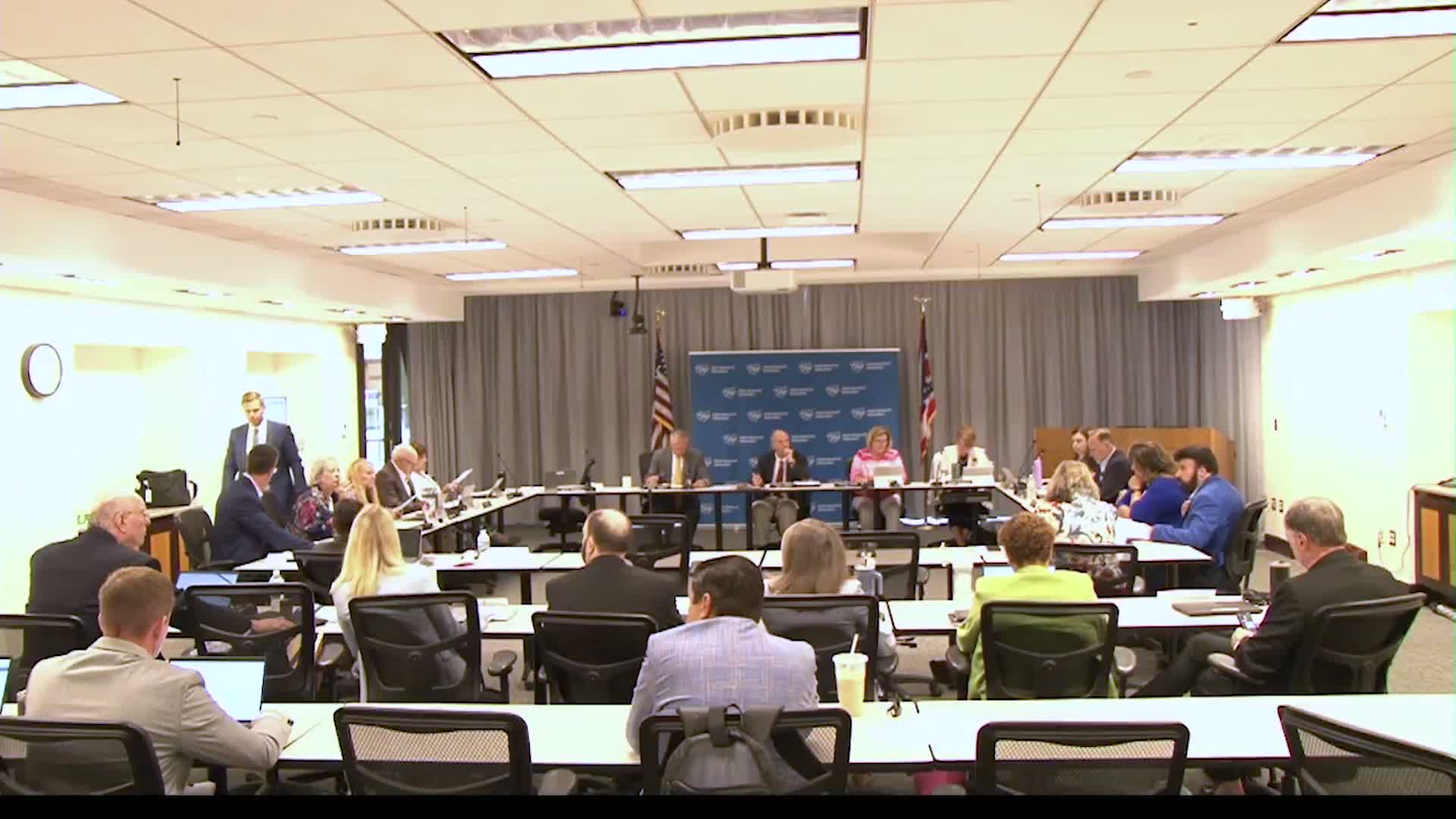
Attribution: Superintendent Kraft and licensure staff Kelly presented the slides and took questions from board members. Questions about FBI vs. RATBACK coverage and reporting obligations were raised by multiple board members during the discussion.
Ending: The board did not take formal action on policy changes at this meeting; members asked staff to prepare additional detail for the September meeting.