
House Appropriations Committee adopts Maryland budget, approves BRFA; restores DDA funding and adds childcare slots
Get AI-powered insights, summaries, and transcripts
Sign Up Free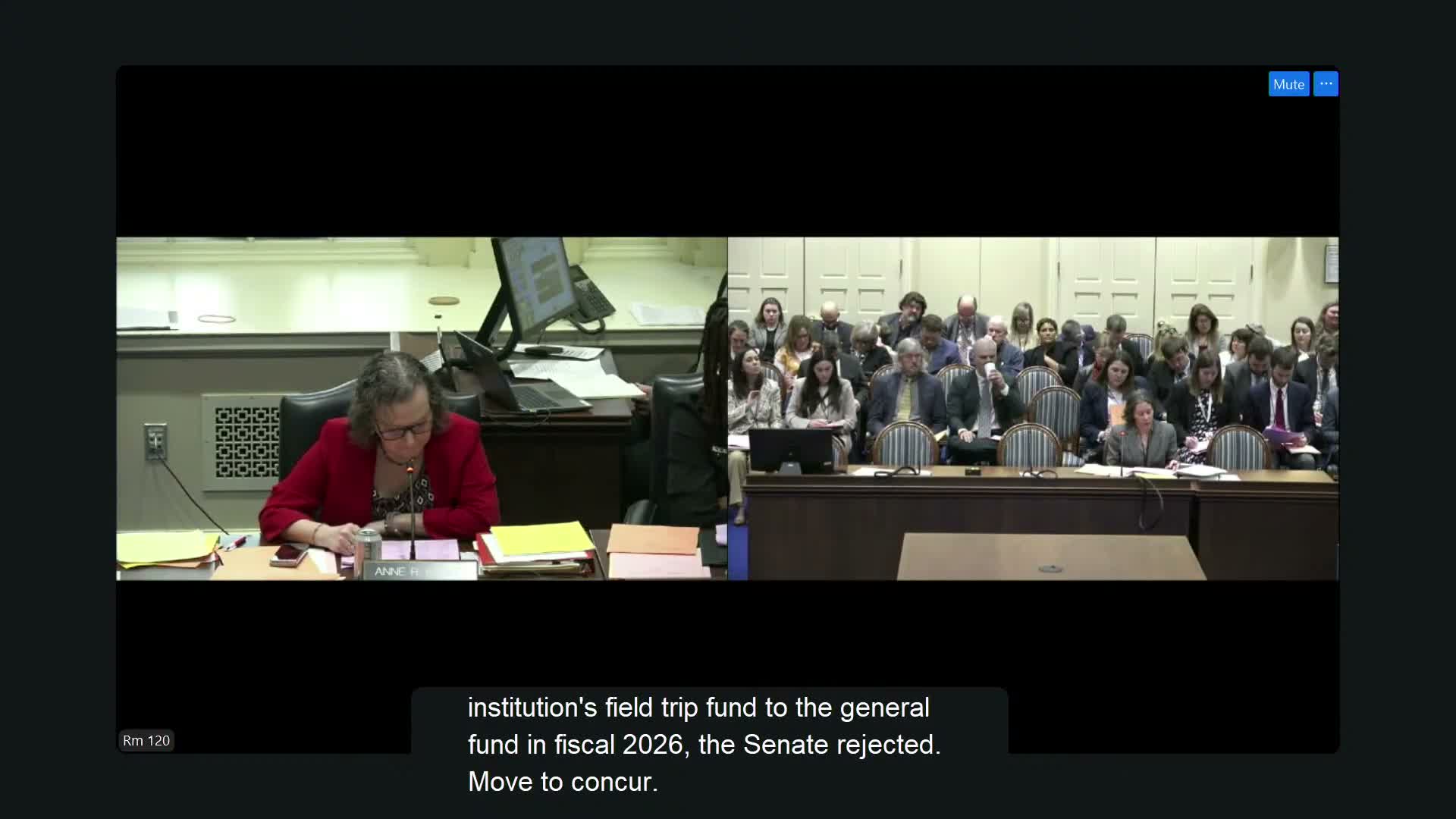
Summary
The House Appropriations Committee voted to approve the state budget and the Budget Reconciliation and Financing Act after considering a series of subcommittee reports that restored money for developmental disability services, added about 3,700 childcare scholarship slots and left an estimated surplus of roughly $250 million; the committee adopted many Senate-concurred narrative and funding changes and moved the measures to the floor.
Chair opened the committee and moved adoption of the state budget and the Budget Reconciliation and Financing Act (BRFA), which the committee approved after a series of subcommittee reports and roll-call votes.
The meeting began with subcommittee presentations on education and economic development, health and human services, public safety, transportation and capital spending. A staff presenter, Jacob Cash, walked members through the full-committee decision packet and the committee proceeded largely by unanimous “move to concur” actions on DLS recommendations and Senate modifications unless a member objected.
Subcommittee deliberations produced several notable restorations and restrictions that carried into the full budget. Members flagged an approximately $23 million addition for the Developmental Disabilities Administration (DDA) in the shared house–senate ad packet and a childcare ad that, combined with other actions, will add about 3,700 childcare scholarship slots.
“We have a budget of the state of Maryland,” the chair said when moving the measure to the vote, and later thanked staff and members after passage.
The committee also discussed the need for cost-containment tied to Medicaid matching rules for DDA services. The chair and the HSS subcommittee chair said they worked with advocates and the administration to identify measures intended to preserve federal Medicaid matching dollars while maintaining services; the committee allocated supplemental funding of about $2.5 million to support an independent review of DDA operations and cost-efficiency.
The budget vote was taken by roll call and the committee approved the budget as presented, sending it to the floor. The committee then moved to consider the BRFA, debated numerous reconciliation items (including transfers, fund-sweeps and program-specific mandate changes), and adopted the BRFA in committee by roll call.
Committee leadership described an estimated surplus in the passed budget of roughly $250 million and stressed that the BRFA is the final step in balancing the package before it moves to the chamber floor. The chair closed by thanking committee staff and adjourned the meeting.
What happens next: The committee’s package — the budget and BRFA adopted in committee — will proceed to the House floor for further consideration and final action.