
Delegate from Baltimore County’s 'Secure the Vote' amendment fails after floor debate
Get AI-powered insights, summaries, and transcripts
Sign Up Free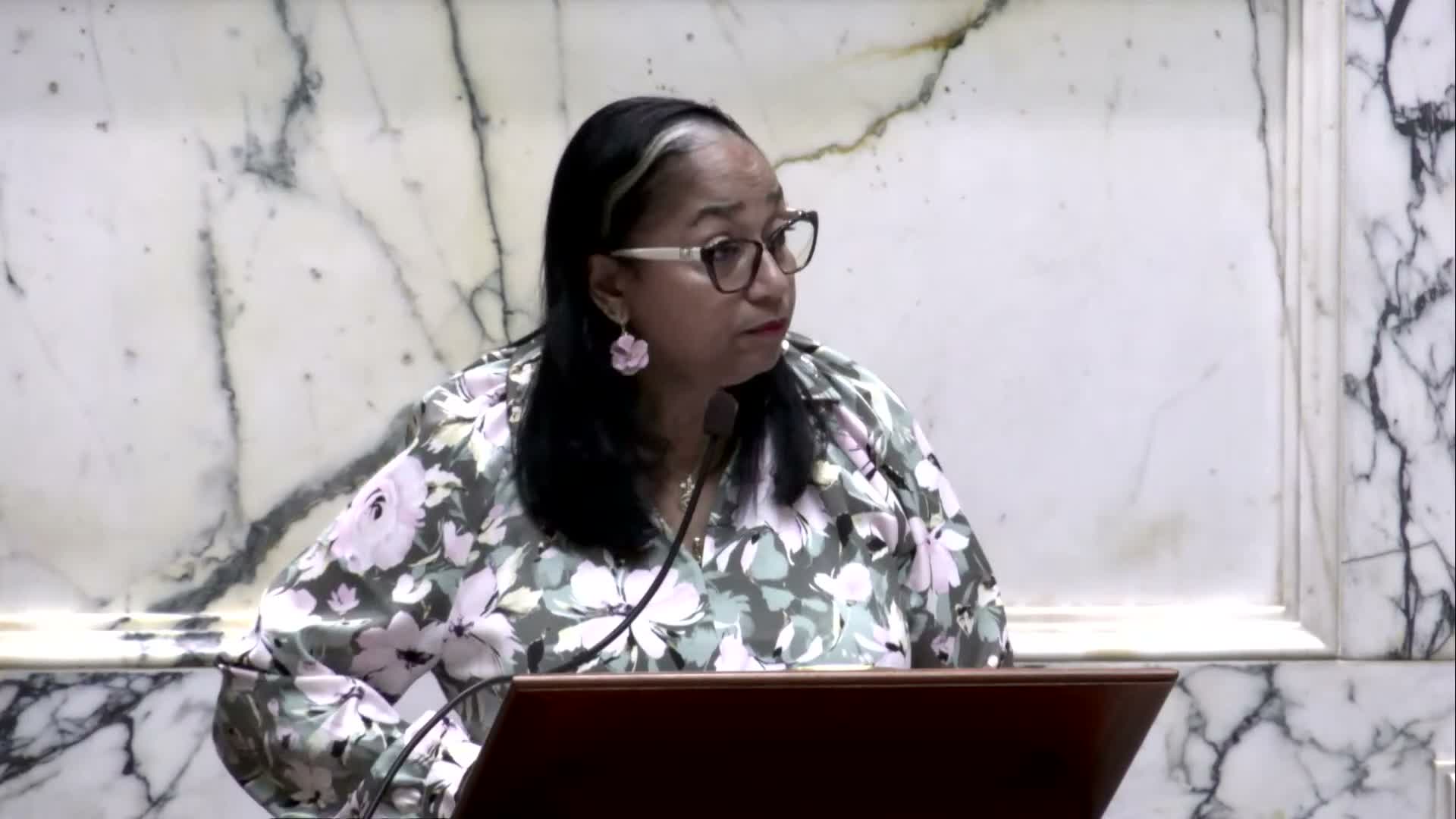
Summary
On March 3, the Maryland House rejected Amendment 743324 to House Bill 115 — a package of voter‑integrity changes that included proof‑of‑citizenship, in‑person voter ID, elimination of ballot drop boxes and pre‑election roll checks. Supporters said it would tighten registration; opponents said it would curtail absentee voting and was inappropriate as a floor amendment.
An amendment that would have required proof‑of‑citizenship at registration, voter identification at the polls and the elimination of ballot drop boxes failed on the House floor on March 3. The proposal — offered as Amendment 743324 to House Bill 115 by the delegate from Baltimore County (speaker 26) and labeled by its author as the Secure the Vote Act — drew a lengthy floor debate and was defeated by roll call.
The maker described the measure as a set of election‑integrity fixes, saying the amendment “implements proof of citizenship at the time of voter registration,” requires voter ID and “eliminates ballot drop boxes,” and adds signature verification for absentee ballots. He framed the proposal as addressing what he called “holes in our registration” that leave inaccurate names on rolls.
Floor Leader (speaker 27) and other opponents said the amendment would upend long‑standing voting procedures. The floor leader argued the amendment would “repeal ballot drop boxes” and “repeal no‑excuse absentee voting,” adding that requiring citizenship proof and voter ID at every polling place would be “massive upendings” of current practice and that such a substantial change should not be sprung as a floor amendment. He urged the chamber to reject it.
Supporters and opponents traded examples and factual claims during the debate. The amendment’s sponsor pointed to the case of Ian Roberts, asserting errors in the voter rolls and arguing for tighter checks. Opponents countered that the individual cited had never been shown to have voted and that removal from the rolls requires due process and, in his case, federal review.
After a roll‑call, the amendment failed; the clerk announced that there were 97 votes in the negative and the amendment did not pass. The underlying House Bill 115 was auto‑printed for third reading after the House disposed of the amendment.
Why it matters: The amendment would have made sweeping changes to how Maryland manages registration and voting mechanics — from restricted absentee access to on‑the‑spot identification requirements at polling places — changes that supporters said would tighten integrity and critics said would reduce access and should not be considered on the floor without fuller committee consideration.
What's next: The amendment failed on the floor. House Bill 115 remains on the calendar (auto‑printed for third reading) and could be the subject of further committee consideration or future floor amendments.