
House sets limits on PFAS in sewage sludge but delegates debate liability and stringency
Get AI-powered insights, summaries, and transcripts
Sign Up Free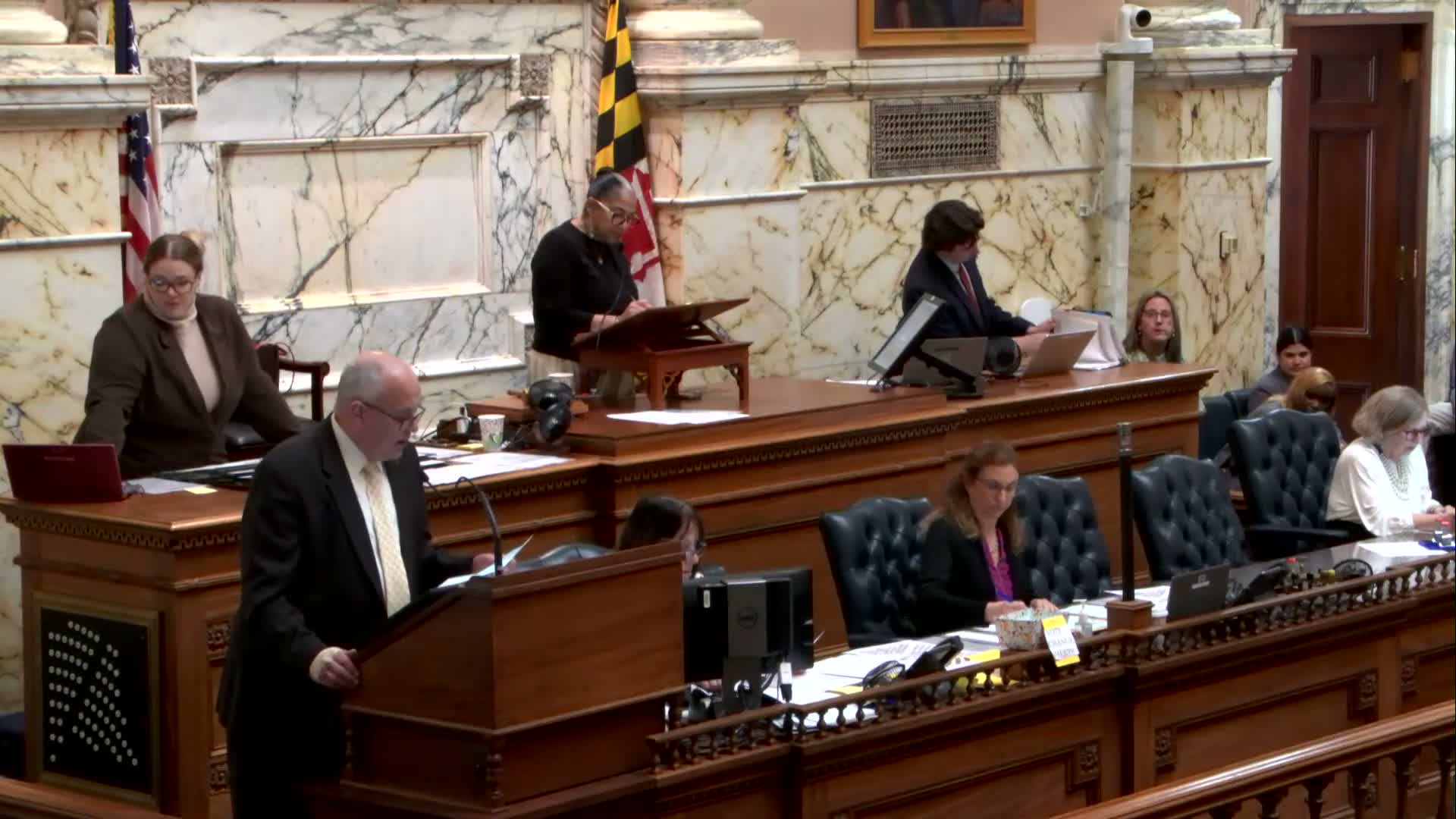
Summary
The House approved a bill setting upper PFAS concentration limits for sewage sludge used as fertilizer, with proponents saying it creates regulatory limits and MDE monitoring and opponents arguing the limits are higher than federal guidance and lack explicit industry liability; passed 130–7.
The House on March 11 passed legislation that sets upper concentration limits for poly‑ and per‑fluoroalkyl substances (PFAS) in sewage sludge that is applied to agricultural land. Supporters said the bill establishes regulatory standards where none currently exist and requires monitoring by the Maryland Department of the Environment; opponents criticized the bill for setting limits higher than some federal thresholds and for not creating explicit liability for industry partners that apply contaminated sludge.
A delegate who explained a red vote said most Maryland systems are below the bill’s limits but those limits are "25 times or more higher than the limits set federally," and argued the bill fails to create liability for industry actors. He said farmers could be left to shoulder liabilities and that monitoring practices do not fully capture how PFAS move from wastewater to farms and food.
The floor leader and the bill’s sponsor defended the measure, saying without the bill there would be no concentration limits and no regulatory responsibility for wastewater treatment plants to reduce PFAS. He said the Maryland Department of the Environment will monitor compliance with plans required under the bill and that civil suits remain an option for harmed individuals.
The roll call recorded 130 yeas and 7 nays; the bill was declared passed.
Why it matters: PFAS are persistent chemicals associated with health concerns. The bill establishes state regulatory limits and monitoring steps but leaves open questions about compensation and liability for harm, which several delegates said should be addressed in future follow‑up work.
What’s next: Implementation and any additional liability standards or lower limits would require subsequent legislative action or administrative rule‑making.