
House passes wide slate of bills on Crossover day; dozens approved in late session
Get AI-powered insights, summaries, and transcripts
Sign Up Free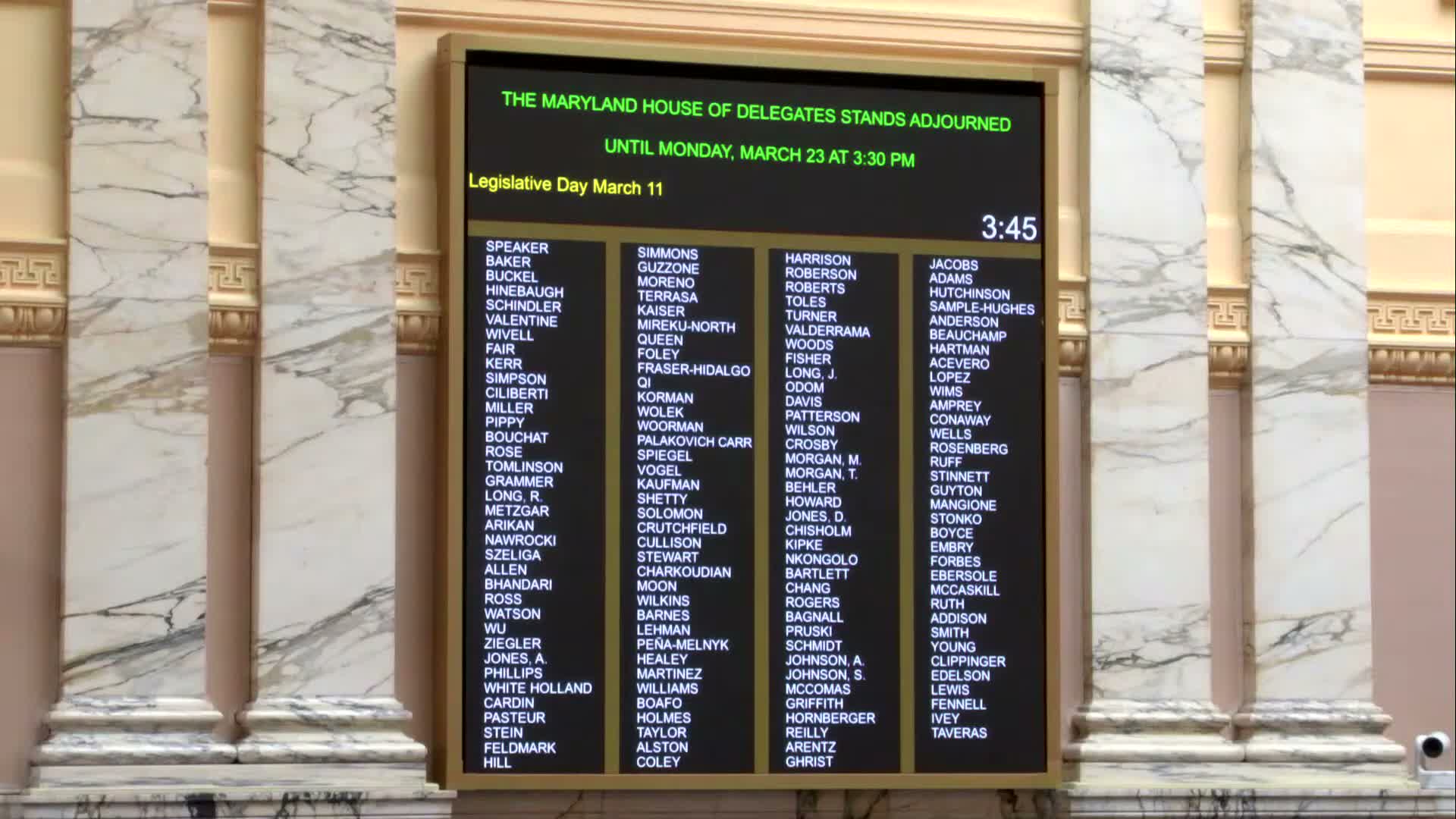
Summary
The House moved a large third‑reading calendar on March 11, approving a wide range of bills by roll calls and voice votes, from public‑health measures and county licensing changes to consumer protections and studies; several bills drew extended floor debate and are noted below.
The House convened March 11 for a long floor session and advanced a large third‑reading calendar, approving dozens of bills on the consent and third‑reading calendars.
Most items were dispatched with brief floor explanation followed by roll call. Bills passed included measures on mail theft, student device policies, county licenses and permit changes, expanded authority for health and pharmacy services, and studies on climate change and emergency management. Where delegates requested explanation, floor leaders and committee chairs described amendments and implementation details before the votes.
Why it matters: Crossover day calendars typically move many bills between chambers and set the legislative trajectory for the rest of session. Several bills approved on March 11 will now go to the other chamber for consideration, while a handful that drew substantive debate will remain focal points for oversight or follow‑up work.
Key votes at a glance (as recorded on the floor): • House Bill 159 (mail theft) — passed, 130 yeas, 0 nays. • House Bill 4‑12 (child support, suspension of driver’s licenses) — passed, 130 yeas, 0 nays. • House Bill 5‑82 (Prince George’s County alcoholic beverages / voter registration language) — passed, 119 yeas, 12 nays. • House Bill 12‑18 (Safe and Healthy Homes for All Act) — passed, 99 yeas, 36 nays (see separate article). • House Bill 9‑25 (PFAS/sewage sludge limits) — passed, 130 yeas, 7 nays (see separate article). • House Bill 10‑67 (phased ban on lead ammunition) — passed, 91 yeas, 42 nays (see separate article). • House Bill 3‑36 (district court commissioner summons/warrants — amended) — passed, 122 yeas, 13 nays (see separate article).
What delegates said: Most bills drew brief floor explanations from committee chairs or floor leaders. Several measures prompted questions about enforcement, fiscal notes and real‑world implementation; in those cases, committee chairs or agency representatives provided detail before the roll call.
Next steps: Passed bills move to the Senate for consideration; items with documented concerns on implementation or legal exposure—particularly those involving regulation or liability—are likely to be the subject of follow‑up work by committees or interagency coordination.
Ending: The House recessed until March 24, 2026, setting a legislative deadline and timing for continued consideration of outstanding business.