
Floor Q&A narrows scope of data‑privacy bill: cell‑phone location treated as geolocation; bill special‑ordered
Get AI-powered insights, summaries, and transcripts
Sign Up Free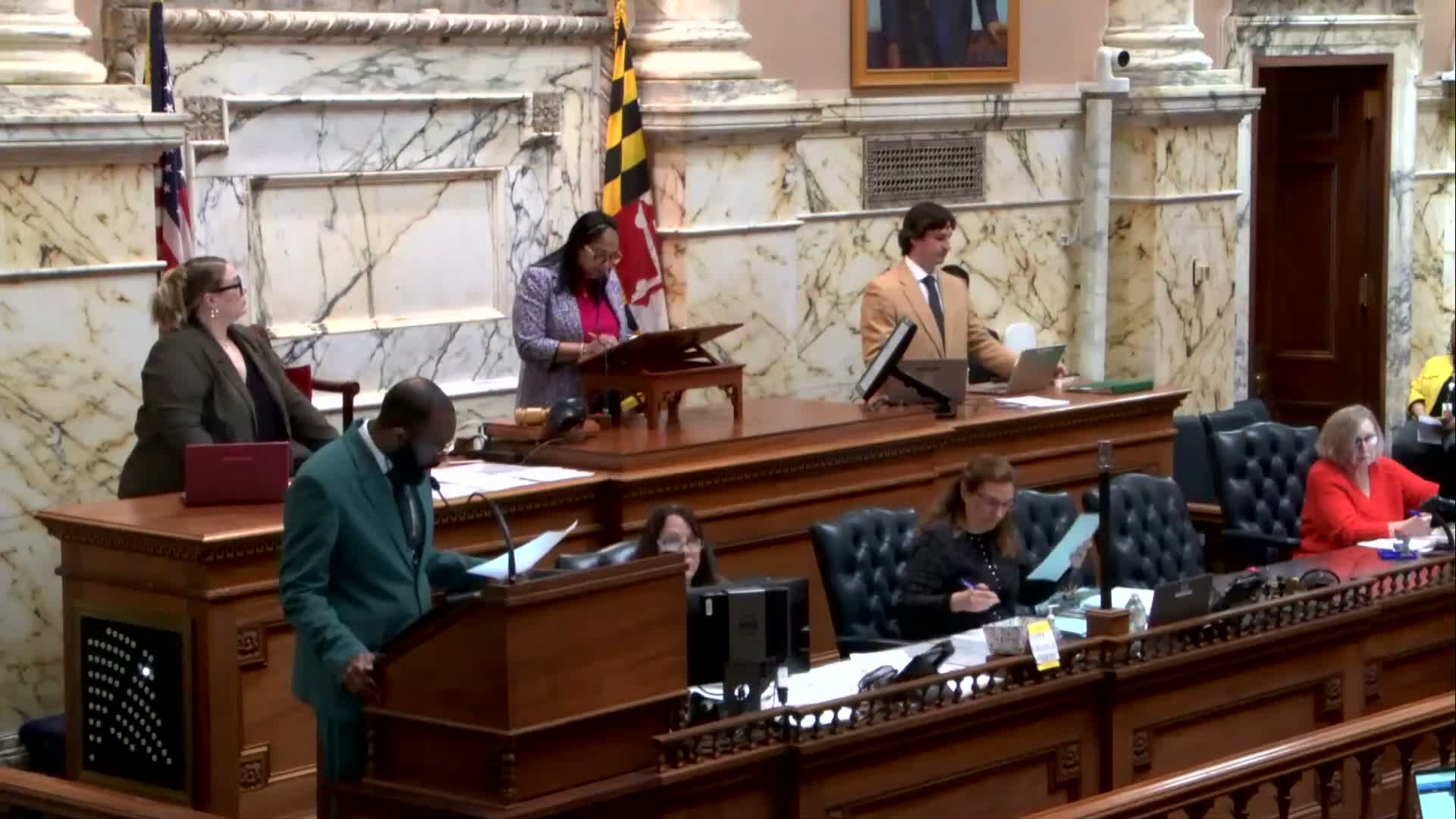
Summary
Delegates pressed the sponsor of House Bill 7‑11 on whether treating cell‑phone and vehicle location data as geolocation would limit venue security uses and intersect with pending court cases. The floor leader and sponsor said the bill preserves consent and adds protections; the House special‑ordered the bill to the appropriate time tomorrow for additional amendments.
The clerk read House Bill 7‑11, a consumer‑data and privacy measure that expands definitions of protected locational data to include cell‑phone and vehicle location points often sold by data brokers. Floor members asked whether the bill would hamper legitimate security uses by stadiums or intersect with pending legal issues about geofencing.
A delegate questioned whether stadiums that require tracking for security could be prevented from using locational data. The floor leader answered with context about Maryland’s prior privacy laws, noting “what this bill does as it relates to that is it puts those under geolocation data,” and emphasized that existing consent mechanisms remain in place: people can agree to tracking as a condition of entry.
Another delegate asked whether the pending U.S. Supreme Court case on geofencing affects the bill; the sponsor said it was not the lead driver of the legislation and agreed members could share case details for committee consideration. Members asked for time to review the text and possible amendments; the House voted to special‑order House Bill 7‑11 to the appropriate time tomorrow so additional changes can be considered.
Why it matters: The bill tightens protections around data points used to infer individuals’ locations and could affect data brokers, venue operators and public‑safety uses. Sponsors framed the measure as closing loopholes in earlier state privacy acts while preserving consent for uses that individuals agree to.
Next steps: House Bill 7‑11 was special‑ordered for the next calendar opportunity; members who raised concerns were invited to work with the committee on amendments.