Get Full Government Meeting Transcripts, Videos, & Alerts Forever!
Get email alerts on the Homelessness Policy topic
No spam. Unsubscribe anytime.
Jackson council adopts ordinance banning unauthorized transport and drop-off of unhoused people, effective immediately
Summary
The Jackson City Council passed Ordinance 19 prohibiting outside municipalities, jails or individuals from transporting and dropping off unhoused people in the city. Council debated penalties after members proposed higher fines but city attorneys said state law limits municipal fines to $1,000 and/or up to one year jail; the measure passed as amended 7-0 and will take immediate effect.
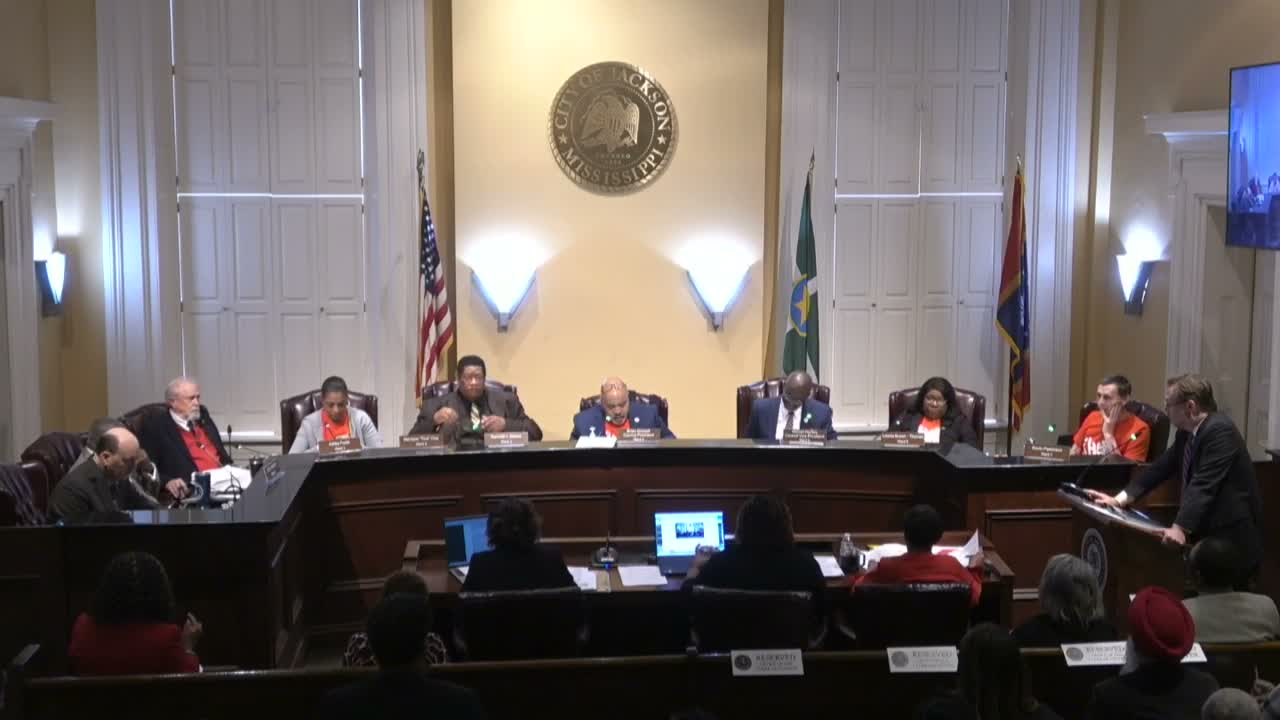
The Jackson City Council adopted Ordinance 19 on Feb. 10, 2026, prohibiting the unauthorized transport and drop-off of unhoused individuals into the city by outside municipalities, jails, mental/behavioral health providers or private parties.
Councilman Hartley, who introduced the ordinance, said the measure is intended to protect neighborhoods and ensure people brought into the city receive services and proper screening. Hartley said the city will also pursue publicity and accountability for entities that drop off unhoused people without supports.
Councilmember (speaker 10) proposed amending the ordinance to raise the civil fine in section 7 from $1,000 to $100,000. City Attorney Drew Martin responded that "state law limits municipal ordinances to penalties of 1000 dollars [and] a year in jail," and that higher civil penalties would require action by the state legislature. Martin added that the ordinance's restitution paragraph provides the city some additional flexibility to recover actual expenses.
After debate, councilmembers amended the penalty language to preserve the existing $1,000 fine and/or up to one year in jail and to retain restitution language that would allow the city to recover documented costs. The amended ordinance passed by voice vote, 7-0. Following the vote, councilmembers agreed the item should become effective immediately as a public-safety measure.
What happened next: the council asked the administration to monitor implementation and to coordinate with legal counsel on whether the city can pursue larger penalties at the state level. Several members also urged the administration to publicize violators as a separate deterrent.
A note on attribution: direct quotes and summaries in this report are drawn from council debate and City Attorney Drew Martin's explanation during the Feb. 10 meeting. The ordinance was moved, amended and approved on the record in open session.