Get Full Government Meeting Transcripts, Videos, & Alerts Forever!
Get email alerts on the Food Access Grocery Recruitment topic
No spam. Unsubscribe anytime.
Jackson hearing spotlights store closures and local plans to restore neighborhood grocery access
Summary
Residents, store managers and city officials told the Jackson City Council on Jan. 22 that neighborhood grocery and pharmacy closures are creating food-access and health-equity problems; panelists recommended site-ready properties, targeted incentives and smaller-format or cooperative models to attract and sustain grocers.
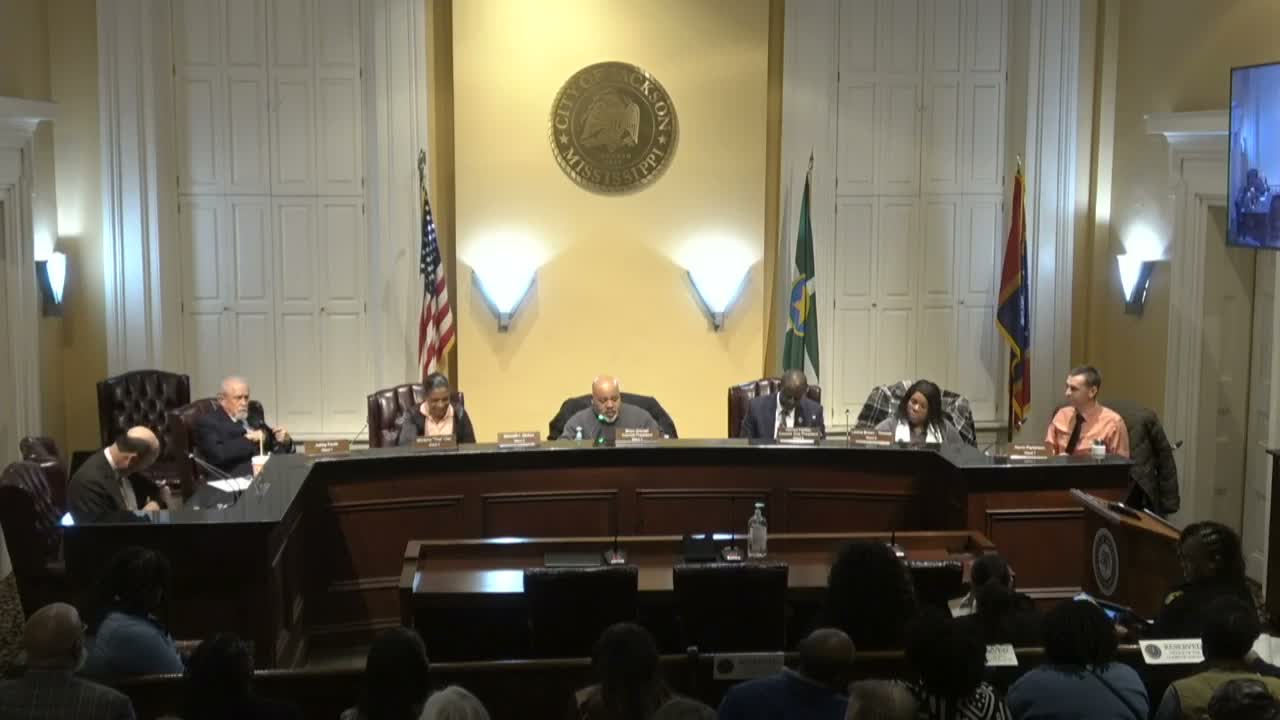
Jackson — Residents, grocery managers and economic-development officials told the Jackson City Council on Jan. 22 that the loss of neighborhood grocery stores and nearby pharmacies has left many Jackson neighborhoods without ready access to fresh food and essential services, and they urged city action to recruit and sustain new operations. Councilman Kevin Parkinson convened the special hearing, which combined personal testimony, an owners’ panel and presentations by city planning and redevelopment leaders.
Dr. Scott Crawford, a Fondren resident and disability-rights advocate, described how transportation barriers make nearby stores a necessity for people who cannot drive. "Without those, I would be unable to live independently," he told the council, saying he relies on J Tran and neighborhood grocery access to buy fresh produce that will last. Monica Candler Butler, director of community outreach for Midtown Partners, said the recent closure of Grocery Depot and nearby pharmacy locations has raised costs and travel burdens for seniors, people with disabilities and families without reliable transport. She warned the council to watch corporate ownership changes, noting the recent Walgreens acquisition by Sycamore Partners and saying such transitions "may mean" additional local closures.
Store managers and developers described operational and site barriers. Victor Ellis, manager of a Save A Lot in Jackson, said the Bailey Avenue store averages "around between 400 and 500,000 a month," operates roughly 7 a.m. to 9 p.m., and faces staffing needs and theft concerns that push up prices. Jason Brookins, a real-estate development consultant working to recruit grocers, said national chains often look for much larger customer traffic and more favorable rent structures; he noted that many modern, smaller-format grocers operate in the 7,000–15,000 square-foot range rather than the 40,000-plus footprints of older supermarkets.
Panelists recommended practical, locally adaptable incentives and site work. Christopher Pike of the Jackson Redevelopment Authority said prospective grocers asked for caps on per-square-foot rent and for subsidy ideas such as retaining a portion of sales tax or a graduated rent-assistance program funded by CDBG dollars to subsidize early operating costs. Angela Brown, the city’s Planning and Development Director, said the planning department is working to create "site-ready" properties, fast-track permitting for priority projects, and set up a business-retention office; she said the city is exploring targeted uses of CDBG funds for facade or startup grants.
Entrepreneurial and nonprofit models came up repeatedly. Jada Lee, working with Pharmacy Marketplace, described a smaller-footprint model that retrofits existing stores or gas stations and partners with regional farmers to supply fresh produce. Public commenters and council members also suggested co-ops, farmers markets on underused city land, automated or low-staff formats and campaigns to encourage residents to shop locally.
Council members asked for a concrete follow-up: identify available parcels or buildings, clarify developer requirements (square footage and rent expectations) and assemble packages that the city, JRA and the chamber can present to brokers and potential operators. Several panelists urged using local real-estate brokers as force multipliers to market sites and noted that building readiness and predictable incentives are key to closing deals.
The hearing did not include formal votes. Council members said they will continue the conversation and explore quarterly follow-ups to track progress on site readiness, incentive packages and partnerships. The hearing included public comment from neighborhood organizers advocating canvassing, participatory budgeting and farmers markets; the meeting adjourned with members thanking participants and urging ongoing collaboration.