Get Full Government Meeting Transcripts, Videos, & Alerts Forever!
Get email alerts on the Demolition Delay topic
No spam. Unsubscribe anytime.
Heritage commission weighs demolition‑delay draft that would prompt review when planner withholds sign‑off
Summary
The La Crosse Heritage Preservation Commission discussed a draft demolition‑delay ordinance that would trigger review when the preservation planner withholds a demolition sign‑off, debated a 50‑year threshold and a 120‑day delay, and heard reuse and deconstruction proposals from Habitat for Humanity; staff will revise the draft for January review.
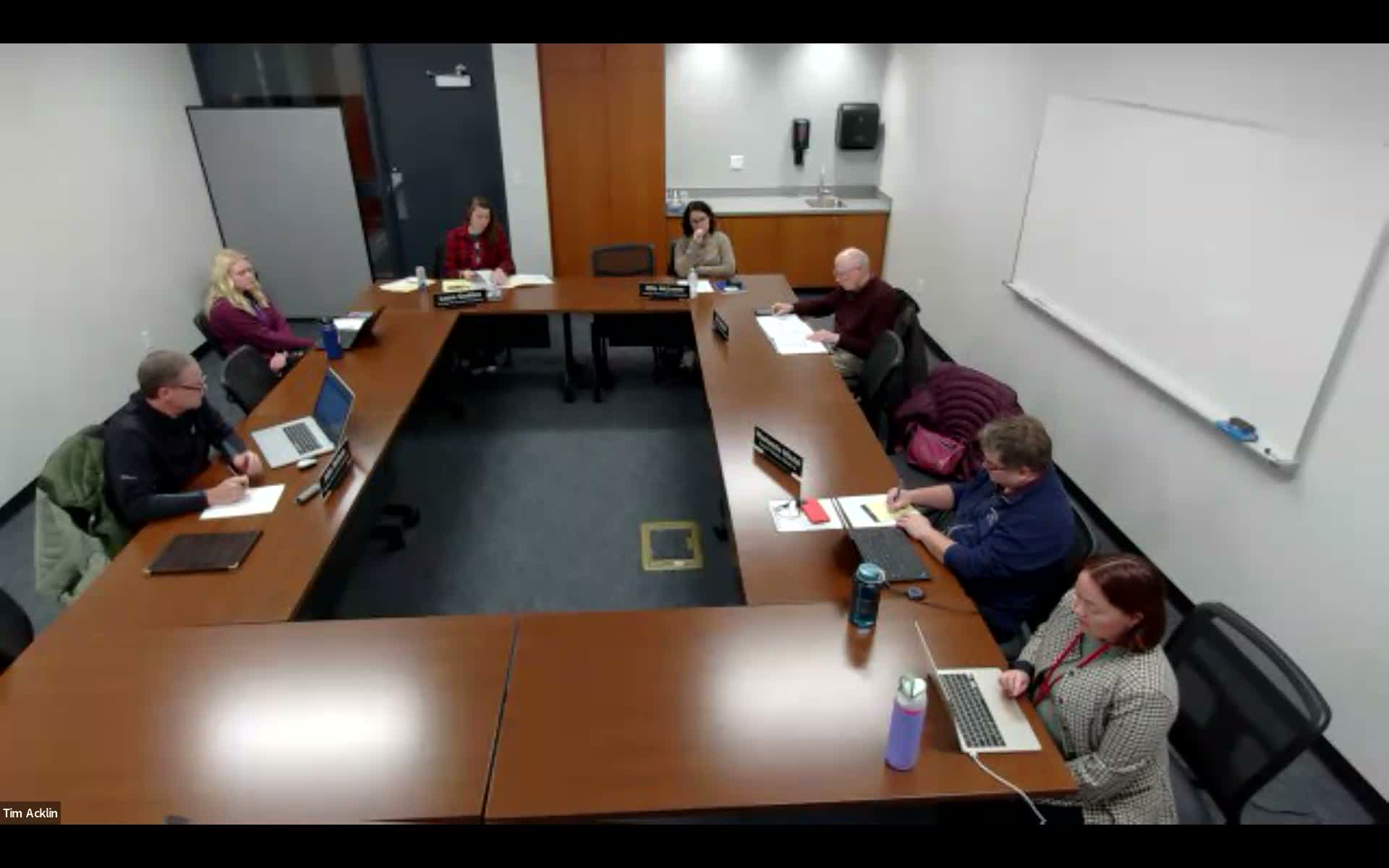
The La Crosse Heritage Preservation Commission on Tuesday opened work on a draft demolition‑delay ordinance that would expand the planner’s role in the demolition permit sign‑off process and create a formal delay and public‑notice procedure for certain properties.
Staff framed the draft as an initial framework rather than a finished ordinance. The staff member leading the discussion said the proposal is intended to “build upon an existing process that we have now” and suggested using the planning director or their designee to centralize review and “reduce the additional amount of staff that would be part of this process.” The staff member also said they favored an initial age threshold, noting, “I feel like, 50 years I think establishing some sort of, age limit is great.”
Natalie, who identified herself as representing Habitat for Humanity and as a board member of Build Reuse, urged a middle ground between wholesale demolition and full preservation. “I see a middle ground where we are delaying demolition on buildings that may not ever have the chance to be repurposed in full, but have the chance to be repurposed in part, and we can open up time and space for salvage to happen, to reclaim materials,” she said, arguing salvage and reuse generate local economic value and reduce landfill use.
Commissioners debated the length and mechanics of a delay. One commissioner said staff had proposed a 120‑day delay while other cities use longer periods; a staff member acknowledged the 120‑day figure was partly arbitrary and dependent on administrative burden, saying the number could change after further research. Chief Reinhardt of inspections warned the commission about a practical constraint: “If if we have all the correct documentation, we can issue it the same day,” which commissioners said could shorten or circumvent a delay when paperwork is complete.
On process, staff described a proposed sequence in which applicants would submit additional documentation when the planner flags a property, the city would post public notice on the property for 30 days, and the commission would hold a public hearing to weigh the criteria and decide whether to institute a delay or waive it if a solution is found. Staff also said previously nominated but not designated properties are kept in a small office file and that already‑designated properties would continue to require certificate of appropriateness or demolition review.
Commissioners and staff agreed the draft needs more detail about criteria, appeals and what happens when no agreement is reached; staff proposed returning an edited draft for further discussion in January. Commissioners also requested additional research on comparative delay lengths used by other cities and examples of reuse/recycling plans such as those mentioned in Madison’s presentation.
The meeting produced no formal ordinance vote. Staff will incorporate feedback (including an AI‑assisted draft offered by a commissioner) and check with inspections before returning a revised draft at a future meeting, with a goal of further review in January.