Community advocates urge Orange County supervisors to end voluntary transfers to ICE during required Truth Act hearing
Loading...
Summary
At a statutorily required public hearing on jail‑to‑ICE transfers, immigrant‑rights advocates and residents urged the Orange County Board of Supervisors to stop voluntary transfers to ICE, citing county transfer counts and deaths in ICE custody; the board received the report and heard questions but took no further action.
Thousands of residents, immigrant‑rights groups and health professionals appealed to the Orange County Board of Supervisors on March 24 to stop the county sheriff’s voluntary transfers of people in local custody to U.S. Immigration and Customs Enforcement.
The hearing, required under California’s Transparent Review of Unjust Transfers and Holds Act, drew 11 public speakers and multiple organizational representatives who described the transfers as dangerous, racially disproportionate and harmful to community trust. "At least 12 people, including two U.S. citizens, have died in ICE custody," said Logan Smith of the Harbor Institute for Immigrant and Economic Justice, urging the board to align with counties that have ended transfers.
Advocates outlined data and personal accounts. Norma Palacios of the California Immigrant Policy Center said the sheriff transferred "over 200 community members to ICE custody in 2025," and Sandra DeAnda of the Orange County Rapid Response Network described families who lost loved ones after transfer and called for a stop to the practice. Speakers repeatedly asked the board to impose a local policy of zero transfers.
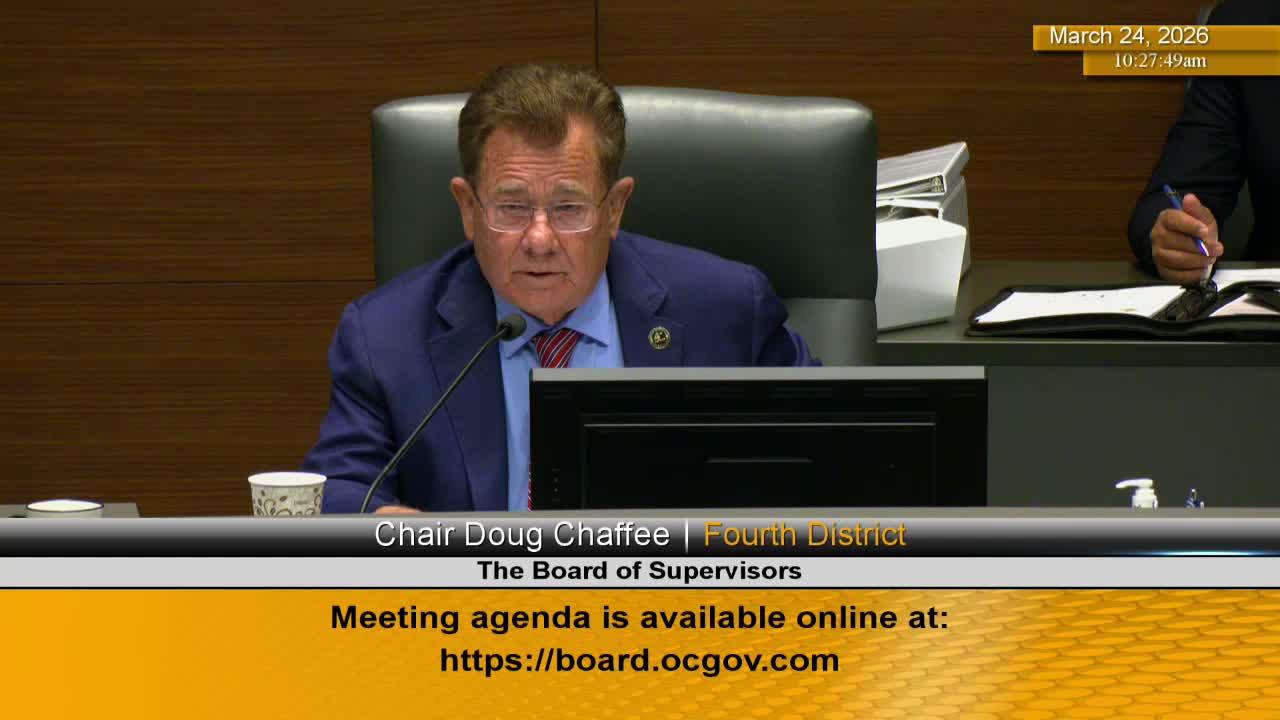
Supervisor Vicente Sarmiento acknowledged the concerns and reminded the room that the hearing is a legislatively required annual forum to "inform the public" about transfers and departmental practices. He noted the board does not directly control the independently elected sheriff but said the comments had been heard. Chair and other board members reiterated that the item was "receive and file," meaning the board accepted the report for the record and did not adopt a new policy at that meeting.
Several speakers pressed for specific transparency steps — translated consent forms, longer decision windows for people asked to sign transfer paperwork, and public disclosure in multiple languages — and highlighted the potential public‑safety consequences when immigrant communities fear law enforcement.
The board closed the hearing after public comment and formally deemed the item received and filed. Supervisors asked staff to remain available for follow‑up questions, and several members encouraged continued public engagement and oversight.
What happens next: This annual public hearing provides a forum for community input; it does not itself change sheriff practices. Community groups and some supervisors indicated they plan follow‑up requests for additional data, cross‑agency coordination and discussion of options for limiting local cooperation with federal immigration enforcement.