Lifetime Citizen Portal Access — AI Briefings, Alerts & Unlimited Follows
Special Magistrate Keith Davis continues dozens of Port St. Lucie code-enforcement cases, sets staggered compliance dates
Loading...
Summary
At a March 25, 2026 Port St. Lucie special magistrate hearing, Magistrate Keith Davis heard city testimony and sworn statements from property owners about unpermitted work and contractor disputes, set compliance deadlines (commonly April 22 or May 27) and continued multiple cases to allow permit submittals and plan-review work.
Special Magistrate Keith Davis on Wednesday continued and set compliance dates in a stream of Port St. Lucie code-enforcement cases involving unpermitted pools, commercial build-outs and residential remodels.
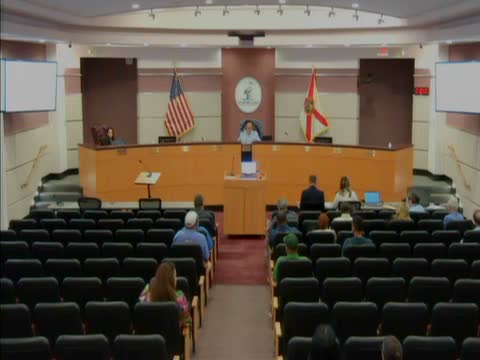
The hearing, held March 25, 2026, opened with city staff presenting evidence of building-code and city-code violations at multiple addresses. For each matter the city described the inspection date, notice and service history, the nature of the alleged violation and a compliance date it recommended. The magistrate then took sworn testimony from property owners, tenants or their representatives before issuing orders or continuing hearings for additional time to obtain permits or resolve plan-review comments.
Why it matters: the decisions determine whether properties avoid daily fines and liens by obtaining permits or completing corrective work; many respondents said they were delayed by nonresponsive contractors, engineering corrections or outstanding plan-review comments.
The most urgent safety case involved an unpermitted in-ground pool at 837 Southeast Cavern Avenue. City staff said the pool’s permit had expired in 2021 and the property was inspected June 9, 2025. Jonathan Vasquez, who testified under oath, said he had been litigating with the contractor and planned to install a safety screen "to go over the top" and expected to have it in place by the compliance date. Magistrate Davis said he had "zero tolerance for unsecured and unsafe swimming pools," accepted the city’s recommendation to require correction and set a compliance timeframe that the record shows was extended to May 26, 2026 to allow the owner to complete a cover and have the installation inspected.
Several commercial tenants and owners said they had begun the permit process but remained in plan review. At 1062 Southeast Port St. Lucie Boulevard, the owner said an architect and electrician had provided proposals and requested more time to secure an after‑the‑fact commercial interior permit; Davis set a later compliance target to accommodate planning-and-zoning and plan-review steps. City staff repeatedly reminded parties that planning-and-zoning approval is often required before building permits can be issued and that plan-review commonly takes weeks.
Multiple respondents across commercial and residential cases described delayed or nonresponsive contractors. Roger Templeman, a draftsman representing elderly homeowners in one case, urged the magistrate to recognize property owners as victims of contractor behavior: "They're being harmed by a gentleman who holds state license," he said, and asked for more time while the state licensing authority pursues enforcement. In several such matters the magistrate granted continuances (often 30–60 days) to allow respondents and the city to pursue permits, amended stipulations or finalize engineering corrections.
On certification‑of‑fine matters, the magistrate noted that when a prior joint stipulation remained unfulfilled the appropriate remedy would be enforcement at a certification-of-fine hearing; where respondents showed active progress (permit application submitted, plan review in process or engineering corrections underway) Davis generally continued hearings rather than immediately imposing fines, while reminding respondents to stay in contact with permitting staff.
For above‑ground and temporary pool cases, respondents who pledged to remove pools or obtain permits were ordered to achieve compliance by April 22, 2026 where the city recommended that date. For other commercial interior and large remodel projects the magistrate commonly continued hearings to April 22 or May 27, 2026 to give time for permit issuance or for respondents to produce signed and sealed plans.
Quotes that capture the hearing’s tone: Magistrate Davis said he would not lightly start daily fines in cases showing good-faith progress but would enforce earlier joint stipulations if respondents failed to comply. Jonathan Vasquez, whose case involved the in-ground pool, told the court he would "put [the mesh] on the pool" after receiving tax-refund funds. Roger Templeman, representing clients caught between contractors and city requirements, appealed for leniency, saying the homeowners had "been forthcoming" and describing them as victims of contractor misconduct.
What’s next: the magistrate signed orders and continued many matters to April 22 and May 27, 2026. City staff told respondents to maintain contact with permitting and plan-review staff and to supply any requested documentation so cases can be resolved before fines or liens are certified.
The hearing concluded at 11:21 a.m. with no public comments and with multiple continued dates scheduled for follow-up.