Get Full Government Meeting Transcripts, Videos, & Alerts Forever!
Get email alerts on the Development Permitting topic
No spam. Unsubscribe anytime.
Melbourne staff say permit reviews ballooned to thousands; cite staffing, incomplete submittals and plan for tech and staffing fixes
Summary
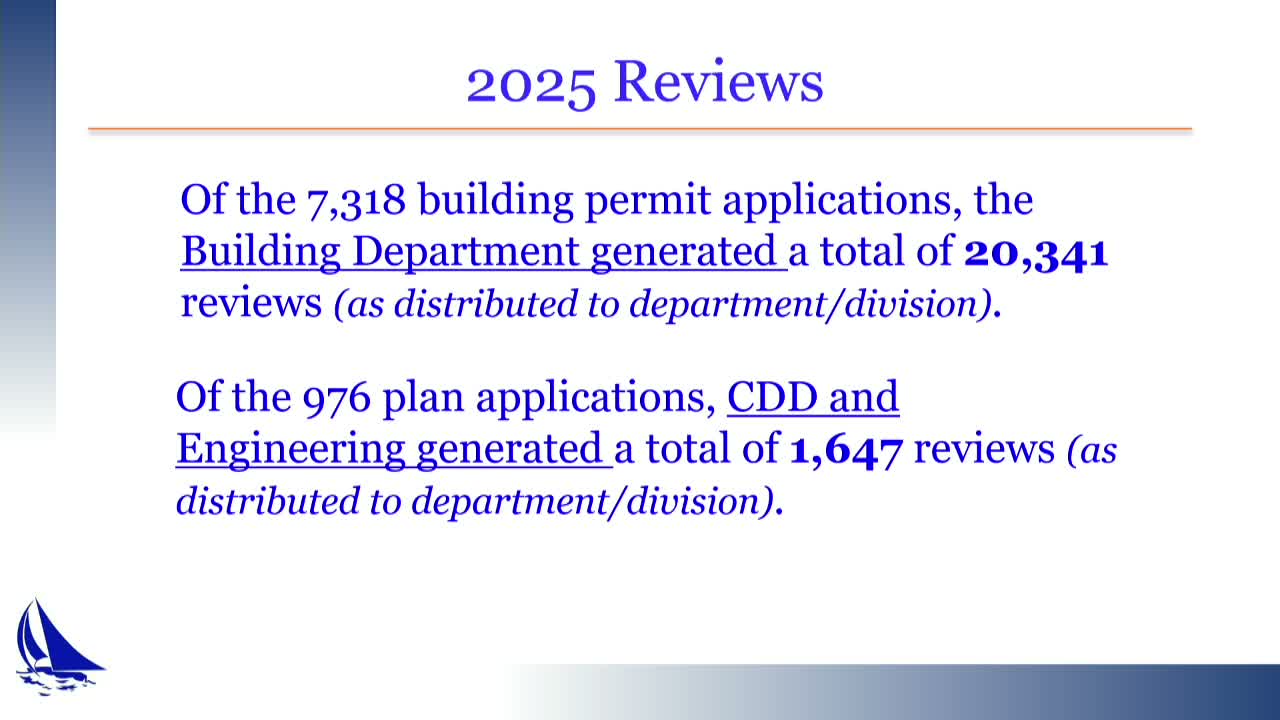
Staff described 7,318 building permit applications creating 20,341 reviews in 2025 and identified missing technical reports, iterative review cycles and the need for more staff and technology (Vuespec, virtual inspections) to reduce delays.
City staff told the council on Feb. 24 that Melbourne’s permit and plan-review workload has surged and that repeat-review cycles are a key cause of slow turnarounds.
Cindy Dittmer, speaking for community development, said the city processed 7,318 building permit applications in 2025 that generated 20,341 individual reviews across departments, and 976 plan applications that required multiple cross-department reviews. “If you do the quick math, that’s about three reviews on average per application,” Dittmer said.
Staff identified recurring causes of delay: incomplete submittals, missing technical reports (traffic or stormwater studies), incomplete responses to staff comments, and the increased complexity of infill and redevelopment projects in a built-out city. Council members and staff noted that some applicants submit minimal or incorrect materials, which then triggers multiple resubmissions.
Potential remedies outlined to speed approvals included higher fees for repeated reviews (already adopted last year and in effect), more hand-holding for small, one-off applicants, stronger pre-application guidance, recruitment of additional reviewers and adoption of inspection/virtual-inspection tools. Building official Steve Ennis described EnerGov and the city’s plan to acquire Vuespec to permit virtual inspections; staff said Vuespec is expected to appear on a future council agenda for purchase.
Council members encouraged continued process improvements, outreach to local contractors to reduce resubmittals, and consideration of performance metrics. Staff said they recently added a development-review examiner position funded through permit fee changes; that post started the day before the meeting and is intended to free staff time for complex plan work.
The council took no direct policy vote beyond earlier fee changes and staffing decisions but asked staff to return with proposals and performance metrics to shorten review cycles.