Get Full Government Meeting Transcripts, Videos, & Alerts Forever!
Get email alerts on the Public Safety Technology topic
No spam. Unsubscribe anytime.
Public safety briefs council on license‑plate readers and violent‑crime trends tied to illicit THC cartridge robberies
Summary
Public safety updated the council on automated license‑plate reader (ALPR) deployment, privacy safeguards (60‑day purge, supervisor‑only hot‑list entry, audit logs) and use cases, and described recent violent‑crime patterns linked to illicit THC vaping‑cartridge robberies; the department outlined next steps including a 2026 crime‑analyst hire and continued regional task‑force partnerships.
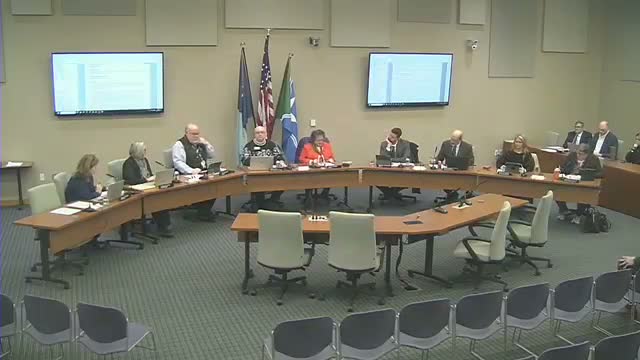
Public safety presented an informational update to the Mankato City Council on Dec. 8 covering automated license‑plate reader (ALPR) technology and recent violent‑crime trends.
On ALPRs, staff reiterated policy and privacy safeguards: officers receive training and sign policies before access; individual logins and audit logs record system use; fixed (Milestone) and fleet (Axon) systems were deployed with a 60‑day data purge to comply with state data‑practices rules; supervisors are restricted to entering plates into hot lists to avoid routine monitoring by individual officers; data is retained locally and shared externally only through formal written requests and with authorization. Jeremy, the department lead, told the council that to date the agency had not received any external requests for ALPR data and that other Minnesota agencies are adopting components of Mankato’s governance framework.
On violent‑crime trends, public safety said several recent shootings and violent incidents in Mankato are connected to organized criminal activity targeting illicit THC vaping cartridges. Staff described coordinated investigative work with the regional drug task force, the Minnesota Bureau of Criminal Apprehension, local prosecutors and other partners, and emphasized prevention, accountability and recovery as city priorities. The department announced plans to hire a crime analyst in 2026 to improve intelligence‑led enforcement and to consider acquiring a mobile command unit to support field investigations.
Council members asked about data‑sharing procedures, potential external access (including federal agencies), whether private entities and universities operate ALPRs locally, and how ALPRs were used during a recent hit‑and‑run investigation; staff said private businesses do operate independent readers and that fixed cameras and fleet systems had been used in investigations (with mixed success) and reaffirmed that data would not be provided outside the agency without a formal request or legal compulsion.
The presentation was informational; no ordinance or procurement action was requested that evening.