Get Full Government Meeting Transcripts, Videos, & Alerts Forever!
Get email alerts on the Us53 3rd 4th Alternatives topic
No spam. Unsubscribe anytime.
WisDOT proposes hybrid plan for 3rd and 4th Streets to balance protected bike lanes and downtown parking
Summary
WisDOT recommended a hybrid alternative for US‑53 downtown: keep parking and widen pedestrian space from King to Vine, and add sidewalk‑level, parking‑protected bike lanes from Vine to La Crosse Street (losing about six to seven spots). The committee scheduled a focused follow‑up meeting to collect more feedback.
Michael Richardson, project manager for the Wisconsin Department of Transportation’s Southwest Region Major Studies, presented recommended changes to the US‑53/US‑16 corridor and said the team is proposing a hybrid alternative for downtown La Crosse that balances bicycle access and parking.
Richardson said the hybrid would use the option that maintains parking and improves pedestrian space from King to Vine Street, and would add sidewalk‑level, parking‑protected bike lanes from Vine to La Crosse Street. “This would allow us to implement alternative 1 … with only the loss of 6 to 7 parking spots,” Richardson said.
Richardson told the Bicycle Pedestrian Advisory Committee the study considered 11 concepts, narrowed the field after public outreach and screening, and that public surveys broadly favored Alternative 1 while downtown businesses preferred Alternative 2. He also said a change.org petition opposing downtown bike lanes tied to Alternative 1 had more than 4,000 signatures, which prompted the team to test two additional concepts.
WisDOT staff said those two variants — keeping parking on both sides while adding protected facilities and a contraflow bike lane option — were not recommended because they would require narrowing existing widths, create operational conflicts, raise maintenance concerns (notably snow storage and clearing) and present safety risks at unsignalized intersections. “Narrowing the terrace width creates issues for snow storage in the winter,” Richardson said, adding that the constrained historic downtown footprint limits options that expand beyond the existing right‑of‑way.
Committee members pressed staff on intersections, pedestrian crossing treatments and whether a roundabout at La Crosse Street would make crossings less safe for bicyclists. A committee member said roundabouts had been “a catastrophe for bicyclists and pedestrians” at another intersection; Richardson responded that the proposed two‑lane roundabout would include enhanced crossings such as raised crosswalks or flashing beacons to improve visibility and safety.
Jeff Sandberg, the consultant project manager on the WisDOT team, noted the 2nd Street cycle track is expected to provide a bypass for some cyclists and that structural constraints on the river bridge north of downtown limit two‑way facilities in that location.
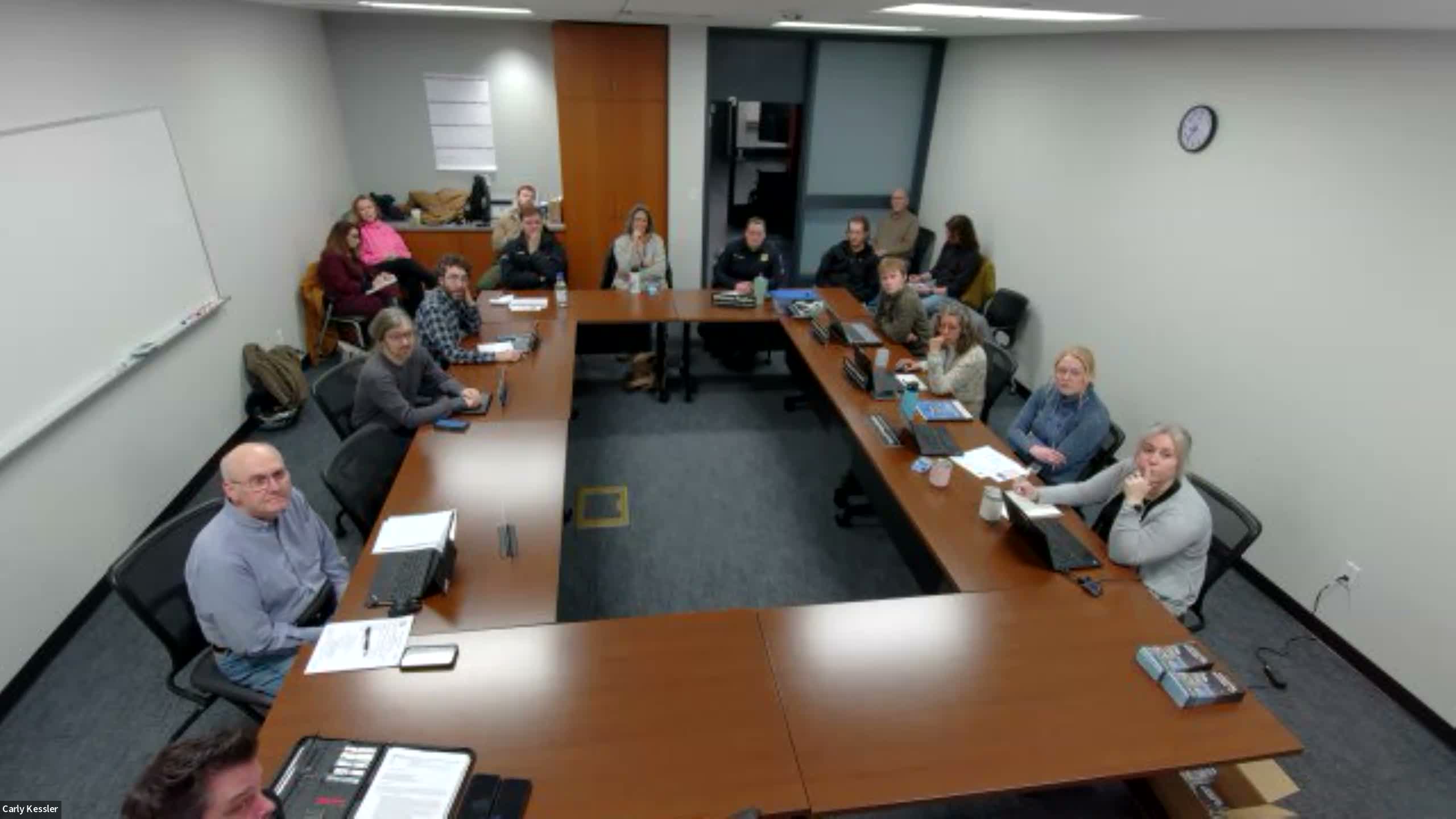
The project schedule calls for finalizing the environmental study and moving to final design this summer; WisDOT staff said selecting a preferred alternative is essential to keep a target construction start in 2030. Committee members asked for more intersection‑level detail before endorsing a preferred plan; the committee moved and passed a motion to convene a special virtual meeting in roughly two weeks focused solely on the 3rd/4th Street alternatives to capture more public and committee feedback.
Next steps: WisDOT will continue coordination with city engineering, the committee will meet again to review additional design detail, and the team expects to finalize the environmental document this summer as the project transitions into final design.