Get Full Government Meeting Transcripts, Videos, & Alerts Forever!
Get email alerts on the Governance topic
No spam. Unsubscribe anytime.
Council rejects charter ordinance to create a city administrator after department heads urge more study
Summary
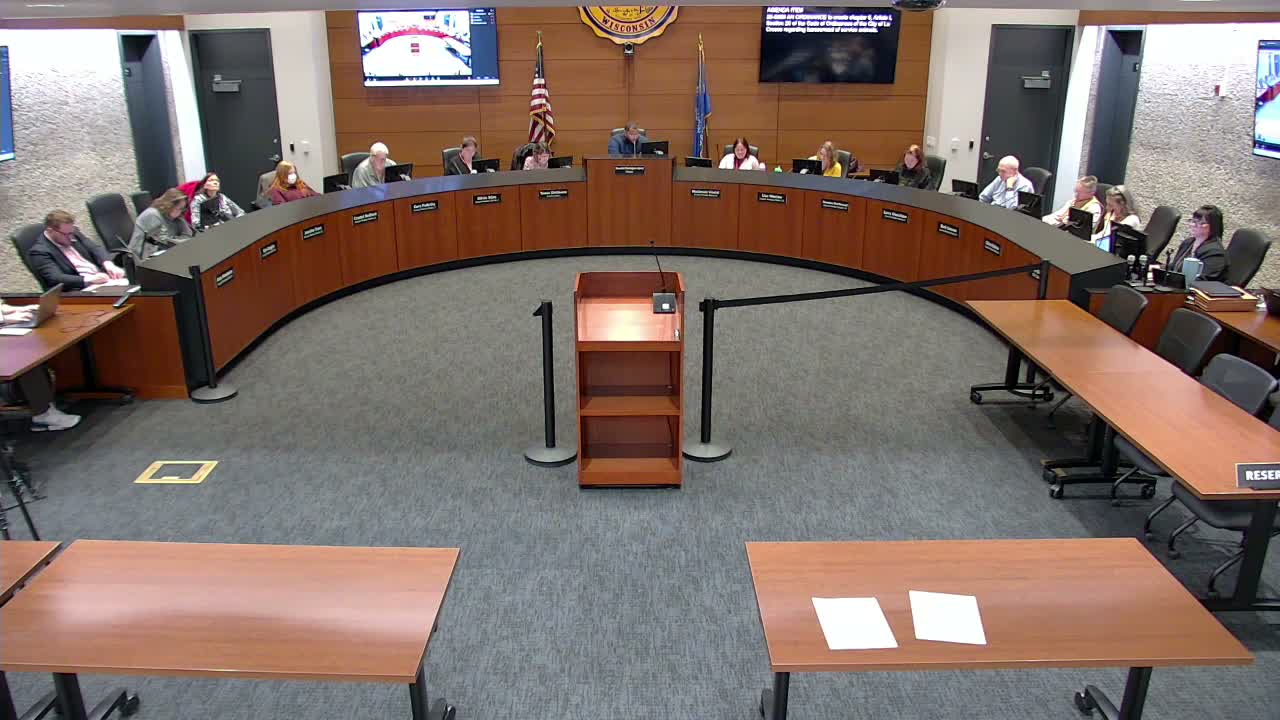
After more than two hours of debate and extensive testimony by department heads raising fiscal and implementation concerns, the Common Council voted down a charter ordinance to create a city administrator (7‑6). Several amendments had narrowed timing and clarified search procedures but left funding and operational questions unresolved.
The La Crosse Common Council voted down a charter ordinance that would have created the position of city administrator and removed certain administrative duties from the mayor.
Proponents argued the position would provide consistent executive leadership, improve long‑term planning and streamline municipal operations. Council Member Sleznicko and others said the city has grown to a size that merits a professional administrator to coordinate more than 500 full‑time staff and a $70 million operating budget.
But a coalition of 13 department heads appeared at the microphone with a joint letter of questions and concerns. Director Franson told the council department heads had ‘‘many unanswered questions’’ about fiscal impacts and implementation; Director Hawkins and others warned of potential budget pressures and possible cuts to frontline services. Attorney Maddie advised that there is no evidence a city administrator will ‘‘pay for itself’’ and warned of likely near‑term budget impacts if the new position were added without a clear funding plan.
Council members split along lines that combined fiscal caution and process concerns. Several members pressed for clearer funding sources rather than creating the office without a budgeted plan. Multiple amendments were approved earlier in the evening to clarify evaluation procedures, transition timing and to delay the effective creation of the office until a date‑certain or upon appointment; despite those changes the final motion to adopt the charter ordinance failed 7‑6.
Council President Dickinson and others urged continued structured conversation and suggested alternatives such as additional studies or a more detailed managerial/workforce review before altering the charter. Some council members signaled they remain open to revisiting the question with clearer fiscal analysis and broader stakeholder engagement.
The defeat leaves the city’s current mayor‑led administrative structure in place; council members who want further work said they will seek clearer funding and implementation plans before returning to the issue.