Get Full Government Meeting Transcripts, Videos, & Alerts Forever!
Get email alerts on the Micro Mobility Regulation topic
No spam. Unsubscribe anytime.
Advisory committee presses for clearer sidewalk rules, enforceability in La Crosse e-scooter and e-bike ordinance
Summary
The City of La Crosse advisory committee reviewed a March revision to ordinance 24-1118 on electric scooters and e-bikes, debating where sidewalks should be allowed, how to define shared-use paths and sidewalks, enforcement of a 'reasonable' speed standard versus numeric limits, and park-specific prohibitions; the draft will be revised and returned to the committee.
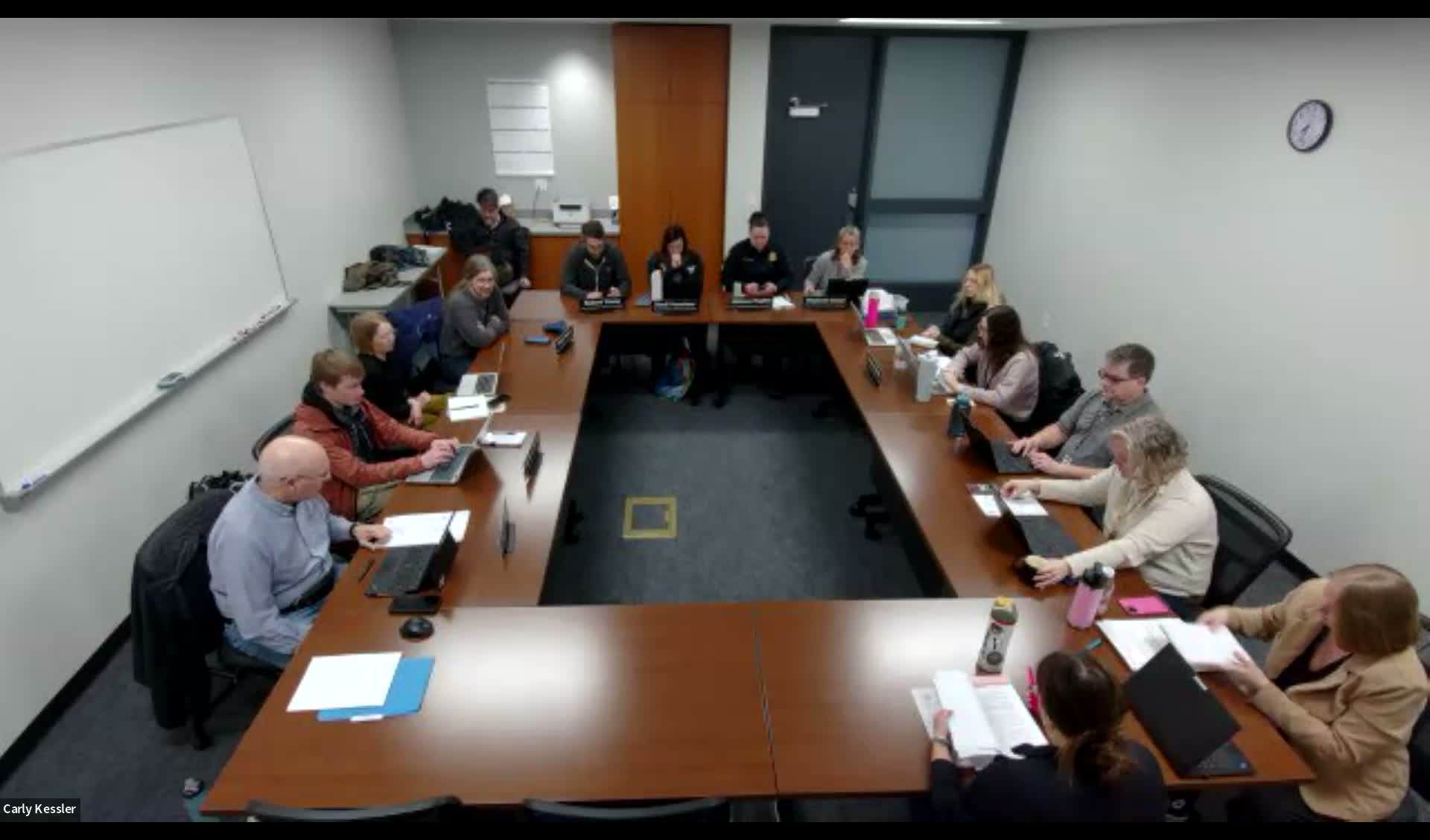
The City of La Crosse advisory committee spent the bulk of its March 10 meeting debating changes to ordinance 24-1118, a proposed update that would govern electric scooters, e-bikes and other micro-mobility devices. Rather than taking a final vote, the committee asked staff to revise the March draft to improve clarity on sidewalk use, enforcement and park-specific rules and to return with a focused version at the next meeting.
The session opened with routine business and approval of minutes from the Feb. 10 meeting (motion by Andrea; second by Rocky). The committee then turned to the ordinance. Committee members pressed the presenter to simplify language and to avoid sprawling lists of exempted or prohibited locations that could be hard for the public and law enforcement to apply.
Several members argued the draft’s 25-miles-per-hour roadway threshold produces counterintuitive outcomes. “We don't have good legal definitions of what is a sidewalk and what is not,” said James Longhurst, who cautioned that bridges, overpasses and other places with high-volume traffic could be misclassified under a strict 25 mph rule. Longhurst added that creating many fine-grained location-based exemptions makes enforcement and public understanding difficult.
Other speakers urged more access for micro-mobility users. One committee member who submitted written feedback said local conditions make the 25 mph concept “often a concept and not reality on a lot of streets in La Crosse,” and warned that people choose scooters and e-bikes for affordability and sustainability. The same member said micro-mobility users should not be forced into car traffic that is unsafe for them.
The committee also debated park-specific language. The presenter described edits to the parks section that broaden bicycle use in Riverside Park while preserving prohibitions in the International Gardens and similar confined garden areas. Members discussed pedestrian conflicts, parking-lot detours and narrow park paths; several asked that staff map problem locations and consider design changes (signage, archways) rather than only ordinance text.
On vehicle classification, members asked for clearer wording about class 1, 2 and 3 e-bikes and what “motor disengaged” means in practice. The presenter said she would update language to mirror statutory phrasing such as “power unit and operation,” noting that state rules already prohibit some behaviors and that municipalities must be careful about imposing requirements that could be legally challenged.
Enforcement and safety rose repeatedly. Some members proposed a suggested sidewalk speed (for education) — for example, 10 mph with slower passing speeds — while others said a numeric limit creates signage and enforcement complications. Law enforcement representatives and the presenter emphasized that many existing traffic laws rely on a “reasonable and prudent” standard applied to the facts of each incident, and that adding additional prescriptive rules (age limits, universal helmet mandates) could raise legal and enforceability issues.
No formal ordinance vote occurred. The committee directed staff to revise the March draft with simpler, clearer language focused on reasonable-use principles, to refine park-specific exclusions, and to return with a new version for further committee review. Chair closed the item by noting the ordinance will be revisited at the next meeting and that staff and committee members will continue offline work on mapping and education strategies.
The meeting concluded with a brief discussion of possible monthly public “mobility mix” forums to broaden community input on bike, pedestrian and mobility issues; that idea will be scheduled as time allows.