Get Full Government Meeting Transcripts, Videos, & Alerts Forever!
Get email alerts on the Personnel Public Safety topic
No spam. Unsubscribe anytime.
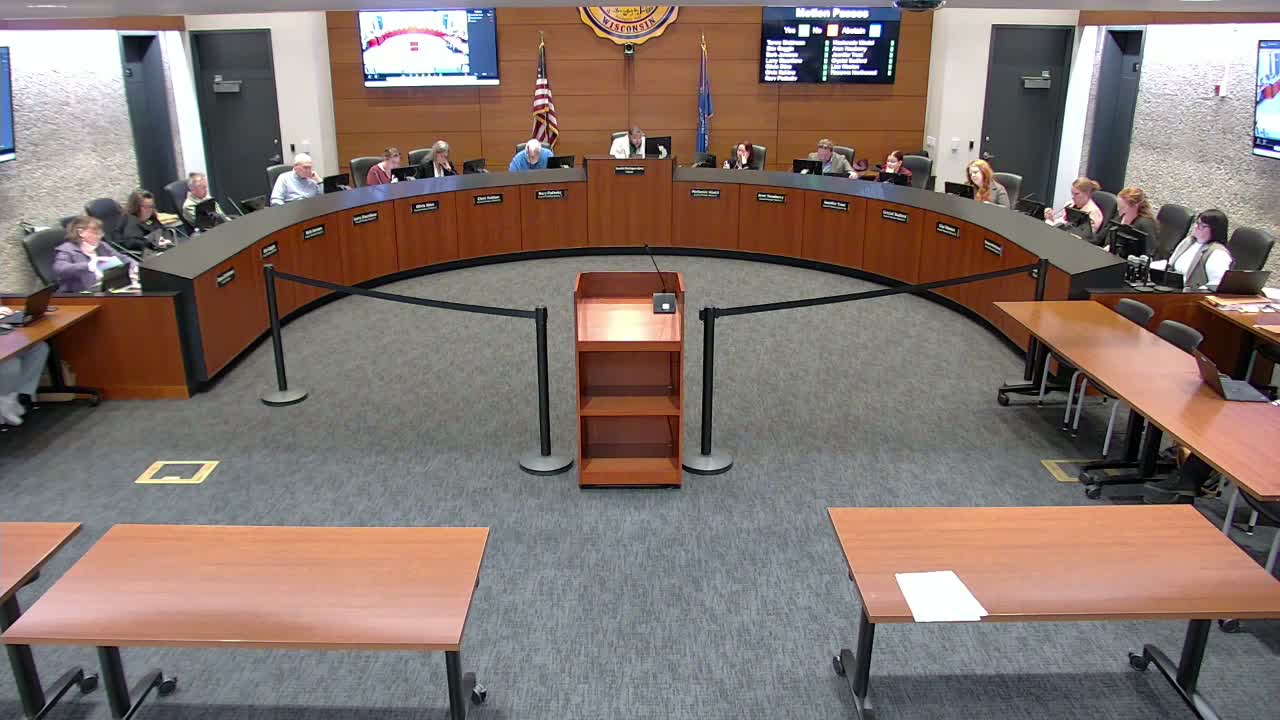
La Crosse council approves adding police and fire chiefs to compression-pay program
Summary
The common council voted to add the city’s police and fire chiefs to existing compression-pay programs intended to preserve pay differentials among upper-ranked public safety staff; both measures passed after questions about budget impacts and bargaining agreements.
Council members voted on March 12 to amend the city’s compression-pay provisions so that both the fire chief and the police chief are included among positions eligible for a compression payment intended to preserve pay-grade spacing among senior staff.
HR Director Rebecca Franson told the council the fire item updates a 2015 resolution and “all we are doing is adding the position of fire chief to those positions that would receive this compression pay,” noting the change is intended to restore an intended pay differential after a 0.6% compression was identified between the assistant fire chief and the fire chief. Franson said the cost for the fire resolution will be covered from the fire department’s operating budget; she estimated the impact on the 2027 budget would be between $8,000 and $10,000.
On the police side, Franson explained how the program is structured: the city takes the average earnings of police lieutenants (covered by a collective-bargaining agreement), “we add 7% to that average, and that is the minimum that our captains need to be paid,” and the amendment would add the assistant chief and police chief into that compression framework for internal equity between public-safety ranks.
Several council members voiced concern about cost and the effect of recent collective-bargaining increases. Council Member Charles said taxpayers had raised concerns about spending priorities; others warned that prior agreements with unions and multi-year 4% increases may be contributing to compression problems. Council Member Weston said she would support the measure with hesitation and urged more parity comparisons with peer municipalities.
Both resolutions were adopted with identical tallies: 8 yes, 4 no, and 1 abstention. The council recorded that the payments are structured so they may not generate immediate payouts for the newly added positions depending on yearly calculations.