Get Full Government Meeting Transcripts, Videos, & Alerts Forever!
Get email alerts on the Emergency Medical Services topic
No spam. Unsubscribe anytime.
Gold Cross tells Appleton committee it met response metrics, highlights training and whole‑blood program
Summary
Nick Romanesco, executive director of Gold Cross, told the Safety and Licensing Committee that the ambulance service met the city’s response‑time metrics, will reintegrate emergency and non‑emergency reporting, and has expanded training and whole‑blood capability as the two‑year service agreement matures.
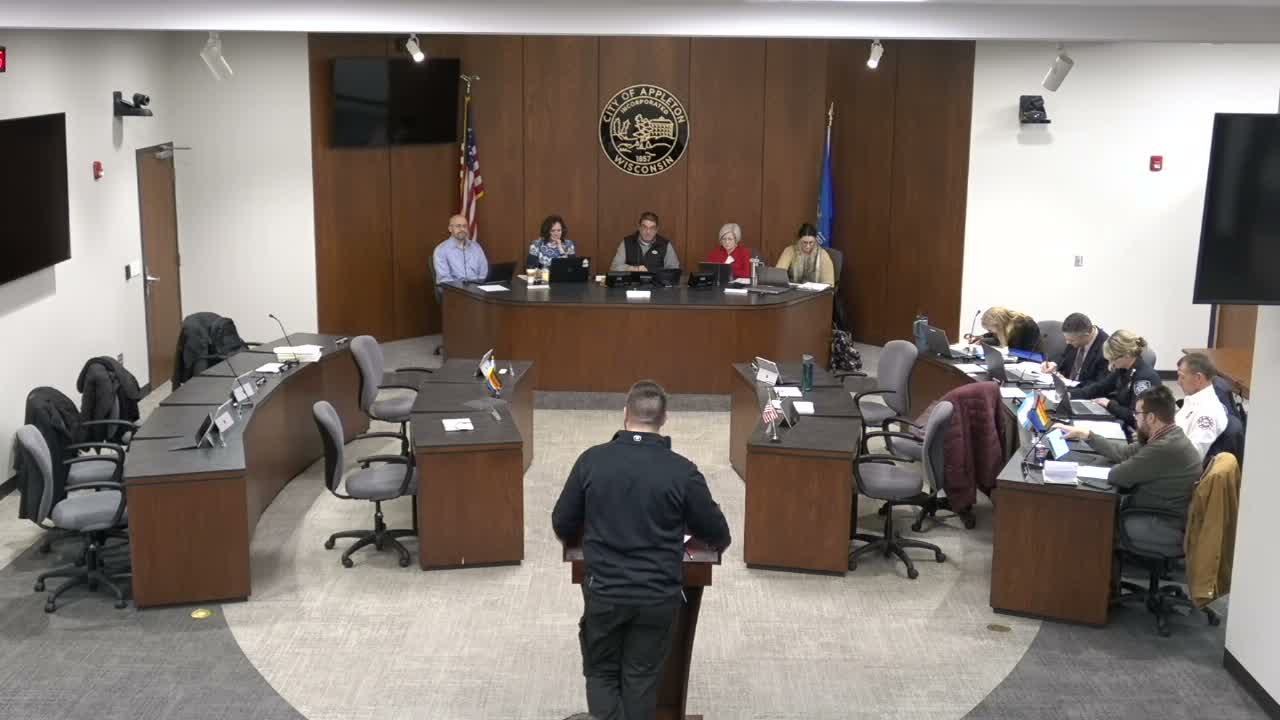
Nick Romanesco, executive director of Gold Cross, told the City of Appleton Safety and Licensing Committee on Dec. 10 that Gold Cross has met the response‑time metrics set out in its multiyear agreement with the city and remains focused on training, interagency coordination and workforce development.
"We've really focused on how do we support each other? How do we have good communication?" Romanesco said, describing collaboration with the Appleton Fire Department as the department transitions to paramedic engines. He noted Gold Cross was designated this year as a Department of Health Services‑approved training center, allowing the agency to run its own initial EMT and EMR training programs, and that it continues a partnership with Fox Valley Technical College for paramedic training.
Romanesco said the service will change its reporting methodology next year to combine emergency and non‑emergency calls in its dataset; the change responds to a 10–15% share of calls that were previously uncoded and excluded from earlier reports. He pointed to the reopening of the Ballard Road interchange as a factor already improving response times in a northeast pocket of the city.
On equipment, Romanesco said Gold Cross carries whole blood on its rapid response vehicle and has deployed it nine times in the city — among the highest uses in the Fox Valley region — and that the agency received the American Heart Association Mission Lifeline award for both cardiac and stroke care.
Romanesco also described patient‑care benchmarking using Utstein criteria for cardiac arrest cases and cited an out‑of‑hospital survival rate of about 50% for the city compared with Wisconsin’s 40.8% and the national 33.4% (prior‑year comparison data were presented as part of Gold Cross's benchmarking).
He said Gold Cross continued to invest in workforce development, reporting multiple internal paramedic cohorts and EMT training classes to address systemwide staffing shortages.
The committee did not take action on the presentation; members thanked Romanesco and asked no substantive follow‑up questions at this meeting. Romanesco said the committee will receive a quarterly snapshot document going forward and that more detailed metrics will continue to be reported annually under the agreement.