Get Full Government Meeting Transcripts, Videos, & Alerts Forever!
Get email alerts on the Cdbg Allocations topic
No spam. Unsubscribe anytime.
Appleton advisory board recommends preliminary 2026 CDBG allocations, protects Pillars funding in contingency plan
Summary
The City of Appleton CDBG Advisory Board recommended preliminary 2026–27 allocations that would leave $95,379 for external partners and approved a split that funds Pillars at $35,000, Rebuilding Together $25,000, COTS $25,000 and Habitat for Humanity $10,379; the board also adopted a contingency plan to preserve Pillars’ full award and a $10,000 minimum for Habitat if the HUD award is smaller.
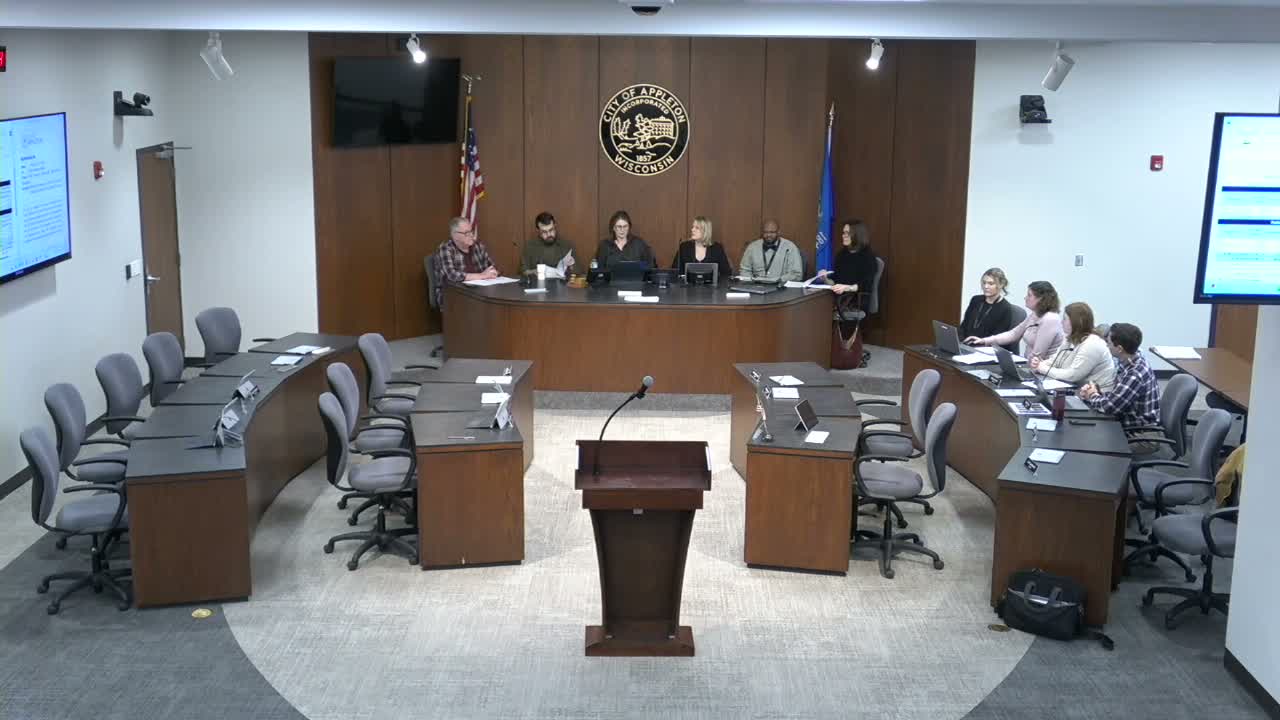
The City of Appleton’s CDBG Advisory Board on Feb. 17 recommended preliminary Community Development Block Grant allocations for the 2026–27 program year and set a contingency plan should the final HUD award differ from staff estimates.
Olivia Galien, the city’s Community Development Specialist, told the board staff’s preliminary estimate for Appleton’s CDBG allocation is $576,096, leaving $95,379 available for external community partners after funding core city projects and internal requests. “No more than 15% of our total allocation for the year can go to activities that are considered public services,” Galien said, noting the city’s community resource navigator currently uses the public‑services cap and that staff had removed First 5 Fox Valley’s asbestos‑removal request from consideration because the required federal environmental review could not be completed in time.
The board discussed how to balance funding a smaller set of fully funded projects against spreading limited dollars across multiple applicants. Members raised concerns that the scoring matrix can deprioritize projects that would otherwise be fully funded by the city; staff said the scoring tool is intended as guidance and that scores clustered closely for this round. Board members also asked about post‑award oversight; Galien described subrecipient contracts, quarterly payment processing, financial monitoring and a typical HUD spending window that can extend up to five years.
After discussion and iterative adjustments on the spreadsheet, Alderperson Josh Lambert moved the board’s preliminary recommendation: Habitat for Humanity $10,379; Rebuilding Together $25,000; COTS $25,000; Pillars $35,000. The motion passed unanimously, 6–0.
The board then approved a separate contingency motion directing that, if the final HUD award is lower than estimated, the city would preserve full funding for Pillars at $35,000, not reduce Habitat for Humanity below the $10,000 minimum award, and proportionally reduce the awards for Rebuilding Together and COTS. That motion also passed unanimously, 6–0.
Those recommendations will be forwarded to the Community Development Committee and then to the Common Council for final approval; staff said the advisory board could be reconvened if members want to revisit allocations after HUD issues the final award.