Get Full Government Meeting Transcripts, Videos, & Alerts Forever!
Get email alerts on the Surveillance Cameras topic
No spam. Unsubscribe anytime.
Appleton committee hears Flock Safety license-plate reader briefing as residents press privacy, sharing and audit questions
Summary
Police and a Flock Safety representative told the Safety & Licensing Committee that ALPRs have aided investigations and that city-owned data is controlled by Appleton; residents pressed the department and vendor on misuse, cross-agency access and auditing after a recent officer misuse case elsewhere.
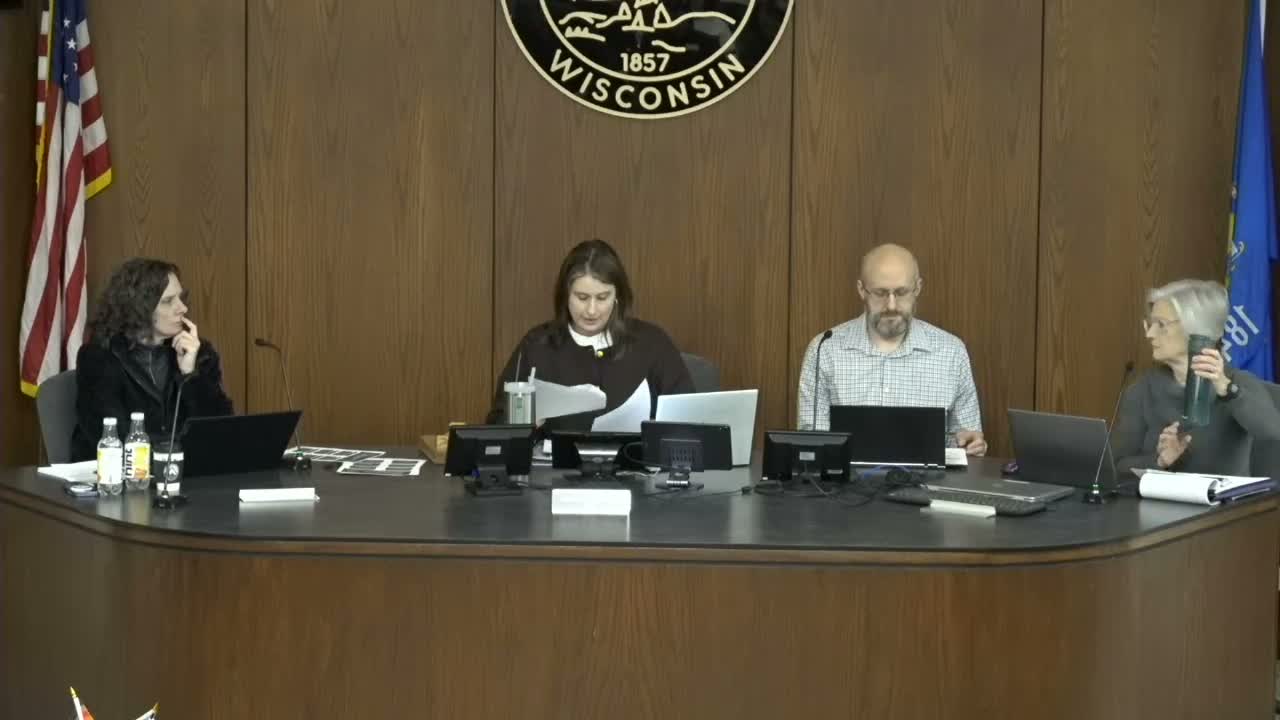
CAPTION: Safety & Licensing Committee meeting, Jan. 28, 2026. APD presentation on Flock Safety ALPR system.
The Safety & Licensing Committee on Jan. 28 heard a detailed presentation from Appleton Police on its use of Flock Safety automated license-plate readers and fielded more than an hour of public questions and concerns about privacy, cross-agency data sharing and safeguards after a widely reported misuse case.
The presentation was led by Patrol Captain Mike Wallace, who said the department first tested the system in a 2022–23 pilot and currently operates 20 cameras (19 fixed, one mobile). Wallace said investigators logged 183 "verified successes" in the pilot — including 30 recovered stolen vehicles, 30 hit-and-run case leads, 22 retail-theft cases and five domestic-violence-related arrests — and credited the cameras with speeding identification of suspect vehicles and reducing hours of manual video review.
"In my 21 years of law enforcement experience, this has easily been one of the most impactful tools we've acquired," Wallace said, attributing faster case clearance and more reliable photographic evidence to the system.
Krista McLeod, a remote representative from Flock Safety, told the committee the images and metadata collected by the camera network are owned by the city and that customers control sharing settings. She said searches require two-factor authentication and are logged, that imagery is retained for 30 days unless preserved for evidentiary purposes, and that Flock will not share a customer's data without expressed consent except when legally compelled by subpoena or court order.
"All of that data that is collected is owned by the city of Appleton," McLeod said. "Flock will never share your data without your expressed consent unless we are legally required to do so."
Committee members pressed for operational detail. McLeod said the product now requires users to select an offense-type from a drop-down menu when conducting searches and that agencies may also require case numbers; she also described forthcoming features to flag anomalous search patterns so administrators can more quickly identify misuse.
Members of the public, and some alderpersons, voiced concern about misuse and about outside agencies that might access Appleton data. Several residents cited a recent Menasha case in which a police officer was alleged to have used ALPR data to search for an ex‑partner; commenters asked what steps Appleton would take to prevent similar misuse and whether downloaded data could be retained by other agencies.
"What specifically are you doing to prevent stalking by an officer — and what preventive policies are in place?" asked Cathy Flores, who said she has worked in domestic-violence services for 35 years.
Chief Olsen responded that APD has tightened search requirements since that incident and conducts audits of system use. "We have auditing features... supervisors periodically review searches and randomly audit incidents," Olsen said, adding that misuse would prompt an internal investigation and likely significant discipline.
McLeod said Flock encourages recurring auditing and is adding alerting features to identify searches that deviate from a user's normal patterns — for example, searches performed after hours or repeated queries for the same vehicle.
Committee members also asked whether private entities can share their Flock camera data with law enforcement and whether Appleton can control what outside agencies do with downloaded material. McLeod said private customers may elect to share camera data with law enforcement but that city networks are not shared to private entities; she said customers own their data and control sharing, and that an agency that downloads images can be identified through audit logs.
Several alderpersons suggested additional steps the city could take to strengthen public trust — for example, narrowing retention windows, clarifying required case‑number fields and publishing more transparency metrics. Olsen said the department is open to tightening language in its policy and exploring additional automated checks.
The committee took no formal action on Flock cameras at the meeting; members said the discussion would continue and staff will review policy adjustments and transparency materials.
Ending: The presentation and public comment period closed with the department promising follow-up materials for alderpersons and a willingness to consider further policy and technical safeguards.