Get Full Government Meeting Transcripts, Videos, & Alerts Forever!
Get email alerts on the Local Code Enforcement topic
No spam. Unsubscribe anytime.
Appleton Board of Health upholds cease-and-desist for State View Commons
Summary
The Board of Health voted 7–0 to affirm a health department cease-and-desist against State View Commons, concluding the property operated without a required occupancy review and licensing; staff said conditional licensing was offered but not signed and recommended full R‑1 compliance before relicensing.
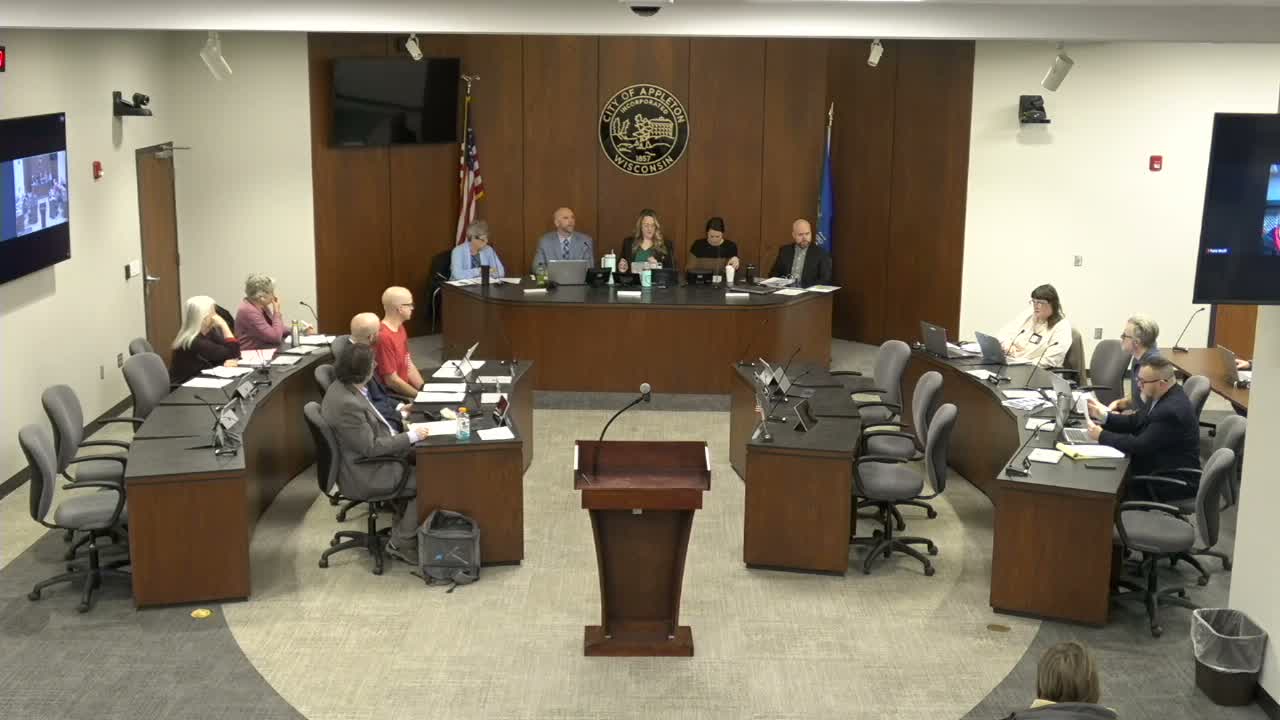
The Appleton Board of Health on Feb. 11 upheld a health-department cease-and-desist order against State View Commons, a four-unit property at 532 West College Avenue, voting 7–0 to deny the owner’s appeal.
The decision followed a staff presentation that the building had been operating in a changed occupancy without required plan review or permits. “We respectfully request that the board deny the appeal and uphold the cease and desist order,” said Todd Schmidt, enforcement agent for the Appleton Health Department, who summarized an internal review with the Fire Department and commercial inspections that found the property did not meet building and fire code requirements for transient lodging.
The board’s action leaves the July 29, 2025, cease-and-desist order in place. Schmidt told the board the property’s TRH (transient rooming house) license expired June 30, 2025, and that a conditional licensing offer made Sept. 18, 2025, was not returned. He said the owner continued to accept bookings after the license lapsed and that staff no longer deemed a conditional license viable without verified R‑1 compliance.
Owners’ counsel and witnesses described efforts to evaluate and price needed work. “Within weeks, he had an architect on-site. By September he had two competitive sprinkler quotes…and the water lateral quote arrived,” attorney Robert Arthur told the board, adding that a basic compliance package—sprinklers, alarm and water lateral—was estimated at about $132,000 and that an elevator, if required, could push retrofit costs toward $500,000. Arthur said those costs were a substantial share of the building’s current market value and that the owners intend to pursue a state variance process if necessary.
Manager Mark Bieseck of Powerhouse Properties said the four units have hosted more than 1,300 guests and remitted roughly $57,000 in lodging, state and county taxes over four years, and he urged the board to consider the property’s economic contributions to downtown activity.
Board members pressed both the city and the owner on process: staff said no formal plan or code-review submission was on file and reiterated that the conditional-license draft required commitments that had not been negotiated or returned. Several members emphasized that the city had offered a path that would allow interim operation while plans were reviewed and that continued operation after a cease-and-desist was a significant concern for enforcement.
Alderwolf moved to deny the appeal; Dr. Vogel seconded. The board voted by voice to deny and affirmed the cease-and-desist order, 7–0.
City staff told the owner they remain willing to work with property representatives on plan submittals and possible equivalencies that could meet safety goals. The board’s decision preserves the enforcement action while leaving an administrative path for the owner to submit plans and pursue compliance or seek a variance through the appropriate state process.