
Senate Resources hears bill to replace property tax with volumetric levy for Alaska LNG; developers say relief is essential
Get AI-powered insights, summaries, and transcripts
Sign Up Free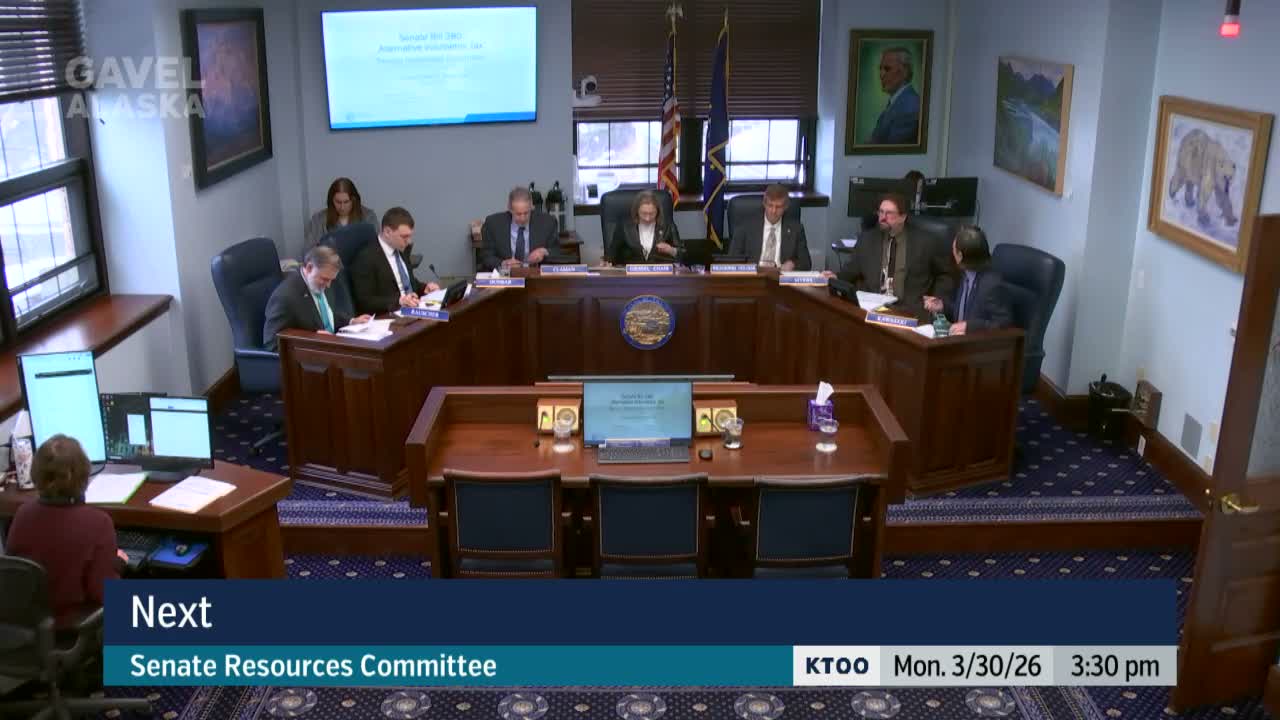
Summary
Glenfarn and AGDC told the Senate Resources Committee that Senate Bill 280, which would exempt project property from conventional property tax during ramp-up and replace it with a 6¢/Mcf volumetric tax, is critical to secure financing and keep gas affordable; some senators pressed for more financial transparency and protections for communities.
The Alaska Senate Resources Committee on March 30 heard testimony on Senate Bill 280, which would suspend conventional state and municipal property taxes for the Alaska LNG (AKLNG) project during a ramp-up period and replace them with an alternative volumetric tax.
Adam Preston, president of Glenfarn and Alaska LNG, told the committee the developer-led financing model relies on project finance and long-term contracts that reduce investor risk, and said higher property taxes would be passed on to customers. "The additional cost of the property tax by our estimates would result in a 25% higher gas cost to the Alaskan customers when they buy from the pipeline," Preston said.
Matt Kissinger, commercial director for the Alaska Gasline Development Corporation (AGDC), described a shift from a producer-led to a developer-led model that assigns cost-overrun risk to the developer and uses a stage-gate economic analysis. He said benchmarking shows other jurisdictions provide targeted tax relief for LNG infrastructure and argued Alaska’s current property tax treatment would make the project uncompetitive without similar measures.
Former U.S. Senator Mark Begich, representing the project’s advisers, urged caution about publicly disclosing proprietary financial details and suggested executive-session briefings for sensitive numbers, while saying the project team has been meeting regularly with borough mayors to address local impacts.
Several senators pressed developers for more detail. Senator Wilkowski asked whether any property tax cuts would be required to be passed through to consumers and whether cost overruns could be prohibited from being allocated to ratepayers. Preston and Kissinger said they would consider statutory language and welcomed proposed amendments to ensure pass-through and no-cost-overrun clauses.
Other senators expressed unease about basing a generational decision on confidential assumptions. Committee members repeatedly pressed for access to detailed cost estimates and sensitivity analyses; developers and AGDC representatives repeatedly said some financial figures are commercially sensitive and recommended confidential briefings or executive sessions.
The hearing closed with a Department of Revenue presentation scheduled to follow; no vote was taken. The committee will continue the conversation at a future meeting.