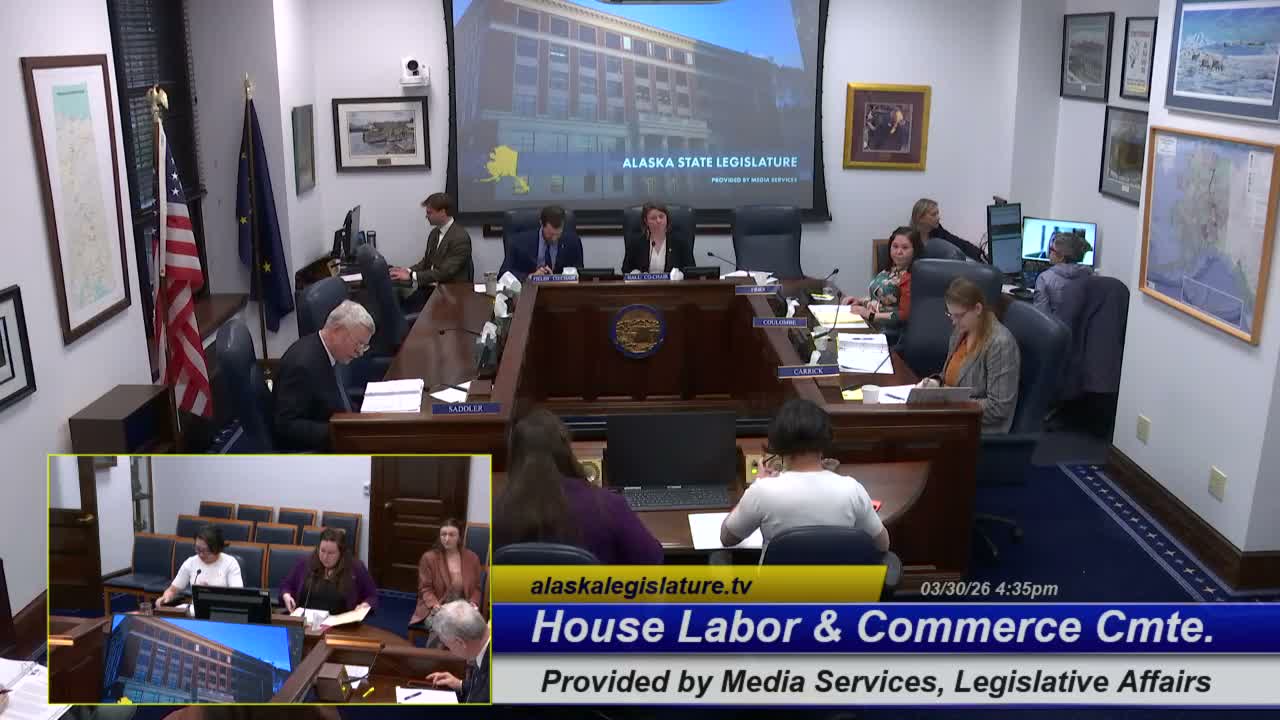
Supporters say SB 89 modernizes PA practice to improve rural access; bill held for amendments
Loading...
Summary
Senator Tobin and stakeholders told the committee SB 89 would codify and modernize physician‑assistant practice, reduce administrative burdens in rural clinics, preserve state medical board oversight, and help recruit and retain clinicians; committee set an amendment deadline and held the bill over.
Senator Lukey Gail Tobin introduced Senate Bill 89 on March 30, saying the bill is intended to increase access to preventive health care across Alaska by modernizing physician‑assistant (PA) practice in statute and reducing administrative and financial burdens that can impede PA practice, especially in rural communities.
Staff Mackenzie Pope offered a sectional analysis describing numerous changes: repealing and reenacting the PA authorizing statutes, allowing PAs to provide care they are qualified to perform, maintaining collaborative agreements for PAs who do not work in specified physician‑led or licensed facilities, and including PAs in temporary licensure and interstate recognition provisions.
Jenny Fayette, advocacy chair for the Alaska Academy of Physician Assistants and a practicing PA, urged support, saying the bill codifies current team‑based practice and reduces duplicative state requirements that can delay credentialing and access in rural clinics.
Mary Swain, CEO of Shamay Community Health Center (a federally qualified health center serving Bristol Bay), described practical consequences of administrative requirements, including long credentialing timelines and fees paid to remote collaborating physicians; she said SB 89 would align statute with existing team‑based care and improve workforce stability.
Committee members asked about differences from prior legislative versions and about the statute's safety provisions; staff said stakeholders revised the structure to keep patient safety while using existing licensure and facility processes. The committee set an amendment deadline of March 31 at 3:00 p.m. and held the bill for further consideration.