Committee hears SB 258 to curb restrictive software‑licensing terms and reduce vendor lock‑in
Loading...
Summary
Senate Bill 258 would limit software licensing contract terms that force state agencies onto vendor‑preferred cloud servers, aiming to preserve agency choice on price, security and storage. Supporters said the bill mirrors laws already enacted in several states and reflects federal scrutiny of restrictive licensing practices.
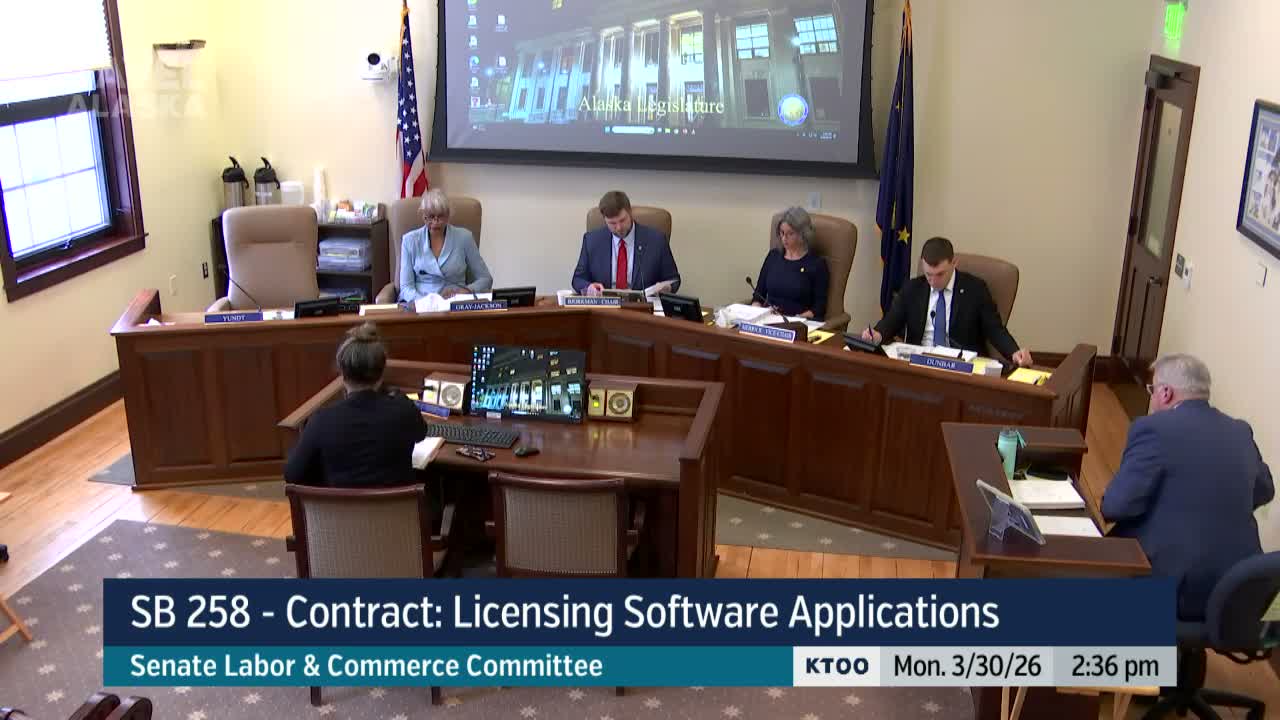
Senate Bill 258, a procurement bill presented March 30 to the Senate Labor and Commerce Committee, would prohibit software purchasing contracts that effectively force a state agency to deploy licensed software only on a vendor’s preferred cloud infrastructure.
Honor Miller Austin, staff to Senator Jesse Kiel, told the committee that some vendors have begun requiring purchasers to move existing products to vendor‑preferred cloud servers, limiting agencies’ ability to select infrastructure based on price, security, or storage needs. "This bill in the long run lowers costs due to the competition being there," Miller Austin said.
Scott Drexel, state and local director for the Coalition for Fair Software Licensing, testified that restrictive licensing practices lead to vendor lock‑in, raise costs, and can create cybersecurity risks. Drexel noted the federal government has paid attention to these issues — including an FTC inquiry and congressional action — and said similar state laws exist in at least six jurisdictions. "The purpose of SB 258 is to ensure that a contract entered into by a state agency for the purchase of software doesn't artificially restrict the state's ability to deploy that software in the infrastructure environment that best fits its particular business needs," Drexel told the committee.
Committee members asked no further questions during the hearing. Miller Austin and Drexel thanked the committee for considering the legislation; the bill will return for additional committee action as needed.
No committee vote was taken at the hearing.