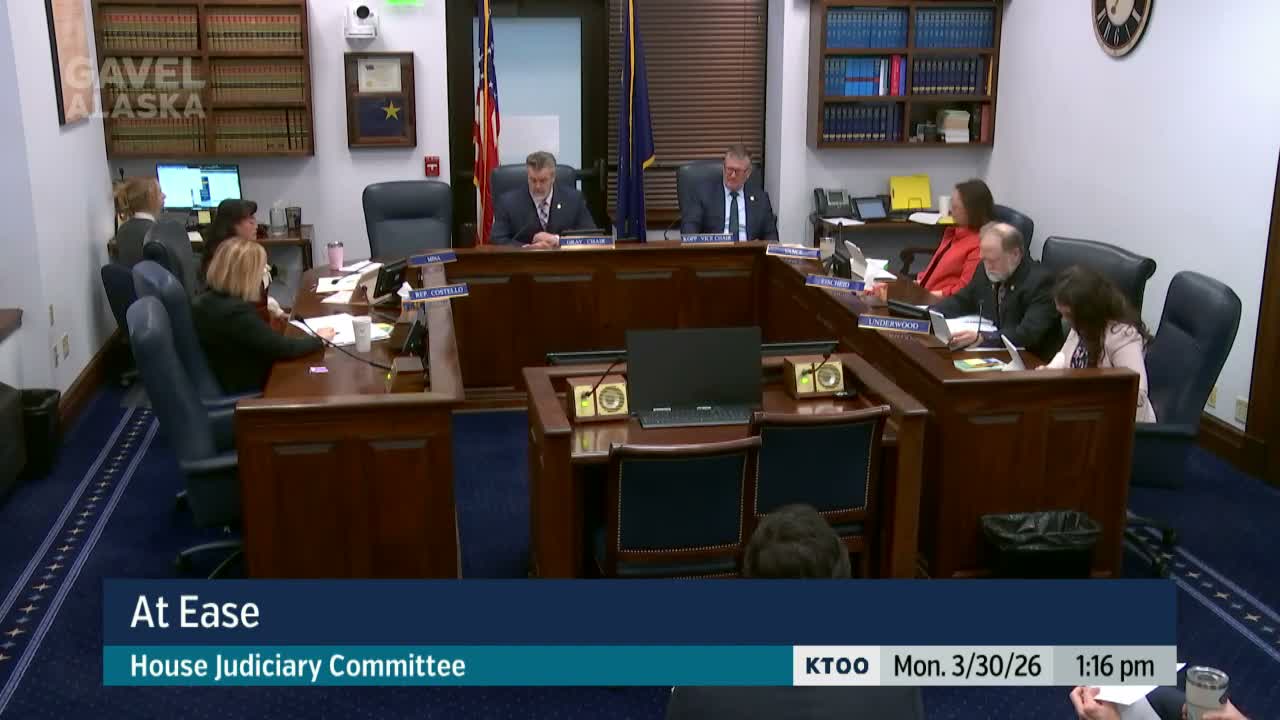
Committee debates denying personhood to AI in constitutional amendment; sets new amendment deadline
Loading...
Summary
Members of the House Judiciary Committee debated an amendment to HJR 31 that would deny personhood, rights, and standing to artificial intelligence and direct the legislature to regulate AI; members agreed to study the issue further and set a new amendment deadline for April 7, 2026 at 5:00 PM.
The House Judiciary Committee spent extensive time on March 30 discussing Amendment 2 to House Joint Resolution 31, a proposed constitutional amendment concerning corporations and rights. Amendment 2 would remove campaign contribution language (left to statute) and add language stating that artificial intelligence systems are not natural persons and that the legislature shall regulate AI systems to protect the rights of natural persons.
Representative Vance, who offered the amendment, told the committee the change was intended to make clear that AI does not have the same inherent rights, standing, or privileges as human beings. Vance described examples of harms he said can flow from AI systems — including biased hiring algorithms and autonomous systems with safety risks — and argued for protecting individual sovereignty and democratic institutions from mistaken extensions of personhood.
Sponsor Representative Zach Fields said he did not object to the amendment as written and called the language a clear directive for legislative regulation of AI. Fields also said campaign contribution issues belong in statute rather than a constitutional amendment.
Legislative legal counsel joined remotely and told the committee he was not aware of any court decision that has concluded an AI program or construct has agency or personhood. On the record, the committee referenced that counsel variously as "Alpheus Bullard" and in his own remarks as "Alpheus Fuller"; the transcript contains inconsistent spellings and institutional labels for the remote advisor. The advisor told members that courts have not recognized AI as persons and framed AI as tools of corporations.
Several members urged caution. Some said the constitutional amendment raises complex accountability questions — who would be legally responsible if an AI system behaves autonomously — and suggested additional hearings and legal analysis. Representative Mina moved to divide the amendment (separating cleanup language from the AI language) but later withdrew the motion after discussion about how to divide specific lines.
After extended discussion and members' requests for more study, the committee set a new amendment deadline for HJR 31: Tuesday, April 7, 2026 at 5:00 PM. The committee did not adopt Amendment 2 at this hearing; members agreed to continue work on the language in subsequent proceedings.