Lifetime Citizen Portal Access — AI Briefings, Alerts & Unlimited Follows
PMI Alaska briefs legislative staff on change‑management tools; keynote urges planning, risk tracking and formal change requests
Loading...
Summary
Project Management Institute Alaska members and consultant Steve Busch presented change‑management best practices to legislative staff and an invited audience, emphasizing bottom‑up planning, continuous risk tracking and formal change‑request logs to improve adoption and project outcomes.
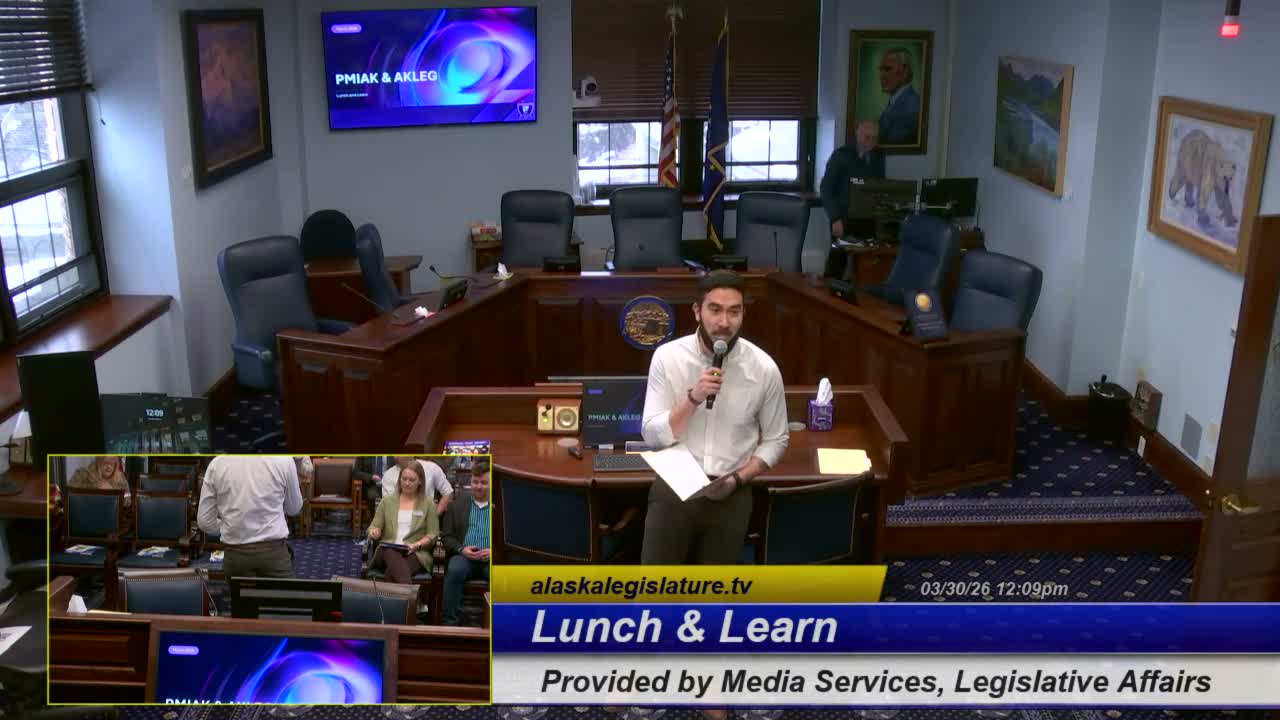
Project Management Institute (PMI) Alaska chapter members on Tuesday briefed legislative staff and an invited audience on practical change‑management techniques, with keynote speaker Steve Busch urging disciplined planning, risk tracking and formal change‑request processes to improve whether projects deliver intended results.
The event, hosted by staff for Representative Schrage, brought PMI Alaska leaders and volunteers to discuss how standard project tools can help translate legislative decisions and large public investments into completed work. "There has to be a why," Busch said, stressing that a clear purpose must drive any change effort so stakeholders understand why a project exists.
Busch framed projects as temporary efforts that produce unique outcomes and described two parallel dimensions of change: the technical side (design and delivery) and the people side (engagement and adoption). He told attendees that, according to research he cited, "about 66 to 70% of all projects do not deliver what they were intended to do," using the statistic to underscore the cost of weak planning and stakeholder work.
Frontline recommendations focused on three technical practices. Busch said teams should build plans from the bottom up by breaking work into small, estimable tasks; maintain a living risk register that records uncertainties and planned responses; and record every change request in a log with a review process and clear communication of decisions.
On the people side, Busch recommended a two‑step impact analysis: identify every group affected by a change and score each group across ten impact categories to create a heat map that shows who needs the most outreach. He also advised anticipating common forms of resistance—most often that people "do not understand the reason for the change"—and designing early tactics to reduce avoidable pushback.
Yulia Chiperko, president of PMI Alaska, told attendees the chapter has about 590 members statewide, represents organizations across roughly 300 employers in Alaska and is working to expand a chapter presence in Juneau. She invited participants to sign up for the chapter newsletter and noted a 40th‑anniversary celebration scheduled in Anchorage on May 29 and a professional development day in September focused on AI and project management.
Organizers also announced a planned door raffle was canceled after notice from the rules committee. They encouraged attendees to follow up with PMI Alaska for training materials and to learn more about membership.
The session was presented as an informational "lunch and learn" rather than a request for votes or funding; presenters repeatedly framed the material as practical tools legislators' offices, state agencies and nonprofit project teams can use to improve the odds that programs and projects achieve their intended outcomes.