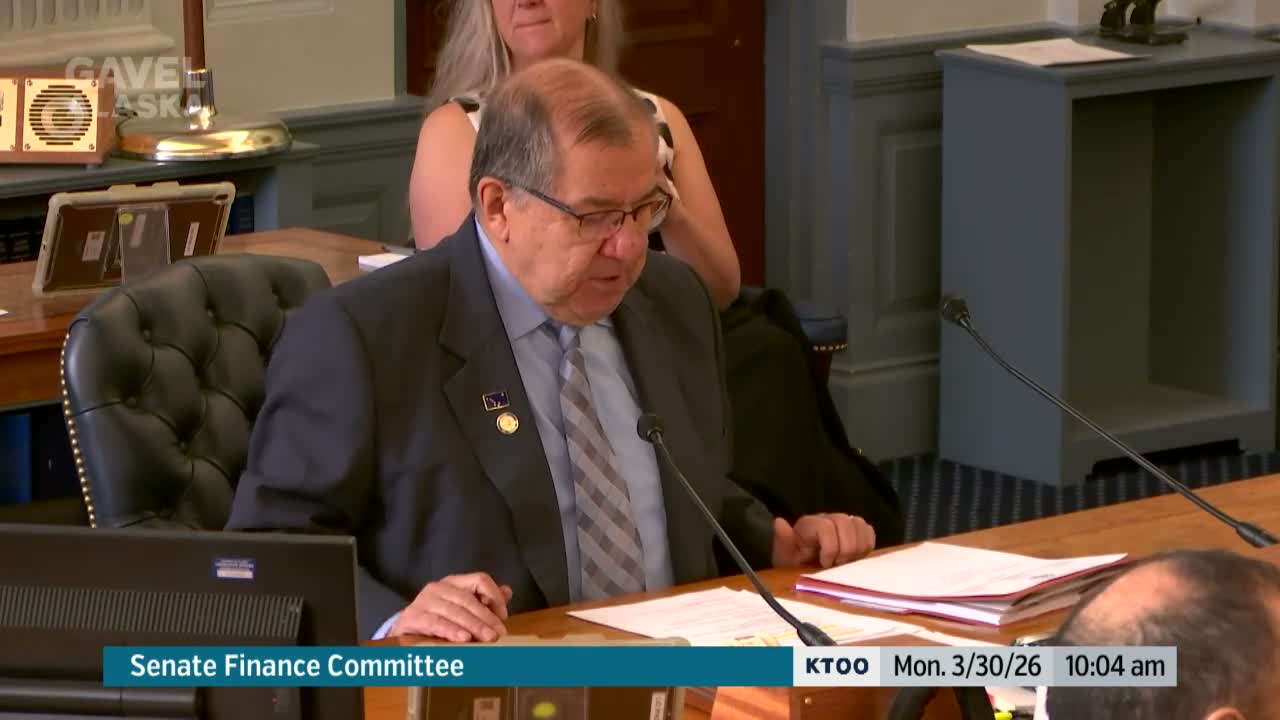
Lawmakers hear competing safety and access claims as Alaska panel considers limited prescriptive authority for naturopathic doctors
Loading...
Summary
The Alaska Senate Finance Committee heard testimony for and against Senate Bill 193, which would give licensed Alaska naturopathic doctors a temporary endorsement to prescribe certain non‑controlled medications under physician supervision; proponents cited access and disciplinary‑data claims, while physicians warned about training gaps and patient‑safety risks. The committee received a fiscal note and set the bill aside with no vote.
Jun. 30, 2026 — The Senate Finance Committee spent its March 30 hearing on Senate Bill 193, a proposal that would allow licensed Alaska naturopathic doctors a temporary endorsement to prescribe certain non‑controlled medications under written supervisory agreements with licensed physicians.
Sen. Scott Kawasaki introduced the measure and said the bill is intended to help address a shortage of primary‑care providers in Alaska by allowing naturopathic doctors to practice “closer to their level of training and education,” initially under supervision. "This would provide a temporary license endorsement with a written agreement with a supervising physician," Kawasaki said, and the proposal would bar controlled substances, chemotherapy and antipsychotics while requiring continuing pharmacology education.
Proponents described shifts in other states and offered regulatory data. Clyde Jensen, PhD, a pharmacology professor who said he has led programs in allopathic, osteopathic and naturopathic medical education, testified that "allopathic, osteopathic, and naturopathic medical schools all deliver similar numbers of pharmacology contact hours" and urged that limited, supervised prescriptive authority could expand access safely. Shannon Bridal, a board member with the federation of naturopathic regulatory authorities, pointed to state‑level discipline data she said showed lower rates of disciplinary actions for naturopathic doctors in jurisdictions with prescribing rights; she said Oregon recorded zero disciplinary actions for inappropriate prescribing in a 14‑year span for the scope SB 193 would allow.
Naturopathic practitioners who testified described care continuity and workforce effects. Dr. Natalie Wiggins, a licensed naturopathic doctor in Anchorage, said her DEA‑licensed experience in Arizona allowed her to manage care in a single visit and that Alaska patients now often must see an additional provider to obtain prescriptions, increasing delays and costs. Dr. Scott Luper, a Fairbanks naturopathic practitioner, said the inability to prescribe has made recruitment and retention of providers difficult and limited residency interest in Alaska.
Opponents urged caution and emphasized differences in clinical training. Dr. Carolyn Renee McKers, president of the Alaska State Medical Association and an obstetrician‑gynecologist, told the committee that physician training includes extensive supervised clinical residency and raised patient‑safety concerns. "Training differences are substantial and directly tied to safety," she said, and she described cases she said illustrated risks when treatments or diagnoses were missed or delayed.
Committee members also heard a fiscal estimate. Senator Steadman read a fiscal note from the Department of Commerce, Community and Economic Development, saying initial implementation costs for the Division of Corporations, Business and Professional Licensing would be in the low tens of thousands of dollars (the fiscal note cited roughly $24,000 for the first year and about $20,000 thereafter).
Sen. Kawasaki closed by describing SB 193 as iterative legislation that includes a temporary endorsement, written supervisory agreements, exclusions for certain high‑risk drugs, and a continuing‑education requirement (the bill text referenced 60 hours every two years with 20 hours focused on pharmacology). The committee did not take a vote during the hearing and set the bill aside for further consideration. Chairman Hoffman adjourned the meeting and noted the committee’s next scheduled sessions.
What the hearing showed: supporters framed SB 193 as an access remedy backed by regulatory data from other states; opponents argued that differences in supervised clinical residency and standardized protocols warrant caution and tighter safeguards. The record contains claims about disciplinary‑action rates and training hours that the committee did not resolve at the hearing.