Special‑education leaders warn of 'vacancy tax' as districts struggle to meet IDEA obligations
Loading...
Summary
CASE president Melissa Matthews told lawmakers that IDEA requires delivery of every IEP minute regardless of staffing shortages; she reported a 14% increase in students with disabilities since 2021 and nearly 200 unfilled special‑education teaching positions, calling current workarounds a costly 'vacancy tax.'
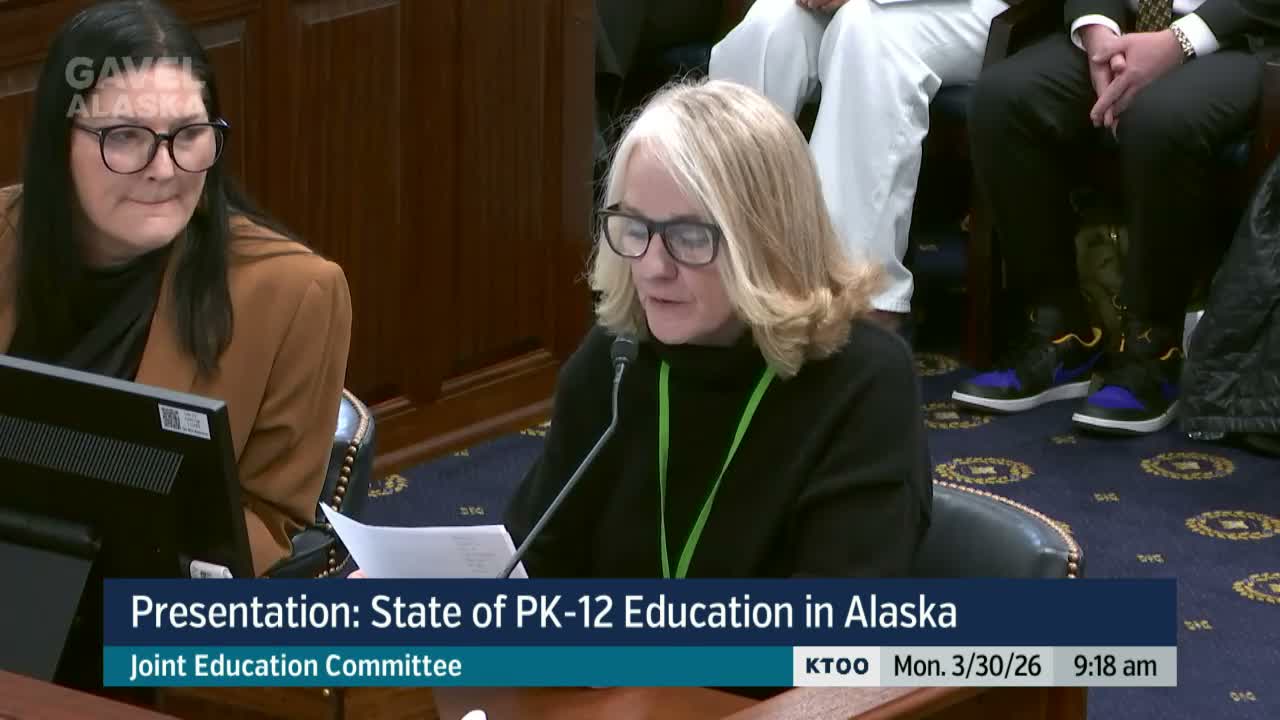
Melissa Matthews, director of student services for Bering Strait School District and president of the Alaska Council of Administrators of Special Education (CASE), told the committee that federal law (IDEA) creates legally binding obligations to provide a free, appropriate public education in the least restrictive environment and that staffing shortages do not excuse non‑delivery.
Matthews said enrollment has remained steady since 2021 but the number of students identified with disabilities has grown by approximately 14 percent; she reported "nearly 200 unfilled special education teaching positions across Alaska." She described models districts use — itinerant teachers who fly between sites, hybrid in‑person/virtual models, and contracted remote providers — and said the result is higher costs for travel, relocation and contracts while legal liability for delivering services falls on districts.
"What we are experiencing is what I would call a vacancy tax," Matthews said, explaining districts are spending more on stopgap measures than they would on a stable permanent workforce. She also emphasized that related services such as speech, occupational and physical therapy have to be provided and that remote services cannot fully replace in‑person care for students with significant physical needs.
Legislators asked about the regional distribution and categories of disability; Matthews offered to provide further breakdowns and noted that early childhood investment — including infant learning programs — could reduce later special education intensity. Committee members requested data on disability categories and the districts most affected.