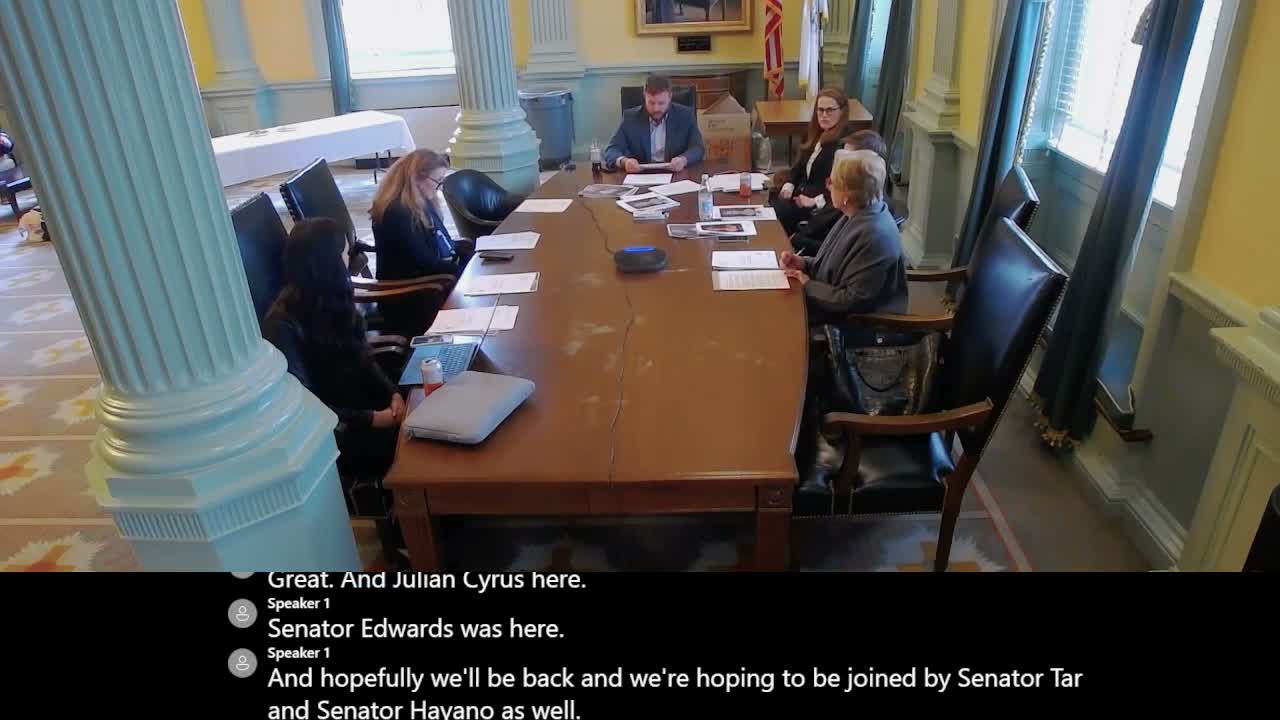
Senate Art Committee reviews maquettes for Elizabeth Freeman and Abigail Adams, urges historical grounding
Loading...
Summary
The Senate Art Committee reviewed clay maquettes and scoring rubrics for proposed bronze busts of Elizabeth Freeman and Abigail Adams, emphasizing historical research, consistent depiction and appropriate scale for Senate chamber placement. Members asked staff to circulate photos and videos and requested rubrics be completed by the end of the week.
The Senate Art Committee spent its business meeting reviewing clay maquettes and the committee’s scoring rubric for proposed bronze busts of Elizabeth Freeman and Abigail Adams, pressing artists to root designs in historical sources while leaving room for artistic interpretation.
Committee members spent the session comparing four finalists — Meredith Bergman, Ann Hirsch, Serena Bates and Jordan Hynes — and discussed how choices about age, headwear and gaze will read when installed in high Senate alcoves. Chair (speaking as the meeting host) reminded members the jury would weigh five criteria equally — artistic merit and technique, emotional impact, composition, historical research and suitability for the chamber — using a 1-to-5 scale.
LaMerchie Frazier, a public historian who submitted a written letter to the committee, told members she was concerned the instructions going to artists did not require “authentic representation” and could allow broad interpretation or use of weak references, including AI-derived images. “The lack of a requirement for really authentic representation was of concern to me,” she said, urging the committee to provide clearer guidance about historical fidelity.
Senator Edwards and other members said elements such as headwear (for example, whether a bonnet is shown) and the subject’s apparent age matter to viewers and to historical accuracy. “The age question is vexing,” one senator said, noting that longevity itself is a historically significant fact for Elizabeth Freeman and could be recognized in the bu st’s explanatory text if not fully captured in the sculpture.
Panelists and committee members reviewed each artist’s maquette in turn. Members praised Meredith Bergman’s technical skill but raised questions about proportions and how Freeman’s hair was rendered; they said Ann Hirsch’s Freeman and Adams studies showed sensitive rendering and useful costume detail but suggested softening or adjusting some features for the chamber; Jordan Hynes’s Freeman maquette prompted split reactions between in-person reviewers (who described a full-bodied presence) and remote reviewers (who requested additional angles or video); and several members said Serena Bates’s submissions appeared less likely to advance because sketches and maquettes differed in ways that obscured recognition of the subjects.
Committee staff committed to making the maquettes available for in-person viewing, and to circulating higher-quality photos and additional video angles for remote members. Chair asked members to complete the online rubric (the committee agreed a survey form would be easiest) and to submit final evaluations by the end of the week so the committee can synthesize scores and discuss recommendations.
The meeting closed with members raising placement concerns — sight lines in high alcoves and the visual balance among existing busts, including the dark bronze Frederick Douglass piece — and requesting that staff supply measurements and suggested base proportions. The committee plans to consolidate rubrics and comments, provide further feedback on any full-scale renderings, and make a recommendation to the Senate following the scoring process. The committee adjourned and said the next meeting would likely be virtual.