Lawmakers hear competing claims as hearing on 5%→4% income tax cut draws advocates and opponents
Loading...
Summary
At a Special Joint Committee hearing, proponents said reducing the state income tax from 5% to 4% would ease household budgets and spur jobs; independent experts and unions warned the cut could cost roughly $5 billion a year, force spending cuts or other offsets, and concentrate benefits among high earners.
A state hearing on two 2026 ballot measures drew hours of testimony and sharp disagreement over the fiscal and economic tradeoffs of reducing Massachusetts’ base personal income tax from 5% to 4% (H.5007).
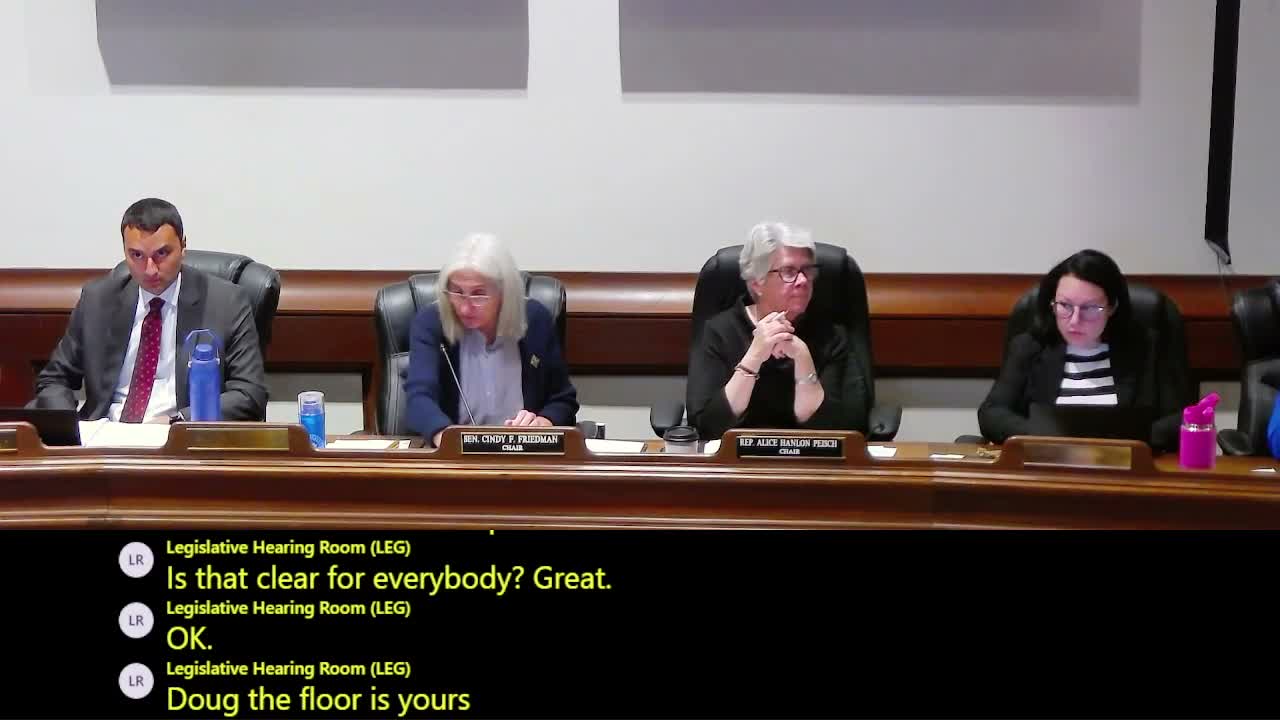
Senate Chair Cindy Friedman opened the Special Joint Committee on Initiative Petitions hearing by describing the process for initiative petitions and naming the two measures under review: H.5007 (a phased 1 percentage-point income tax cut) and H.5006 (a revision of Chapter 62F, the state’s revenue‑cap statute). The hearing ran panels of subject‑matter experts, proponents, opponents and more than two dozen pre‑registered public commenters.
Proponents framed the income‑tax cut as immediate relief for households and a boost to competitiveness. Chris Cohan of Taxpayers for an Affordable Massachusetts said the average Massachusetts household would keep “about $1,300 a year” once the cut is fully phased in and argued that returning dollars to residents would increase local spending and job creation. Christopher Carlozzi of the National Federation of Independent Business said pass‑through small businesses would use savings for equipment, hires and other investments.
“Families want relief,” Cohan said in his testimony, asserting the cut would circulate money in the economy and benefit a broad cross section of voters.
Opponents — including economists, bank and union leaders, and municipal officials — warned the reduction would create a large, durable budget hole and force sharp cuts or other offsets. Doug Haugat of the Massachusetts Taxpayers Foundation, the committee’s invited expert, presented a conservative baseline model estimating a long‑run reduction in income tax collections on the order of $5.4 billion when the cut is fully implemented, with a roughly $800 million effect on FY2027 budgets during the phase‑in. Haugat warned that a sustained $5 billion annual shortfall would limit reserves, increase the likelihood of mid‑year “9C” corrective cuts, and reduce deposits into the state’s stabilization fund.
Opponents emphasized distributional effects. Professor Jonathan Gruber (MIT) and representatives of the Massachusetts Teachers Association and health‑care unions told the committee that the proposed cut would disproportionately help the wealthiest households while threatening funding for public education, MassHealth and other services that many residents rely on. Bob Rivers of Eastern Bank, citing state analysis, said a $5 billion gap would translate into deep cuts to discretionary and locally funded services.
Proponents disputed the largest cost estimates and presented dynamic modeling that assumed some economic growth effects. Rebecca Paxton, a consultant for a proponent coalition, said her statistical model projected modest temporary revenue declines during phase‑in but faster long‑term revenue growth and argued other estimates relied on a hypothetical future baseline that overstates the cost.
The committee’s members pressed both sides on core uncertainties: which modeling assumptions are appropriate, how much of a net growth effect a modest rate cut can produce, and how implementation timing (the cut phases in January 2027 over three years) would affect the FY2027 budget. Lawmakers also questioned proponents about petition‑drive fundraising and paid signature gatherers; proponents acknowledged paid gathering but said that practice is common.
Public comments were dominated by opposition from unions, municipalities, housing and senior advocates, and community groups, who argued that the proposed cuts would worsen local fiscal strain, reduce services or prompt property tax overrides. Several union speakers said the Fair Share Amendment proceeds — passed in 2022 — are already funding expanded services that would be at risk if revenue fell.
No committee vote occurred; chairs closed the hearing after taking public testimony and invited written submissions through the designated deadline. The panel’s record includes divergent technical estimates and competing narratives about the measure’s benefits and costs — leaving the committee with choices to weigh about modeling assumptions, near‑term budget mechanics and longer‑term priorities.