Healy administration frames FY27 health budget as preservation amid deep federal cuts
Loading...
Summary
EOHHS Secretary Kiaomi Mahania told the Joint Committee on Ways and Means the administration's FY27 request prioritizes preserving core services as federal funding changes and health care cost growth squeeze the state budget. She highlighted targeted investments and warned of multibillion-dollar federal revenue losses.
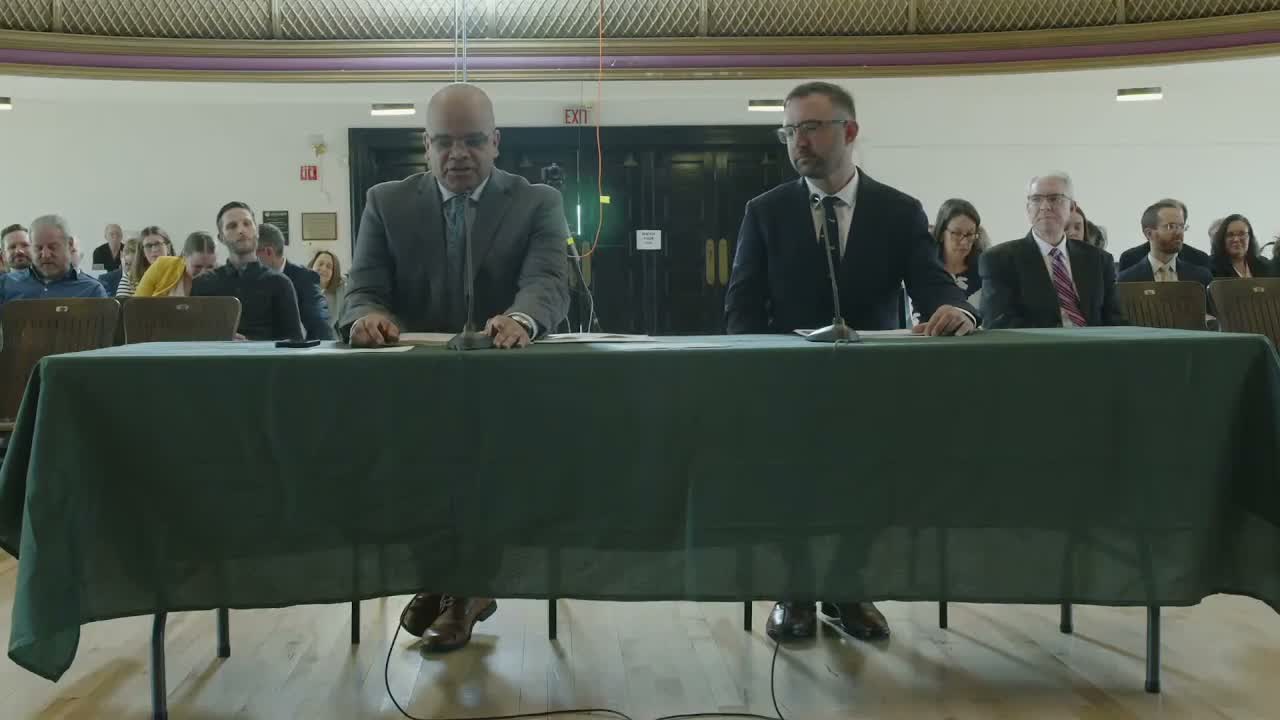
State Representative Meg Hilcoyne and Senate Co-chair Robin Kennedy opened the Joint Committee's public hearing in Clinton, where the Executive Office of Health and Human Services laid out the Healy-Driscoll administration's FY27 spending plan for health and human services.
—Kiaomi Mahania, the secretary of EOHHS, said the administration's FY27 request recommends funding the executive office at $33.7 billion, a 3 percent increase over FY26, and attributed most of the increase to nondiscretionary drivers including health care cost growth, provider-rate and collective-bargaining increases, and rising caseloads. —"Given the nondiscretionary cost increases and revenue pressures, the FY27 request focuses largely on preserving existing services with targeted investment in high-priority areas," Mahania said in her prepared remarks.
Mahania identified a series of targeted investments in the request: higher average daily reimbursements for DCF foster parents, full funding for a Department of Public Health maternal-health implementation including an expanded universal home-visiting program, maintained family resource centers, continued Healthy Incentives Program funding to increase access to fresh produce, and a one-year extension of a pilot expanding ConnectorCare eligibility.
She warned, however, that federal policy changes threaten hundreds of millions of dollars in annual revenue. "We're expecting that this dramatic reduction [in federal funding] . . . will significantly constrain our budget for the next several fiscal years," Mahania said, noting recent CMS awards the state won to bolster rural health but stressing those grants do not replace lost baseline federal dollars.
Committee members pressed Mahania about how EOHHS is prioritizing programs under the fiscal squeeze. She said agency leaders were asked to identify programs that "have the greatest impact" and that the FY27 package reflects those choices. Members repeatedly asked for outreach and engagement so stakeholders can help design changes that minimize harm to vulnerable residents.
Mahania closed by stressing the administration's goal to preserve core programs while pursuing reforms that slow cost growth. "Our partnership with the legislature is more critical than ever," she said.
The committee moved immediately into questioning of MassHealth and other agencies; several witnesses and follow-up panels expanded on the budget's specific proposals and potential operational consequences.