Child-care providers and EEC warn of large waitlists and workforce gaps; C3 grants stabilizing but access remains urgent
Loading...
Summary
Early-education officials told the Ways and Means committee that Commonwealth Cares for Children grants helped stabilize programs but that a statewide shortage of income-eligible vouchers has left roughly 29,000 children on waitlists; apprenticeship and other workforce steps can help but funding for access is the immediate need.
Child-care operators and the Department of Early Education and Care told the joint committee that operational support (C3) and other H2 investments have helped stabilize the field but do not substitute for income-eligible vouchers that allow low-income families to use licensed care.
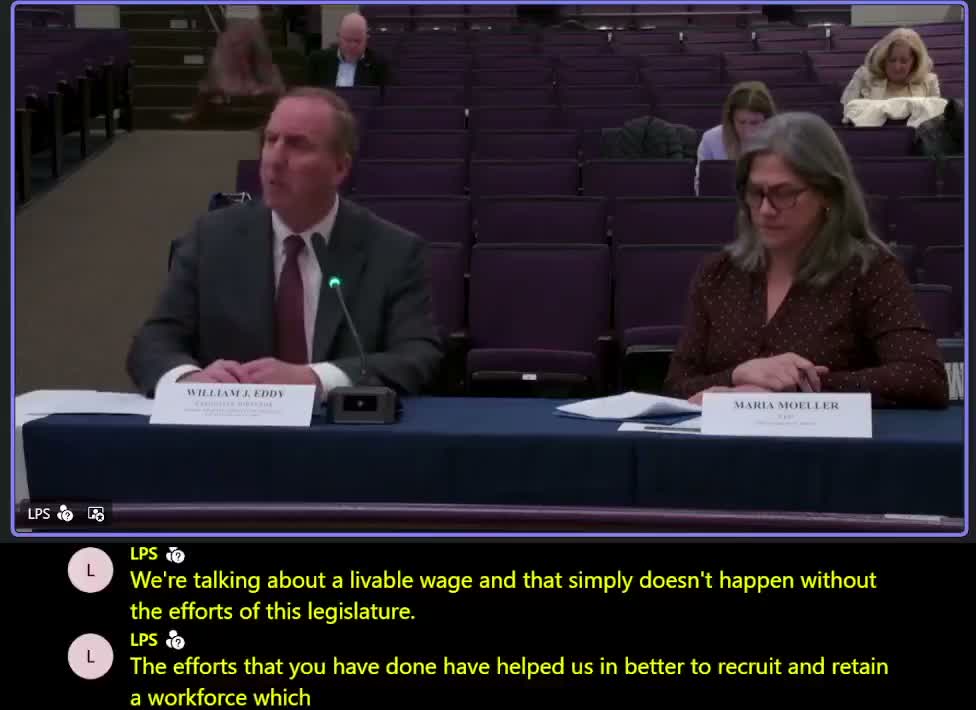
Maria Gonzalez Moller, CEO of the Community Group in Lawrence, described an operating model that relies on full enrollment financed by subsidies. "Since March 2024 when income‑eligible vouchers were last available, waitlists have grown considerably," she said, listing program closures and classroom reductions where families could not afford care without vouchers.
Industry advocates and EEC testified on the apprenticeship and workforce strategies that have expanded the pipeline of educators. The sector reported progress on pay and retention where C3 grants were used for compensation, but witnesses said wages still lag in lower-cost regions and that many classrooms remain closed for lack of subsidy-funded children.
Providers and advocates asked the Legislature to: restore voucher access and expand the childcare financial assistance line, maintain C3 funding at current levels, fund the Governor's CPPI preschool expansion, and continue apprenticeship investments that create career pathways for early-education staff.
Panelists also asked the committee to include $31.2M in a House supplemental to reduce the childcare waitlist and to preserve employer‑led and public-private innovation funds that expand supply.
If reimbursements and voucher access are not restored, providers warned, capacity and the progress achieved since the pandemic could be reversed.