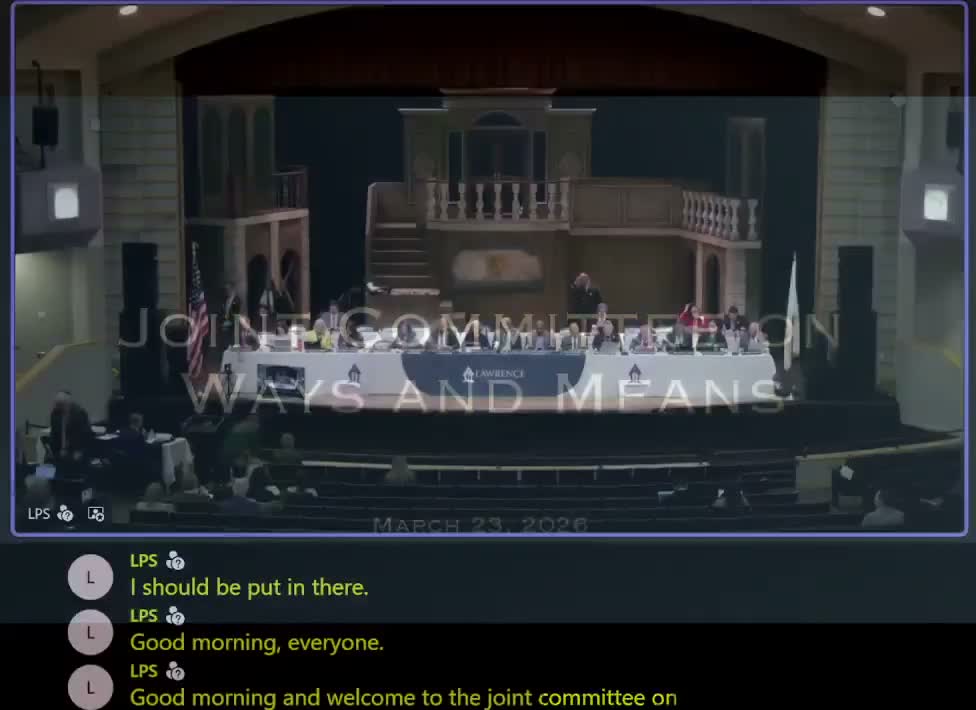
Joint Ways and Means hearing in Lawrence focuses on FY27 education and local aid; members press for fixes to Chapter 70 and special-education funding
Loading...
Summary
State education leaders and local officials urged the Legislature to protect and extend key FY27 investments in literacy, early childhood, school meals and higher education while addressing rising special-education, transportation and municipal aid pressures. Lawmakers pressed agencies on a Chapter 70 study due in June.
Senator Pavel Payano and Representative Pat Duffy co-chaired a public Ways and Means hearing in Lawrence on the governor's FY2027 House 2 education and local aid proposals, saying the budget would frame the Legislature's work this session. "This hearing today will be focused on the governor's proposed FY27 budget," Payano said in his opening remarks.
Acting Secretary Amy Kershaw, who said she was representing the Education Secretariat pending a permanent secretary, laid out cross-secretariat priorities in the governor's proposal: increased funding for early literacy and high-dosage tutoring, expanded access to preschool through the Commonwealth Preschool Partnership Initiative, new funding for student mental health, and investments in early college and career pathways. Kershaw highlighted the administration's anti-hunger work and the decision to make universal free school meals permanent.
Local leaders told the committee those investments matter in Lawrence and similar gateway cities. Acting Mayor Giovanni Rodriguez said Lawrence educates roughly 13,000 students and depends on Chapter 70 and Student Opportunity Act funds to maintain services. "We spend over $23,000 per student every year," Rodriguez said, arguing the city needs predictable state funding to keep programs and special supports running.
Commissioners from the Executive Office of Education gave line-by-line context: Higher-education officials summarized proposals to sustain free community college, expand early-college enrollment, and boost campus success grants; K–12 officials described a record Department of Elementary and Secondary Education request focused on literacy launch, special-education supports and an "Accelerated Achievement" pilot to target high-need schools. Department of Early Education and Care leaders described C3 operational grants, a proposed $1.2 billion child-care assistance line and apprenticeship strategies to stabilize the early-childhood workforce.
Committee members repeatedly pressed agency witnesses on two near-term items: (1) when the local contribution/foundation budget review report would be ready — DESE and its chief financial officer said a draft is expected by the end of the fiscal year in June — and (2) how to mitigate rapidly rising special-education, transportation and health-care costs that many members said are driving local override requests.
Lawmakers, municipal leaders and school officials left the hearing with a long list of budget and technical requests: increase the special-education circuit-breaker reimbursement and lower its eligibility threshold; raise the per-pupil minimum aid level; expand rural aid; fully fund regional and nonregional transportation; and consider targeted mitigation grants for districts facing immigration-related enrollment declines. Business groups and higher-education leaders urged continued investment aligned with workforce pipelines, including early childhood, ESOL for adults, apprenticeships and partnerships between employers and 2- and 4-year institutions.
The committee adjourned after more than five hours of testimony and questioning and said it would consider the range of requests as House and Senate budgets progress.