Get Full Government Meeting Transcripts, Videos, & Alerts Forever!
Get email alerts on the Public Meeting Ethics topic
No spam. Unsubscribe anytime.
City attorney reminds Nampa officials to keep deliberations on the record and warns private communications may be public
Summary
City attorney Todd reviewed public‑meeting etiquette, advising commissioners and council members to avoid side conversations, texting and off‑record communications and to treat official communications on private devices as potentially public records.
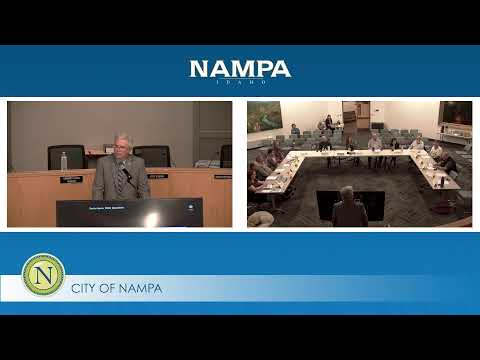
City attorney Todd gave a detailed legal briefing at the end of a joint workshop, reminding elected officials and commissioners that public‑meeting decisions must be based on the record and warning that side conversations, text messages and other off‑record communications can create legal vulnerability.
Todd said officials should “have all of your conversations on the record” and discouraged side discussions and passing notes during public hearings, noting those actions can give grounds for a legal challenge if not disclosed. He reiterated that in a public hearing the decision must be justified by the record — the testimony, documents and exhibits presented — and that individuals should avoid off‑record negotiations or private communications that are not disclosed.
Todd also discussed public records law and the use of private devices: he warned that official communications occurring on personal laptops or phones can still be public records subject to disclosure if they pertain to public business. He advised officials to use public accounts where practicable or to be mindful that private devices may be subject to scrutiny in a public‑records request or court challenge.
On testimony and time limits, Todd clarified chairing practice: public commenters should generally be allowed to complete their allotted time (commonly three minutes), but officials may ask factual clarifying questions and should avoid editorial comments during testimony so as not to create the perception of a predetermination. Todd said it is appropriate to correct an obvious factual error on the record but not to convert a hearing into debate during the comment period.
Several council members acknowledged the guidance and asked Todd to return for more time to continue the conversation at a future workshop. The briefing ended with staff and council agreeing to schedule follow‑up and to post materials related to the plan and the legal guidance.