
Trustees debate phasing and priorities for Measure EE; parent oversight member urges front‑loading and TK/K focus
Get AI-powered insights, summaries, and transcripts
Sign Up Free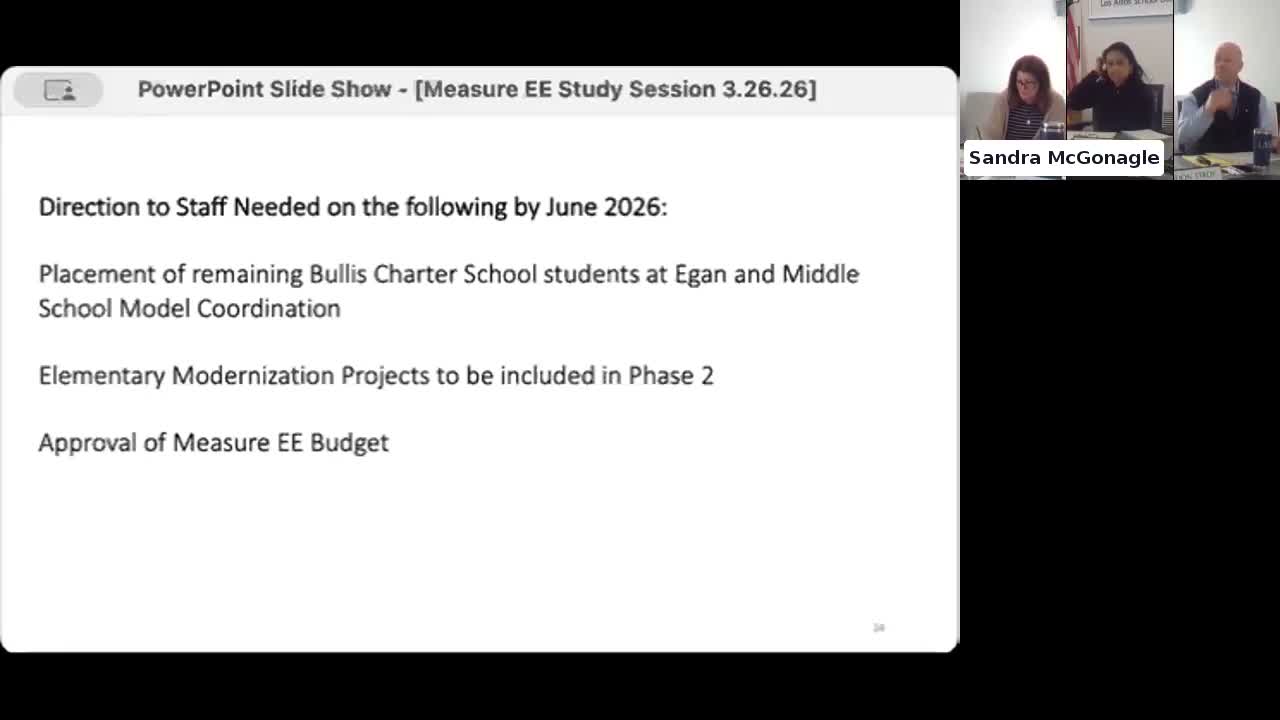
Summary
At a study session, trustees and the public debated whether to prioritize full campus modernizations or targeted projects, discussed DSA thresholds and cost escalation, and heard a public comment urging the district to consider front‑loading projects in 2029 and prioritize TK/Kindergarten upgrades to support enrollment.
Public commenter Mitra LaRospoor, identified herself as an Oak parent and member of the Citizens' Bond Oversight Committee, asked whether the district could "front‑load" modernization work in 2029 given contractor bandwidth and staff capacity and suggested prioritizing TK and kindergarten improvements to help enrollments.
Board members questioned several elements of the draft plan and the assumptions behind cost estimates. One trustee asked why hard-cost modernization figures now add up to about $140 million across phases when the 2024 facility master plan listed roughly $83 million, pressing staff for the assumptions that explain the difference. The presenter said escalation, inclusion of additional soft costs and contingency assumptions account for part of the discrepancy and offered to return with reconciled assumptions for review.
Trustees also debated quick‑start options such as shade structures and painting versus larger investments. Some trustees and the presenter warned that small projects can trigger DSA or ADA path‑of‑travel reviews that cascade into larger obligations: "If you touch a building, DSA will require you to upgrade the path of travel," the presenter said, noting such requirements can turn a modest project into a much larger scope and cost.
Board members discussed operational tradeoffs including the cost and disruption of removing portables (staff estimated about $15,000–$20,000 per portable plus possible site work), whether to prioritize visible, community‑facing projects to demonstrate bond activity, and whether it makes sense to consolidate modernizations or do them piecemeal to avoid triggering DSA thresholds. Several trustees asked staff to provide more granular comparisons with the facility master plan figures and to propose a phase‑2 plan that balances equity across campuses with practical constraints.
The board asked staff to return by June with a refined recommendation for phase‑2 project placements, a reconciliation of the current cost estimates with the earlier master plan, and clear options for quick‑start projects that would not create unanticipated DSA obligations. No final votes were taken on project phasing at the session.