Get Full Government Meeting Transcripts, Videos, & Alerts Forever!
Get email alerts on the Audit Financial Reporting topic
No spam. Unsubscribe anytime.
Auditors give Butte–Silver Bow a clean FY2025 opinion but flag repeat control weaknesses
Summary
Newland & Company issued an unmodified opinion on Butte–Silver Bow's FY2025 financial statements, but auditors reported repeated internal-control deficiencies at small offices, problems reconciling immunization billings and a lapse in retainage on construction contracts; county staff proposed an $80,000 retainage threshold and other fixes.
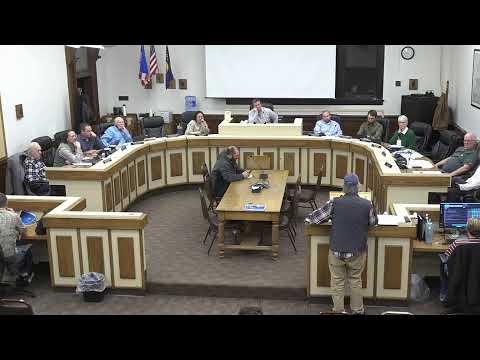
Pat Burt, the lead auditor for Newland & Company, told the Butte–Silver Bow Council on March 18 that the independent audit of the county's fiscal year 2025 financial statements resulted in an unmodified (clean) opinion: “the financial statements … present fairly in all material respects,” Burt said.
The auditors also reported an unmodified opinion on the county’s schedule of federal awards but identified several repeat findings that require management attention. Burt listed significant deficiencies in internal control at smaller offices — including the parking commission, the Civic Center and the landfill — and an ongoing software issue that prevents the immunization department from reconciling billings, collections and adjustments to the general ledger at month end.
Burt said ARPA-related work accounted for a large portion of the audit procedures; auditors reviewed in excess of $13.6 million in ARPA expenditures and noted that roughly $5.6 million of ARPA funding remained at year-end. He also told commissioners that the audit uncovered multiple construction contracts that did not include retainage clauses, a lapse he attributed to personnel turnover and contract-process oversights.
Director of Finance and Budget Karen Hassler responded to the findings with specific steps the administration is taking. Hassler said the county will pursue a new electronic health-record system to improve immunization reconciliations and has drafted a retainage policy that will require 5% retainage on contracts exceeding an $80,000 bid threshold — the county’s public-bid threshold — to ensure contract performance. She also outlined that converting some cashiering to a parking-payment vendor and adding manager-level reviews are mitigating cash-collection risks at other offices.
Commissioners pressed for particulars. Commissioner Thatcher asked why the county elects a 10% de minimis indirect-cost rate rather than the 15% option for certain grants; Burt replied that most of the county’s grants include explicit administrative line items that remove the automatic-de minimis option and therefore limit college-wide adoption of a straight 10% election.
Hassler said the full 400-page annual report and final opinion letters will be provided in bound form to commissioners and posted to the county website once finalized. Burt recommended the county study the feasibility of improving segregation of duties for cash collections in outside offices and implement control changes to address the repeat findings.
The presentation closed with a commitment to follow up on the management responses and to work toward eliminating repeat findings in future audits.