Lawndale Elementary presents second interim budget showing multi‑year deficits; teachers, students urge board to reconsider cuts
Loading...
Summary
District officials recommended a "positive" second interim certification while projecting deficits over the next three years driven by declining enrollment and rising personnel costs. Teachers, parents and students urged the board to cancel or rethink proposed staff reductions, warning of larger class sizes and harm to student supports.
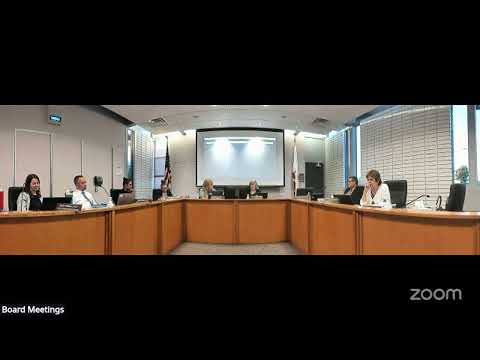
Lawndale Elementary School District officials presented their second interim budget at the March 19 board meeting and recommended the board approve a "positive" certification while warning of multi‑year deficits driven by falling enrollment and rising personnel costs.
Assistant Superintendent of Business Dr. Howard Ho and Director of Budgeting Luis Diaz told trustees the second interim report captures revenues and expenditures through Jan. 31 and reflects updated CALPADS enrollment and state assumptions. Dr. Ho said the district’s enrollment was 4,255 students for 2025–26 and is projected to fall to 4,148 in 2026–27, a decline of more than 500 students since 2021–22. The report shows a projected deficit of $4.8 million for 2025–26, a $2.3 million deficit in 2026–27 (partly offset by one‑time funds), and a projected $6.0 million deficit for 2027–28.
"Revenues are flattening or declining due to declining enrollment, while expenditures — particularly salaries, benefits, pensions and special education costs — continue to increase," Dr. Ho said. Diaz detailed assumptions behind revenue and expenditure lines, including LCFF adjustments (roughly $450,000 at second interim), an estimated one‑time revenue item listed at $3.0 million with planned decreases in future years, and step‑and‑column and pension cost projections. He said the general fund increased by about $1.0 million at second interim and that the district contributes approximately $18.0 million from the unrestricted fund to support special education and restricted maintenance programs.
Superintendent Castro said the district must submit an updated fiscal stabilization plan to the Los Angeles County Office of Education (LACOE) because of the deficit and emphasized the difficulty of the choices ahead. "Salaries are 80% of our budget," she said, and noted that the fiscal stabilization plan is a requirement that constrains options.
The fiscal presentation prompted extensive public comment focused on proposed reductions in force at middle schools. Sylvia Ortiz urged the board to "please reconsider the proposed RIFs at the middle schools," saying cuts to classroom and PE teachers would harm student learning and increase safety and liability risks if coverage were provided by principals or campus security. History teacher Caitlin Fountain cited district I‑Ready data and classroom composition, saying, "In each of our history classes that are currently over 30 students, we have multiple English learners, including newcomers with little to no English, six or more students with IEPs," and warned minimum class sizes could rise to 33 in seventh grade and 35.5 in eighth grade if cuts proceed.
Rogers teacher Rosangel Garcia and veteran teacher Nancy Salazar echoed concerns about smaller settings and continuity, urging the board to preserve positions that they said contribute directly to the district’s recent academic recognitions. Student Derek Ramirez told trustees, "When teachers are taken away, we lose more than just staff. We lose support. We lose guidance," and asked the board to imagine classrooms of 30 to 40 students with fewer adults to provide help.
In response, Superintendent Castro acknowledged speakers and said she understood the emotional impact of the proposals while reiterating fiscal constraints imposed by LACOE oversight and the stabilization plan. She also reassured the audience that existing teacher contracts protect against excessive class sizes and stated, "Classes will not be overcrowded." Castro invited staff and the union to work with the district on alternatives but said the district must balance stewardship of public funds with protecting staff and students.
No formal action to authorize layoffs or implement staffing changes was taken at the meeting. Trustees approved routine agenda items and minutes by recorded vote (motions on minutes and consent items carried 4–0), and the district confirmed it will submit the fiscal stabilization plan to LACOE the following day. The meeting adjourned at 6:37 p.m.
Why this matters: The district projects persistent structural gaps between revenue and expenditure that, under current assumptions, would require difficult choices affecting classroom staffing. The public speakers — teachers, parents and a student — framed layoffs as a threat to recent gains and to equity for the district’s highest‑need learners. The board’s next steps include monitoring the governor’s May revision, implementing the fiscal stabilization plan, and considering staffing and budget tradeoffs as the district finalizes its 2026–27 budget.