
House DFL leaders say Republicans blocked bills on guns and ICE in schools; Democrats vow to keep pushing
Get AI-powered insights, summaries, and transcripts
Sign Up Free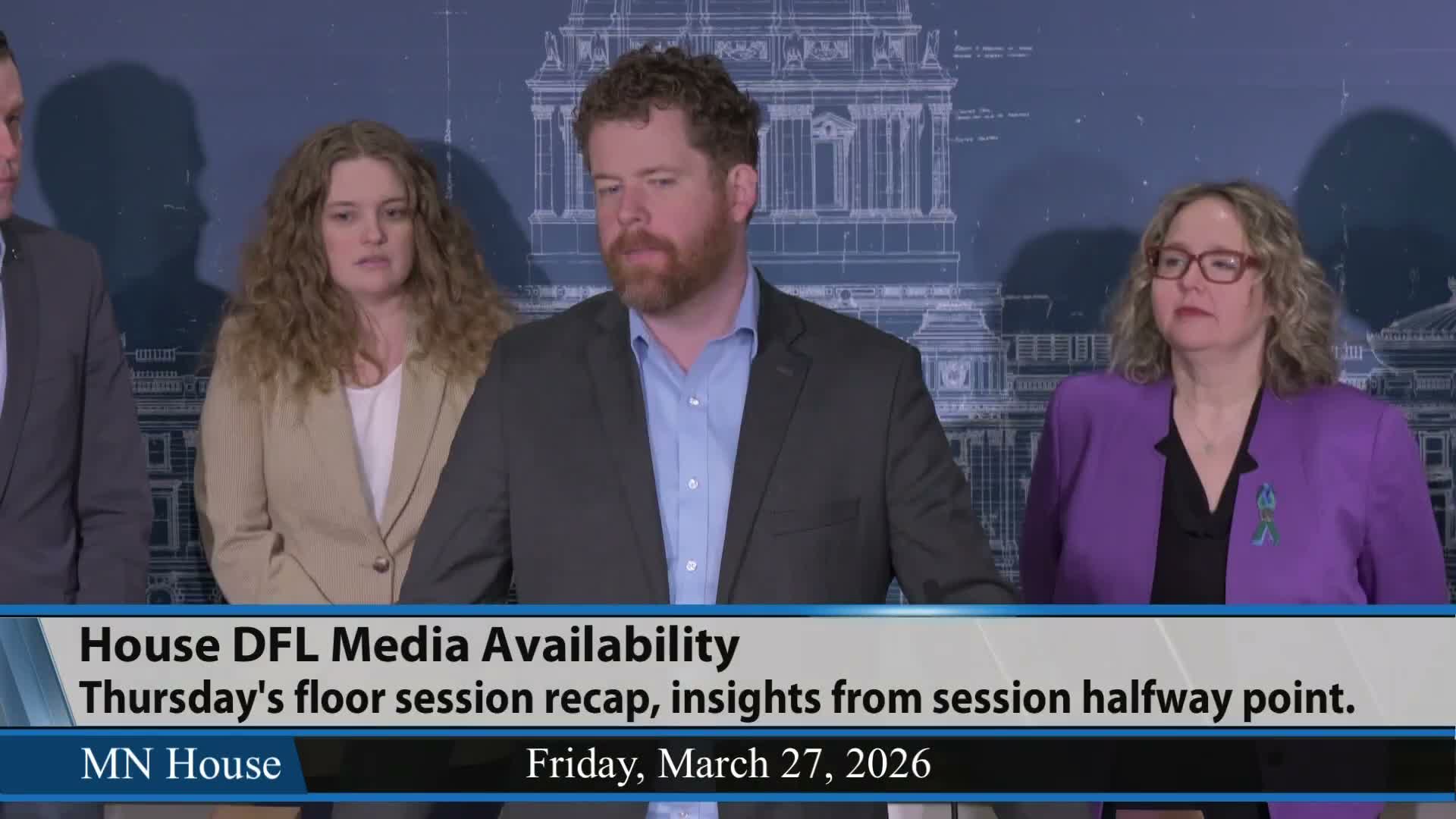
Summary
A House DFL lawmaker said Minnesota House Republicans unanimously voted to block advancement of gun-violence prevention bills and a measure to limit ICE activity in schools; Democrats say they will use other procedural tools this session and make the votes an issue with constituents ahead of the fall election.
A House DFL lawmaker accused House Republicans of blocking progress after a floor vote that prevented advancement of three bills on gun-violence prevention and a bill intended to limit ICE activity in schools.
"The overwhelming majority of Minnesotans want strong action to stop gun violence, and the overwhelming majority of Minnesotans want us to rein in ICE and prevent them from doing terrible things at schools," the DFL lawmaker said, calling last night's outcome "incredibly frustrating and disappointing." The lawmaker said Democrats forced a floor vote using a procedural rule when regular order did not yield movement.
Why it matters: Democrats said the measures reflect widely shared public priorities — including an assault-weapons ban and a ban on high-capacity magazines — and that blocking them leaves families and schoolchildren unprotected. A second DFL lawmaker noted the bills would have required a 68-vote threshold to advance and said "it would have just taken one Republican" to move the measures forward; that speaker named Representatives Andrew Myers, Danny Dedeaux and Witte as among those who voted not to advance the bills.
DFL leaders described a two-track plan: continue negotiations and use available procedural tools during the remainder of the session, and make the vote a campaign issue. "There are still many weeks left in this session, and we will fight all the way to the end," the lead DFL lawmaker said, adding that if the measures cannot pass in the current cycle Democrats will continue the effort in future sessions and in the 2026 campaigns.
On procedural options, the lawmaker said the rule used to force the vote expires at the committee deadline and is not available afterward, and acknowledged that suspending the rules later would require a higher threshold (90 votes). The speaker said the bills had committee hearings but that the procedural tactic was a limited tool for public transparency on where members stand.
On red flag laws and other measures, Democrats said strengthening existing red flag statutes would be helpful but would not replace their pursuit of assault-weapon and high-capacity magazine bans. "Red flag laws are saving lives," a DFL lawmaker said, and the caucus intends to pursue a package of measures including background checks, restrictions on binary triggers and action on straw purchasers.
The briefing also addressed safety for lawmakers after threats and the circulation of isolated clips on social media. The lead lawmaker said many members have experienced threats and said public officials deserve protections; reporters asked whether the Legislature should expand a protective services unit within Capitol security overseen by state patrol to improve notification and response.
What was not decided: The briefing recorded no formal passage of new measures. Democrats said the bills were not advanced on the floor; the transcript records that House Republicans voted against advancing the measures and Democrats voted to advance them, but detailed roll-call tallies were not specified in the briefing.
Next steps: DFL leaders said they will continue talks with colleagues, consider other procedural avenues, and encourage constituent engagement during the upcoming recess. The lawmaker added that accountability will also take place politically in the fall election if members continue to vote against measures that, Democrats say, most Minnesotans support.