
Parents, students and teachers urge Santa Rosa board to preserve ArtQuest as trustees debate coordinator cuts and scheduling
Get AI-powered insights, summaries, and transcripts
Sign Up Free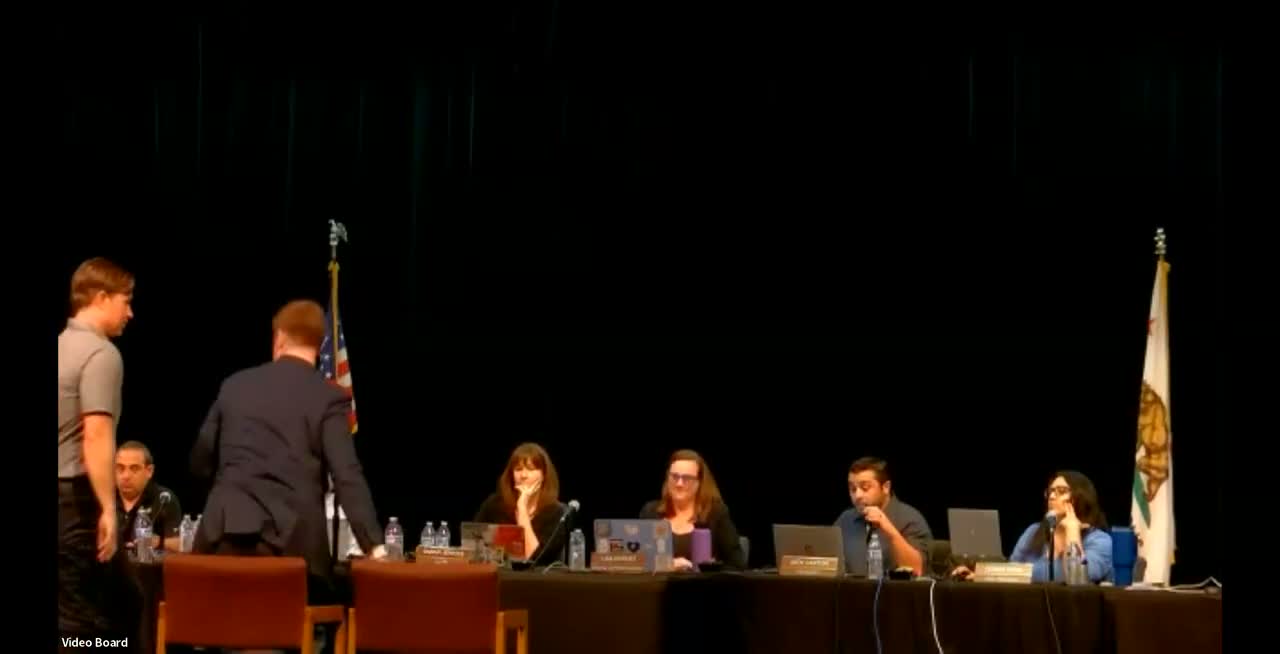
Summary
More than two dozen public commenters and program coordinators urged the Santa Rosa City Schools board to preserve the ArtQuest magnet's two‑block structure and coordinator staffing after the district proposed section reductions; coordinators warned cuts are already prompting families to withdraw applications.
Hundreds of public commenters, students, alumni and program staff pressed the Santa Rosa City Schools Board of Education on March 25 to protect ArtQuest — the district’s award‑winning visual and performing arts magnet at Santa Rosa High — after staff presented possible section reductions tied to projected enrollment.
More than a dozen speakers during an extended public‑comment period described ArtQuest as a life‑changing program that requires a two‑period (double‑block) schedule to deliver hands‑on arts instruction. “ArtQuest saves lives,” said one alumnus and current parent, arguing the program fosters belonging and keeps students engaged in school. Students and parents repeatedly warned that uncertainty over the program’s future has already led some families to withdraw incoming student applications.
ArtQuest coordinator Brooke DiLello, who identified herself as a 20‑year district teacher and the program’s coordinator, said the program has already lost coordinator FTE and sections over recent years. “We fight really hard to keep our program going and sustaining,” DiLello said, adding that a parent recently told her they would not enroll a child next year because of the program’s uncertain future. She urged board members to preserve coordinator time and restore staffing to stabilize the magnet.
District officials and program directors presented data on signature programs across the district — including IB at Montgomery, the Early College Magnet at Pioneer, and CTE pathways — and said the district is exploring ways to fund coordinators outside strictly enrollment‑based section allocations. Dr. Sarah O’Connor, director of college and career signature programs, said the district aims to identify coordinator support through LCAP and other funding sources and is pursuing state and federal grants to sustain pathway programs.
Trustees described the issue as a trade‑off between program fidelity and district‑wide section allocations. Several trustees expressed support for the idea of protecting signature programs but asked staff to propose options that balance smaller class sizes in specialized programs with the need to maintain class‑size averages across the campus. Trustee Jenkins emphasized the importance of marketing and recruiting to keep district programs sustainable and suggested seeking outside grant funds to preserve specialized offerings.
Why it matters ArtQuest’s double‑block schedule requires more instructional contact time and smaller, specialized classes, which can reduce average class sizes and raise section costs compared with typical courses. Board members said they want options that preserve program integrity while keeping the district fiscally responsible.
What’s next Staff committed to return with clearer scenarios and funding options, including possible use of LCAP or CTE grants, analysis of coordinator FTE needs, enrollment/wait‑list effects, and a marketing plan to retain and recruit students for signature programs.
Speakers quoted in this article are on the official meeting roster and spoke during the ArtQuest comments and program presentation.