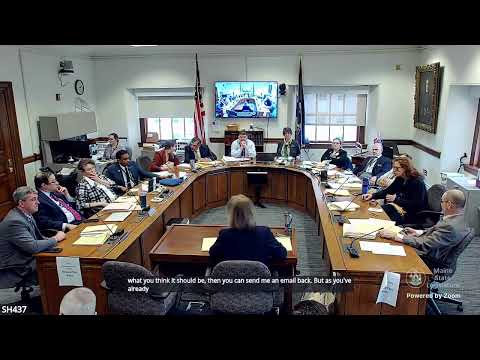
Committee shifts implementation dates for ADU and housing-development changes, pauses two recent laws
Loading...
Summary
In reviewing LD 2173, the committee favored an approach that sets implementation of several housing-development and ADU provisions to July 1, 2027, and would pause two laws already in effect (minimum parking-space requirements and childcare-location rules) until that date to give municipalities time to align ordinances.
Representative Gere led a detailed language review of LD 2173, a comprehensive bill to update laws governing housing developments and accessory dwelling units (ADUs). The draft the committee reviewed (the "yellow" version) keeps current statutes largely intact and places many implementation dates into an unallocated provision with an effective date of July 1, 2027.
As Gere explained, "Section 27 says everything that was enacted in LD 18 29 has an effective date of 07/01/2027," and section 29 similarly sets the bill's effective date to July 1, 2027. The approach is intended to avoid littering statutes with numerous implementation dates and to allow municipalities a single update window for ordinances.
The bill also contains a provision (section 28) that would pause two laws already in effect — one that changes minimum off-street parking requirements and another from HHS dealing with permitted locations for childcare facilities — until July 1, 2027. Gere noted that pausing laws that are already active could affect projects in planning stages and stressed that the pause would not retroactively strip vested permits: "If they already have a permit, then they have what's called a vested right," a staff member explained.
Committee members asked whether the pause could stall projects that are mid-application and whether municipalities could use ordinance language to exempt limited coastal or flood-zone areas from high-density or ADU provisions; staff said exemptions are intended to be narrow and limited to defined coastal/flood hazard areas.
The committee expressed agreement on much of the drafting approach but flagged several sections for reviser's cleanup and asked staff to circulate final Ross edits and fiscal notes. Members also noted floor amendments remain an option if final electronic language diverges from the committee's intent.